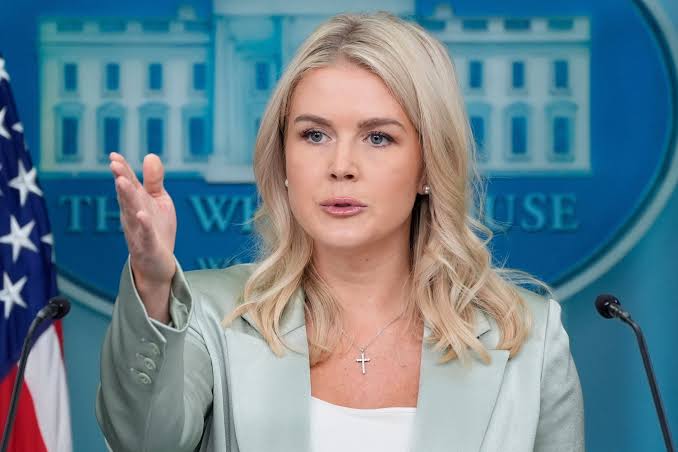
As President Donald Trump prepared to deliver a nationally televised primetime address from the White House, Press Secretary Karoline Leavitt defended his continued focus on the 2020 presidential election, arguing that millions of Americans still have unanswered questions about election security. The remarks have reignited debate over Trump’s long-standing claims about the 2020 election while placing election integrity back at the center of national political discussion just months before the 2026 midterm elections.
The upcoming speech is expected to focus on election security, voting systems, and allegations related to the 2020 election. Although the White House has released few official details about the address, Trump has suggested it will include what he describes as significant information regarding election administration and voting machines.
Karoline Leavitt Defends Trump’s Position
Speaking to reporters before the president’s address, White House Press Secretary Karoline Leavitt dismissed criticism that Trump was revisiting old political grievances. Instead, she framed the speech as part of the administration’s broader commitment to protecting future elections.
According to Leavitt, millions of Americans continue to question aspects of election administration, and the president believes those concerns deserve public attention. She argued that election integrity remains an important issue regardless of when the disputed election occurred.
Leavitt also rejected suggestions that the speech was intended to undermine confidence in the electoral process, insisting the administration’s objective is to encourage transparency and strengthen public trust in future elections.
What Trump Is Expected to Say
President Trump has indicated that his address will cover several election-related topics, including:
- Election security
- Voting machines
- Foreign interference concerns
- Voting procedures
- Election administration reforms
The president has repeatedly described the speech as containing a “major announcement,” although administration officials have not confirmed specific policy proposals. Reports suggest the White House has considered discussing intelligence related to foreign capabilities involving election systems, though no evidence has been presented showing that foreign governments altered vote totals in the 2020 election.
Renewed Focus on the 2020 Election
Trump has consistently maintained that problems occurred during the 2020 presidential election, despite courts, state election officials, and federal agencies having rejected widespread fraud allegations sufficient to change the election outcome.
His latest speech represents another effort to keep election integrity among his administration’s highest-profile political issues. Supporters argue that reviewing election procedures is necessary to restore voter confidence, while critics contend that repeatedly revisiting the 2020 election risks undermining trust in democratic institutions.
The White House has emphasized that the speech will address future election security as much as past controversies.
Why the Timing Matters
The address comes at a politically sensitive moment.
The United States is approaching the 2026 midterm elections, where control of Congress will be at stake. Election administration, voting rules, and ballot security have become major campaign issues across multiple states.
Political analysts note that focusing on election integrity allows Trump to energize many Republican voters who remain deeply concerned about election procedures while simultaneously drawing criticism from Democrats and voting-rights organizations.
Because the speech will originate from the White House rather than a campaign rally, it is expected to receive extensive national television coverage.
Democrats Push Back
Democratic lawmakers have sharply criticized the planned address.
Several members of Congress argue that continuing to revisit the 2020 election distracts from current economic and national security issues. Others have accused Trump of promoting claims that have repeatedly failed to gain legal support.
Some Democratic leaders also expressed concern that emphasizing disputed election narratives could affect public confidence ahead of the 2026 elections.
The criticism reflects the broader political divide that continues to surround election administration in the United States.
Republican Response
Republican reactions have generally been more supportive, although some lawmakers have said they were unaware of the speech’s full contents before its delivery.
Many GOP officials continue advocating for stronger voter identification requirements, updated election security measures, and greater transparency in ballot counting procedures. Those proposals have become common priorities within the Republican Party since the 2020 election.
Vice President JD Vance also defended Trump’s decision to discuss election-related issues, saying the president has every right to address matters he considers important to the country.
Debate Over Election Security
Election security remains one of America’s most politically divisive issues.
Supporters of stricter election laws argue that stronger safeguards improve confidence in the democratic process. Common proposals include:
- Expanded voter ID requirements
- Improved voter roll maintenance
- Increased transparency during ballot counting
- Enhanced cybersecurity protections
- More standardized election procedures
Opponents argue that many existing safeguards already protect election integrity and caution that additional restrictions could reduce voter participation.
This ongoing debate has become a defining feature of American politics since 2020.
Intelligence Questions Add Another Layer
Reports indicate White House officials have discussed releasing intelligence related to China’s potential capability to interfere in U.S. elections.
However, intelligence assessments cited by multiple reports indicate there is no evidence that foreign governments successfully altered vote totals in the 2020 presidential election. Officials remain divided over whether releasing selected intelligence documents could create misunderstanding if presented without full context.
That issue may become one of the most closely watched portions of Trump’s address.
Karoline Leavitt’s Role
As White House Press Secretary, Karoline Leavitt has become one of the administration’s most visible defenders.
Her briefing ahead of Trump’s speech demonstrated the administration’s strategy of presenting election security as an issue affecting future elections rather than solely revisiting the past. By arguing that Americans deserve confidence in how elections are conducted, Leavitt positioned the president’s address as part of a broader conversation about electoral transparency.
Her comments also reinforced the administration’s message that election integrity will remain a central policy and political priority throughout Trump’s second term.
What to Watch During the Address
Political observers will be watching for several key developments:
- Whether Trump announces new election-related executive actions or legislative proposals.
- Any release or discussion of intelligence concerning foreign election threats.
- Specific reforms proposed for voting systems.
- Reactions from Congress and state election officials.
- The impact on public debate ahead of the 2026 midterm elections.
Because election security remains a defining issue in American politics, Trump’s primetime address is expected to shape political messaging from both Republicans and Democrats in the weeks ahead.
Conclusion
Karoline Leavitt’s defense of President Trump’s continued focus on the 2020 election underscores how election integrity remains one of the defining political issues of Trump’s presidency. While supporters argue that transparency and stronger election safeguards are essential, critics warn that revisiting disputed claims risks deepening political divisions.
As Trump delivers his nationally televised White House address, the speech is likely to influence not only the immediate political conversation but also the broader debate surrounding election security, voter confidence, and the approaching 2026 midterm elections. (AP News)
For another major Justice Department shake-up, read our coverage of Who Is Roger Rogoff? Trump Fires Newly Appointed U.S. Attorney Just One Hour After Taking Office, explaining why President Trump’s abrupt dismissal of the court-appointed federal prosecutor sparked legal and political controversy.