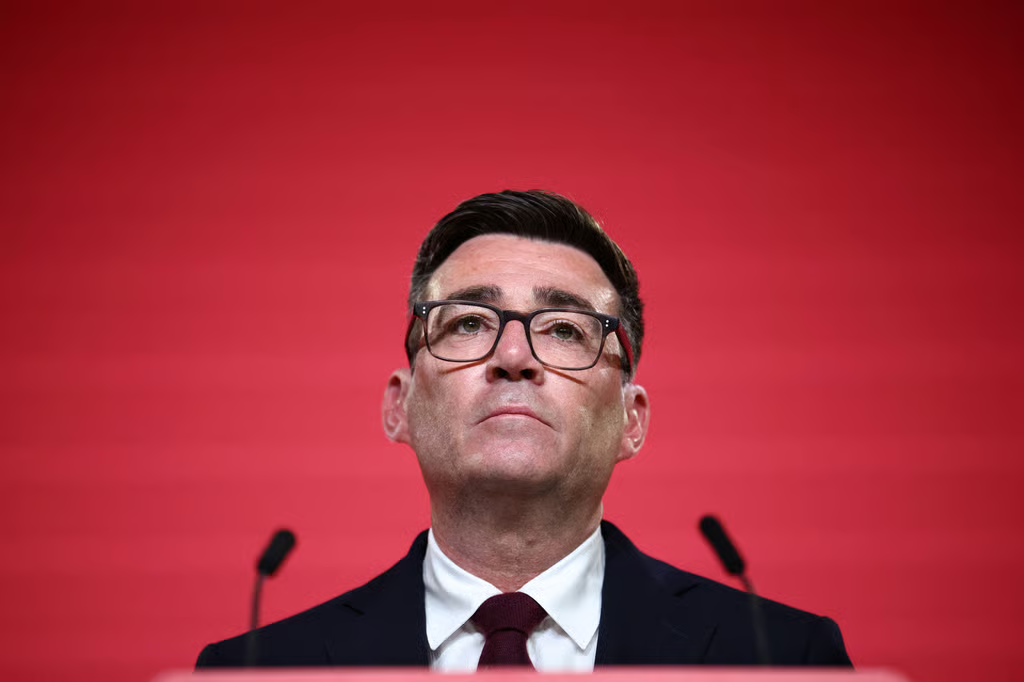
Andy Burnham has officially become the new leader of the UK Labour Party, marking a dramatic turning point in British politics. Following the resignation of Keir Starmer, Burnham secured overwhelming backing from Labour MPs and now prepares to become the United Kingdom’s next Prime Minister. In his first speech as Labour leader, Burnham promised to “give people hope back” and rebuild trust in politics after years of political instability and economic challenges.
His appointment comes at a critical moment for Britain. The country continues to face rising living costs, pressure on public services, sluggish economic growth, and growing political competition. Burnham’s leadership signals Labour’s attempt to reconnect with voters while presenting a fresh vision focused on unity, regional investment, and economic renewal.
Who Is Andy Burnham?
Andy Burnham is one of Britain’s most recognizable Labour politicians. Born on January 7, 1970, in Merseyside, he first entered Parliament in 2001 as the Member of Parliament for Leigh. Throughout his parliamentary career, he held several senior Cabinet positions under previous Labour governments, including Health Secretary and Culture Secretary.
After narrowly losing previous Labour leadership contests, Burnham shifted his focus to local government and became the Mayor of Greater Manchester in 2017. During his time as mayor, he earned national attention for defending local communities during the COVID-19 pandemic and campaigning for greater regional powers.
His reputation as a practical leader with strong regional support helped position him as the natural successor after Labour’s leadership crisis.
How Andy Burnham Became Labour Leader
Burnham’s rise to the leadership was remarkably swift. Following growing internal dissatisfaction that led to Keir Starmer’s resignation, Labour MPs overwhelmingly rallied behind Burnham.
He secured nominations from nearly all Labour Members of Parliament, effectively making the leadership contest uncontested. The formal declaration at the Labour conference confirmed what many political observers had expected for days.
His victory demonstrates broad support across different wings of the Labour Party, although maintaining that unity will remain one of his biggest challenges.
Burnham’s Message: Restoring Hope
The central theme of Burnham’s first leadership speech was hope.
He repeatedly emphasized that millions of Britons feel ignored by Westminster politics and promised to rebuild confidence in government.
Among his key messages were:
- Returning power to local communities
- Ending divisions within the Labour Party
- Supporting economic growth across every region
- Improving public services
- Delivering practical solutions rather than political conflict
One of his most memorable statements was his promise to serve “people and places who have been waiting too long for politics to let them hope again.” (AP News)
Focus on Regional Development
One of Burnham’s defining political priorities has always been devolution.
As Mayor of Greater Manchester, he consistently argued that too much political and economic power remains concentrated in London.
Now as Labour leader, he intends to expand local decision-making by:
- Giving more authority to regional governments
- Increasing local transport investment
- Supporting regional business growth
- Allowing communities greater control over housing and infrastructure
His approach aims to reduce economic inequality between London and other parts of Britain.
Economic Priorities
Britain’s economy remains one of Burnham’s biggest challenges.
High inflation, pressure on household budgets, slow economic growth, and public spending concerns continue to dominate political debate.
Burnham has promised a balanced approach that combines support for business with stronger public investment.
His economic priorities include:
- Encouraging private investment
- Supporting British manufacturing
- Expanding infrastructure projects
- Improving workforce skills
- Creating higher-paying jobs across the country
He has also emphasized that Labour can be both pro-business and committed to social fairness.
NHS and Social Care Reform
Healthcare has always been central to Burnham’s political career.
Having previously served as Health Secretary, he has repeatedly called for major reforms to both the National Health Service (NHS) and adult social care.
His proposals include:
- Reducing NHS waiting times
- Recruiting additional healthcare workers
- Reforming social care funding
- Improving mental health services
- Strengthening cooperation between hospitals and local services
Many analysts believe healthcare policy will become one of the defining issues of his premiership.
Housing and Infrastructure
Burnham also pledged to address Britain’s housing shortage.
His plans include increasing affordable housing construction while expanding council housing to help families struggling with rising housing costs.
Infrastructure improvements—including transport, digital connectivity, and local regeneration—are expected to form another major part of Labour’s agenda.
Party Unity
One of Burnham’s immediate priorities is ending years of Labour infighting.
Internal divisions have frequently weakened the party in recent years, with disagreements between moderate and left-wing factions.
Burnham acknowledged these tensions during his leadership speech and called for a united Labour movement focused on governing rather than internal disputes.
He argued that political unity is essential if Labour hopes to rebuild public confidence.
Challenges Ahead
Although Burnham begins with strong support inside Labour, significant obstacles remain.
His government will face:
- Persistent inflation
- Pressure on public finances
- NHS waiting lists
- Housing affordability
- Immigration debates
- International economic uncertainty
Political competition is also intensifying, particularly from Reform UK, which has attracted growing support in several parts of England.
Burnham must demonstrate that Labour can deliver tangible improvements rather than simply offering new rhetoric.
Political Reaction
Labour supporters have largely welcomed Burnham’s leadership, praising his communication skills and experience in regional government.
Trade unions also expressed cautious optimism while calling for concrete policy action rather than promises alone. (The Guardian)
Meanwhile, opposition parties questioned whether Burnham has presented enough detailed policy proposals.
Critics argue that while his speeches emphasize optimism and unity, voters will expect clear plans on taxation, economic growth, immigration, and public spending.
What Happens Next?
Keir Starmer is expected to formally resign as Prime Minister before King Charles III invites Burnham to form a new government.
Burnham is then expected to announce his Cabinet and begin implementing Labour’s new policy agenda.
Political observers will closely watch:
- Cabinet appointments
- Economic policy announcements
- NHS reform plans
- Regional investment proposals
- Housing initiatives
- Relations with business leaders
The first few months of his leadership could determine whether Labour successfully regains public confidence.
Conclusion
Andy Burnham’s election as Labour leader represents one of the most significant developments in British politics in recent years. After years of serving both in Parliament and as Mayor of Greater Manchester, he now has the opportunity to lead the country during a period of considerable economic and political uncertainty.
His promise to restore hope, strengthen regional communities, improve public services, and unite Labour reflects an ambitious vision for Britain’s future. Whether that vision translates into lasting political success will depend on his ability to deliver practical results on the issues that matter most to voters.
With the transition of power now underway, Britain enters a new political chapter under Andy Burnham’s leadership—one that could reshape both the Labour Party and the country’s direction for years to come. (AP News)
Want to learn more about the senior DHS official at the center of recent Homeland Security developments? Read our detailed profile on Troy Edgar: Bio, Wife, Ambassador, Net Worth, DHS to explore his career, personal life, government service, and growing influence within the Department of Homeland Security.