
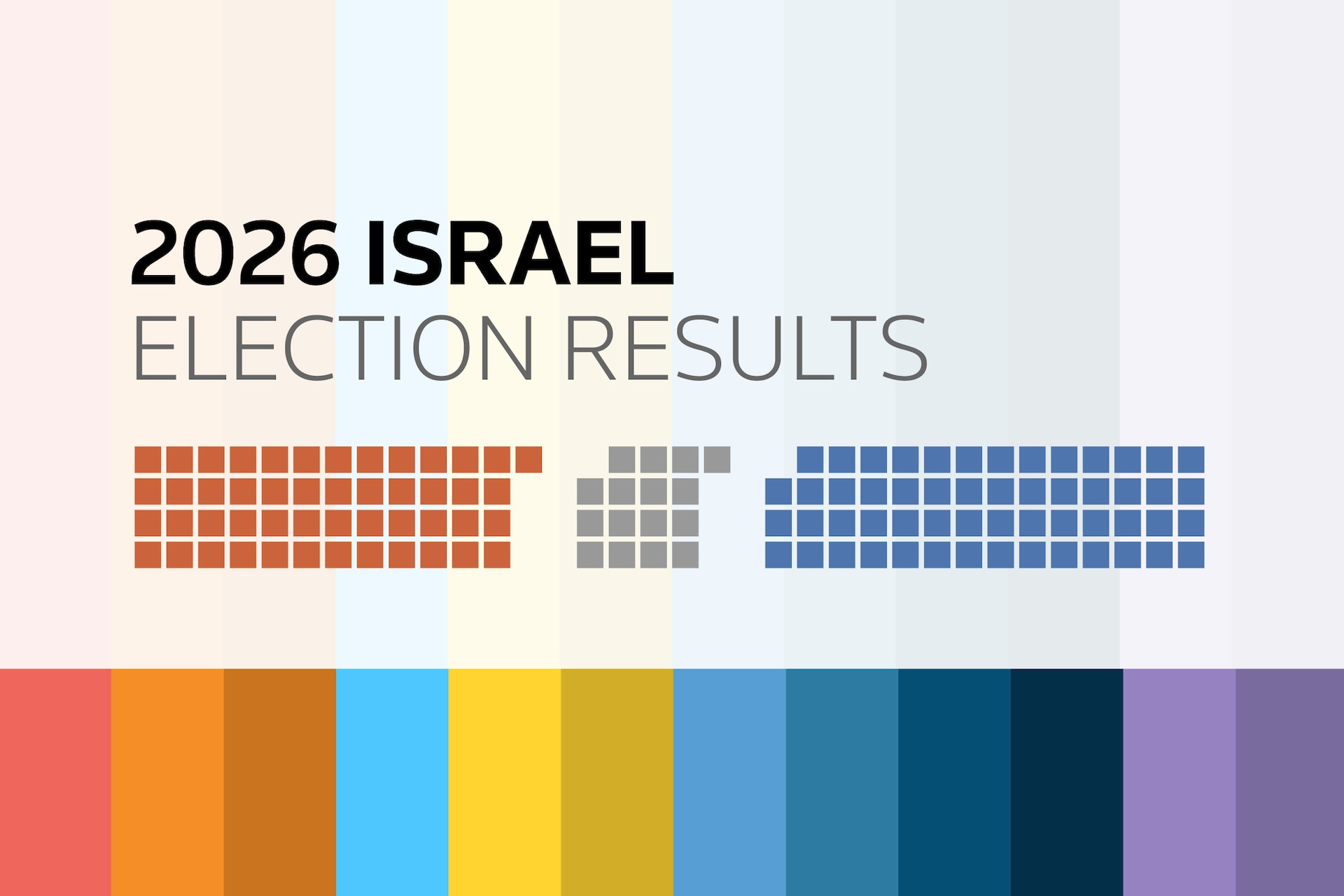
Israel’s October 27, 2026, general election has emerged as a major test for Prime Minister Benjamin Netanyahu, with opposition leader Gadi Eisenkot challenging his grip on power. Record voter turnout, close pre-election polls and growing public debate over security and political accountability have made the Israeli election one of the country’s most consequential political contests in years.
According to the election-day updates provided by CNN and The New York Times, 55.7% of eligible voters had cast ballots by 4 p.m. local time, marking the highest turnout recorded at that hour since the Central Elections Committee began tracking election-day figures in 1973.
However, the latest available information does not establish a final winner. With neither major political bloc projected to secure a clear parliamentary majority, the Israel election results could lead to complicated coalition negotiations before the next government takes shape.
Israel Election Results 2026: Latest Updates
Here are the key developments from the Israeli elections 2026 based on the supplied reports.
-
Election date: October 27, 2026.
-
Main candidates: Prime Minister Benjamin Netanyahu and opposition challenger Gadi Eisenkot.
-
Voter turnout: 55.7% by 4 p.m. local time, according to the Central Elections Committee figures reported by CNN and The New York Times.
-
Total eligible voters: Approximately 7.3 million.
-
Parliament: Israel’s Knesset has 120 seats.
-
Majority needed: At least 61 seats to secure a parliamentary majority.
-
Polling station closing time: 10 p.m. in Israel, according to the supplied election coverage.
-
Election outcome: No confirmed final result is established in the information available here.
The central question is whether Netanyahu’s right-wing and religious coalition can retain enough parliamentary support to form another government or whether Eisenkot and his allies can build an alternative governing bloc.
Israeli Elections 2026: Netanyahu vs. Gadi Eisenkot
The election has largely revolved around Netanyahu’s leadership and whether voters want a change in Israel’s political direction.

Benjamin Netanyahu
Netanyahu, leader of the Likud party, is seeking to preserve his governing coalition after years marked by war, domestic political divisions and criticism over the security failures surrounding the October 7, 2023, Hamas-led attacks.
His supporters point to his experience and security policies, while critics have called for greater accountability and a change in leadership.

Gadi Eisenkot
Eisenkot, a former chief of staff of the Israel Defense Forces and leader of the Yashar party, has emerged as a leading challenger. His opposition bloc brings together right-wing, centrist and left-wing political forces.
His path to power depends on winning sufficient parliamentary support and potentially securing backing from Arab parties.
Other important figures include former prime minister Naftali Bennett, opposition politician Yair Lapid, National Security Minister Itamar Ben-Gvir and Finance Minister Bezalel Smotrich. Their parties and parliamentary support could influence the negotiations that follow the vote.
Israel Election Polls: What Did the Final Surveys Show?
The final Israel election polls published before election day indicated that Netanyahu’s coalition was struggling to reach the 61 seats required for a majority.
According to the polling figures in the supplied CNN report, the projections differed slightly between broadcasters.
|
Polling organization |
Netanyahu’s bloc |
Eisenkot’s bloc |
Arab parties |
|---|---|---|---|
|
Channel 13 |
50 seats |
54 seats |
16 seats |
|
Channel 12 |
50 seats |
56 seats |
14 seats |
|
Kan 11 |
50 seats |
52 seats |
14 seats |
These are pre-election projections reported in the supplied material, not official Israeli election results.
Channel 14 presented a contrasting picture, projecting that Netanyahu’s coalition could win 62 seats. That forecast stood apart from the other major polls cited in the report.
The differences underline why voters and political observers are waiting for actual vote counts rather than relying on surveys alone. Polls estimate voter preferences, while the official results determine the distribution of parliamentary seats.
Why Arab Voters Could Influence the Israel Election Results
Arab citizens of Israel could play a decisive role in determining which political bloc can form the next government.
The supplied reports indicate that turnout was particularly strong in several Arab-majority communities. At 4 p.m., national turnout had already reached 55.7%, while Rahat and other communities were reporting substantial participation earlier in the day.
The two major Arab political forces highlighted in the coverage are Mansour Abbas’s Raam party and the Joint List. Their parliamentary representation could become important if neither Netanyahu’s coalition nor Eisenkot’s bloc reaches a majority independently.
Even if a party does not formally join a governing coalition, it may influence government formation by providing parliamentary support from outside the coalition. That possibility makes the final seat distribution especially important.
Higher turnout can also affect smaller parties. Israel’s electoral threshold is 3.25%, meaning parties must receive enough votes to qualify for parliamentary representation.
Is the Israeli Election a Referendum on Netanyahu?
For many voters, the Israeli election has become a referendum on Netanyahu’s leadership and his government’s record since the October 7 attacks.
Security remains a central issue, alongside questions about responsibility for the attacks, the handling of the war and the future direction of the country. Families of victims and former hostages have used election day to call for accountability and a formal investigation into the security failures.
Other voters continue to support Netanyahu, citing his experience and approach to national security. The campaign has therefore highlighted a deep division over whether his leadership provides stability or whether a change in government is necessary.
The economy and the cost of living have also featured prominently. Military service requirements for ultra-Orthodox Jewish communities, relations between Jewish and Arab citizens, and Israel’s international standing are additional issues influencing voters.
The result could shape the country’s domestic policies and its approach to regional security for years to come.
What Time Is It in Israel? Election Day Schedule
For readers following the count from abroad, knowing the local time in Israel helps put the election updates into context.
Israel uses Israel Standard Time (UTC+2) during standard time and Israel Daylight Time (UTC+3) during daylight saving time. On October 27, 2026, Israel is observing daylight saving time, so the local time is UTC+3.
|
Election detail |
Time or date |
|---|---|
|
Election date |
October 27, 2026 |
|
Polling station closing time |
10 p.m. Israel time |
|
Corresponding Eastern Time |
3 p.m. EDT |
|
Reported turnout milestone |
4 p.m. Israel time |
|
Turnout at 4 p.m. |
55.7% |
What time is it in Israel right now? The exact current time changes continuously. On the election date covered here, Jerusalem and Tel Aviv are operating on UTC+3. The supplied New York Times live report displayed 6:52 p.m. in Jerusalem at the time of its update.
Readers in the United States should note that Israel is seven hours ahead of Eastern Daylight Time on this date. The supplied CNN report lists the scheduled closing time as 10 p.m. local time, equivalent to 3 p.m. EDT.
Where Do I Vote in Israel?
People eligible to vote in Israel can check their assigned polling station through the country’s official election authorities.
If you are searching for “where do I vote,” use the Central Elections Committee’s official information and voter services to verify your assigned location and applicable voting instructions. Polling stations are assigned according to voter registration details, so voters should confirm their own information rather than rely on a general list of locations.
The election-day coverage also reported long lines at some polling places. Election officials said people already waiting in line at the scheduled closing time would be allowed to cast their ballots, according to the supplied report.
Israel generally does not permit most citizens living overseas to vote absentee in national elections. The reports said that some eligible Israelis had travelled back to the country to participate in the election.
When Will the Israel Election Results Be Announced?
The Israel elections results date is October 27, 2026, the day voters cast their ballots. However, election day is not necessarily the date when the final parliamentary outcome becomes clear.
Initial projections may emerge after polling stations close, but exit polls and preliminary estimates are not the same as certified results. Election officials must count the ballots and determine how votes translate into seats in the Knesset.
The final outcome could also depend on smaller parties that narrowly cross or fall below the electoral threshold. Even after the seat distribution becomes clear, negotiations between political parties may take days or weeks.
As of the supplied reports, there was no confirmed final result identifying who would become Israel’s next prime minister.
For continuing Israel news, readers can follow updates from the Central Elections Committee and established news outlets, including CNN, The New York Times and The Jerusalem Post.
What Happens If Neither Netanyahu nor Eisenkot Wins a Majority?
Israel’s parliamentary system makes coalition-building essential. The Knesset has 120 members, and a government needs the support of at least 61 lawmakers to command a majority.
If Netanyahu’s bloc falls short, he could attempt to negotiate with other parties to secure enough support to remain prime minister. Eisenkot could pursue a similar strategy if his bloc wins more seats but cannot reach the majority threshold independently.
The opposition’s ideological differences could complicate negotiations. Parties may agree on replacing Netanyahu but disagree over security policy, religious exemptions from military service, the occupied West Bank and relations with Arab parties.
A third possibility is a prolonged political deadlock if neither side can assemble a workable coalition. In that situation, negotiations could continue for weeks or months, depending on the results and the willingness of party leaders to compromise.
Consequently, the largest party does not automatically determine who becomes prime minister. The ability to assemble a parliamentary majority is the decisive factor.
Israel Election Results 2026: What to Watch Next
The main developments to monitor as the count progresses are:
-
The official seat totals for Likud and Eisenkot’s Yashar party.
-
Whether Netanyahu’s coalition can reach the 61-seat majority.
-
How many seats the Arab parties secure.
-
Whether smaller parties cross the 3.25% electoral threshold.
-
Whether Bennett, Lapid and other political leaders support a coalition agreement.
-
How quickly the Central Elections Committee publishes verified results.
The record turnout demonstrates the significance of this election for many Israelis. But turnout alone does not determine the winner, and early projections should not be mistaken for a final result.
The bottom line: The Israeli election on October 27, 2026, is a major test of Benjamin Netanyahu’s political future. Gadi Eisenkot and other opposition figures are seeking a path to government, while pre-election polls suggest that coalition negotiations could prove decisive. The final Israel election results and the distribution of Knesset seats will determine who has the strongest chance of forming the next government.