
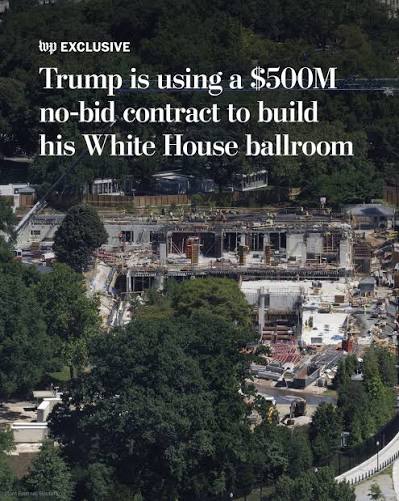
The East Wing ballroom executive residence contract has become one of the most talked-about political stories in Washington after a Washington Post investigation alleged that the White House awarded a confidential, no-bid construction contract worth up to $500 million for a major renovation project. The report has sparked debate over transparency, government procurement rules, taxpayer funding, and presidential authority.
The controversy centers on the construction of a new ballroom on the White House grounds, a long-standing goal of President Donald Trump. While the administration argues the project is legal and necessary, critics question why the contract bypassed the traditional competitive bidding process that typically applies to large federal projects.
What Is the East Wing Ballroom Executive Residence Contract?
According to a Washington Post investigation, White House officials awarded a no-bid contract valued at up to $500 million to Virginia-based Clark Construction for the East Wing ballroom project.
Instead of using the standard federal procurement process, the agreement was reportedly handled through the Executive Residence, an office responsible for maintaining and operating the White House residence. Because this office is exempt from many federal contracting rules, it can issue contracts without following the competitive bidding requirements that apply to most federal agencies.
This unusual contracting process has become the central focus of the ongoing political debate.
Why Is the Contract Controversial?
Government agencies usually award large construction projects through competitive bidding to encourage fair pricing and transparency.
However, according to the Washington Post, the Executive Residence used its legal exemption to award the ballroom project directly to Clark Construction.
Procurement experts quoted in the report argued that competitive bidding generally helps taxpayers receive the best value while preventing favoritism.
The White House, however, maintains that using the Executive Residence was entirely lawful because the office will oversee the completed facility.
Donald Trump’s Reported Role
Another major aspect of the Washington Post investigation involves President Donald Trump’s direct participation.
According to documents reviewed by the newspaper, Trump personally negotiated several project costs, including discussions involving construction materials such as concrete.
The report states that presidential negotiations helped reduce one concrete estimate by several million dollars during discussions with contractors.
Supporters argue this demonstrates active cost management, while critics believe presidential involvement in contractor negotiations raises additional questions about oversight.
Who Received the Contract?
The contract was reportedly awarded to Clark Construction, one of the largest construction firms in the Washington metropolitan area.
Clark Construction has decades of experience working on federal projects and previously held a competitively awarded maintenance contract for the White House during the Biden administration.
The Washington Post reported that the ballroom agreement is separate from that earlier contract and specifically covers demolition, construction, and modernization work associated with the East Wing redevelopment.
The company has stated that it follows all applicable procurement and contracting requirements.
Why Was the Executive Residence Used?
The Executive Residence is a division within the Executive Office of the President responsible for managing daily operations inside the White House residence.
Its responsibilities typically include:
- Building maintenance
- Interior renovations
- Historic preservation
- Official events
- Furnishings and artwork
Because of its unique legal status, the office is exempt from several procurement laws that apply to executive agencies.
The Washington Post reported that this exemption allowed the administration to award the ballroom contract without issuing a public request for proposals.
The Planned East Wing Ballroom
The ballroom project represents one of the largest physical changes to the White House complex in decades.
According to administration plans, the new ballroom will:
- Replace portions of the existing East Wing.
- Provide significantly greater event capacity.
- Improve security for large state functions.
- Reduce the need for temporary outdoor event tents.
- Modernize facilities used during official ceremonies.
President Trump has advocated building a permanent ballroom for years, arguing that current White House facilities cannot adequately accommodate major diplomatic events.
Questions About Funding
Funding has become another major point of controversy.
When the project was first announced, Trump indicated that wealthy private donors would finance the ballroom.
However, subsequent reporting suggested that taxpayer funds could ultimately support portions of the project, particularly security improvements connected to the new facility.
According to Reuters, the administration later requested congressional funding for security-related costs, although Senate Republicans reportedly declined that request.
Separate reports have also suggested that total construction costs may continue increasing beyond earlier estimates.
Legal Debate Over Competitive Bidding
Federal contracting experts note that competitive bidding is generally intended to:
- Increase transparency
- Prevent waste
- Encourage competition
- Reduce project costs
- Protect taxpayer interests
The Washington Post reported that experts believe agencies like the General Services Administration (GSA) or National Park Service would normally oversee projects of this size.
The White House argues that the Executive Residence has legal authority to manage projects involving the presidential residence.
White House Response
Administration officials have defended the contracting process.
According to statements cited in multiple reports, officials argue:
- The Executive Residence legally issued the contract.
- The project follows applicable law.
- National security considerations support the contracting approach.
- The new ballroom will better serve future presidential administrations.
Officials also note that presidential authority over the White House residence differs from ordinary federal construction projects.
Critics Raise Transparency Concerns
Watchdog organizations and some lawmakers remain skeptical.
Their concerns include:
- Lack of public competition.
- Confidential contract details.
- Increasing project costs.
- Possible taxpayer funding.
- Limited public oversight.
Some legal experts argue that even if the contracting process technically complies with existing law, a project of this magnitude should have included broader public review.
Construction Timeline
Construction planning has been underway since 2025.
Reports indicate that:
- Initial planning began after the ballroom announcement.
- Portions of the East Wing have already been demolished.
- Clark Construction has continued preliminary site work.
- Additional construction phases remain ongoing.
The final completion timeline depends on construction progress and ongoing legal challenges.
Why This Story Matters
The East Wing ballroom executive residence contract extends beyond a single construction project.
It raises broader questions about:
- Presidential authority
- Government procurement practices
- Transparency in federal spending
- Executive branch oversight
- Use of taxpayer resources
Whether the administration acted appropriately will likely remain a topic of debate as investigations, legal proceedings, and congressional scrutiny continue.
Conclusion
The East Wing ballroom executive residence contract has become a major political controversy after the Washington Post reported that the White House used the Executive Residence to award a confidential no-bid contract worth up to $500 million for the construction of a new ballroom.
Supporters argue the arrangement is legal under existing authority governing the Executive Residence and allows the administration to move quickly on an important modernization project. Critics counter that bypassing competitive bidding reduces transparency and raises questions about accountability, particularly as project costs continue to grow.
With construction continuing and legal challenges still unfolding, the East Wing ballroom project is likely to remain one of the most closely watched White House infrastructure stories in the months ahead.