Introduction
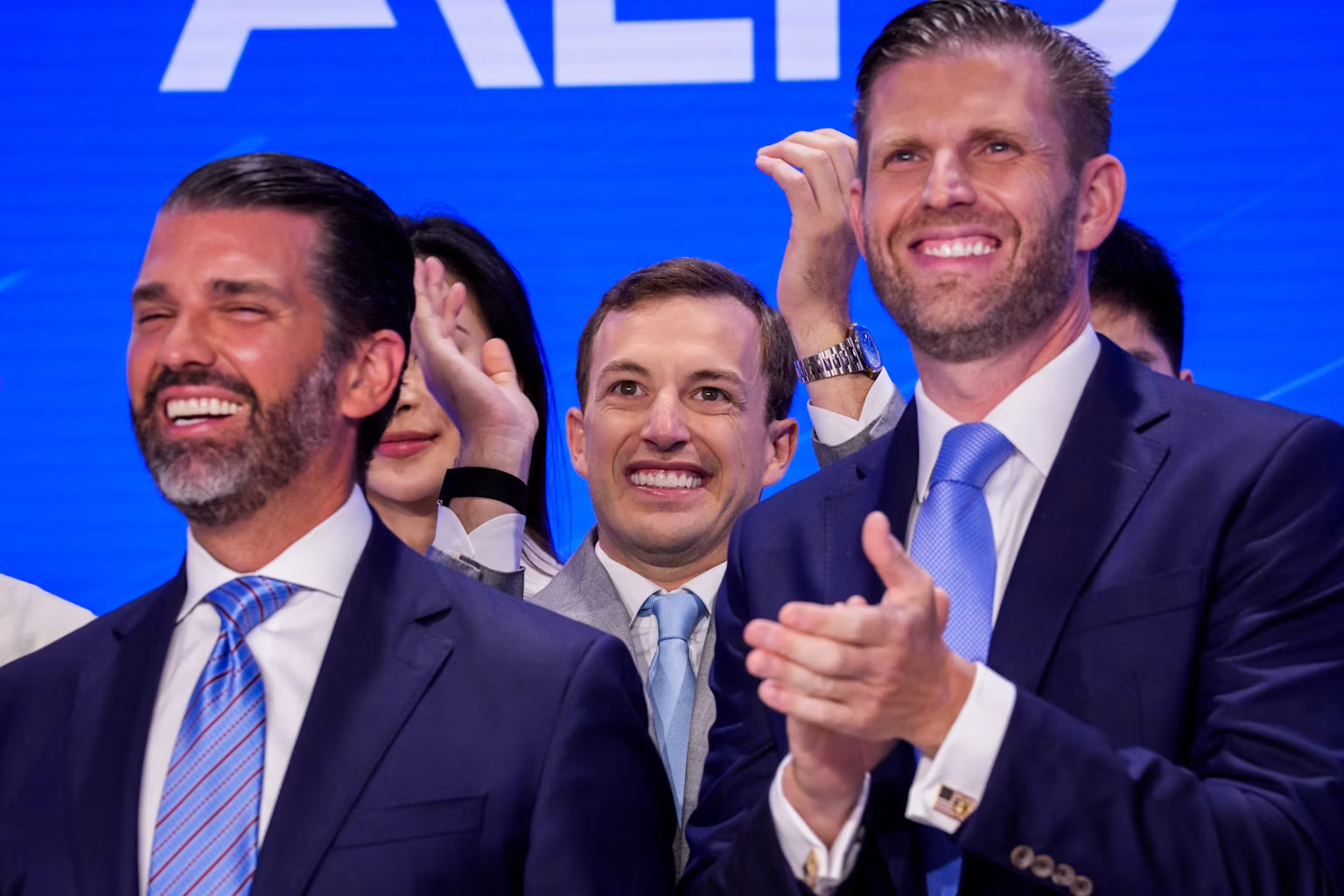
Donald Trump Jr. and Eric Trump are facing growing scrutiny after reports revealed that companies in which they have invested have secured billions of dollars in Pentagon contracts during President Donald Trump’s second administration. While there is no evidence that either son directly awarded or influenced these contracts, the timing and scale of the investments have sparked a heated political debate over ethics, transparency, and potential conflicts of interest.
The issue has become one of the most discussed political and business stories in Washington, with lawmakers, watchdog organizations, and ethics experts questioning whether close family ties to the president create an unfair advantage for private investors.
Here’s everything we know so far.
Why Are Trump’s Sons in the Spotlight?
According to recent reporting, Donald Trump Jr. and Eric Trump have invested in more than a dozen defense technology companies that have collectively received over $3.2 billion in Defense Department contracts since Donald Trump returned to the White House. Those same companies have reportedly secured another $3.1 billion in potential future awards while also becoming eligible to compete for contracts worth as much as $200 billion over the coming years.
Although the companies won the contracts through federal procurement processes, critics argue that the investments create the appearance of a conflict of interest because the president oversees the executive branch responsible for defense spending.
How Are They Investing?
Rather than investing personally in every company, the Trump brothers have used investment firms connected to their business activities.
Donald Trump Jr. has been associated with 1789 Capital, an investment firm focused on companies operating in sectors such as defense, manufacturing, artificial intelligence, and national security.
Eric Trump has invested through ventures connected to American Ventures and business partnerships operating from Trump Tower.
Many of these investments were reportedly made after President Trump began his second term, increasing public attention over the relationship between private investment and federal spending.
Which Companies Are Involved?
Reports indicate that many investments have focused on rapidly growing defense technology firms developing products such as:
- Military drones
- Artificial intelligence software
- Robotics
- Autonomous defense systems
- Satellite technology
- Space security platforms
- Missile defense technologies
Among the most notable companies mentioned are SpaceX and Anduril Industries, both of which have become major Pentagon contractors while expanding work on next-generation military technology. These firms have won significant government contracts because of their capabilities in aerospace, satellite communications, autonomous systems, and national defense modernization.
Several smaller startups backed by Trump-related investors have also received Pentagon funding for emerging defense technologies.
Why Is Defense Spending Increasing?
The contracts come during a period of major expansion in U.S. defense spending.
The Trump administration has emphasized:
- Modernizing the U.S. military
- Expanding missile defense programs
- Investing in artificial intelligence
- Increasing drone production
- Strengthening cybersecurity
- Building advanced space-based defense systems
Programs such as the proposed Golden Dome missile defense initiative are expected to generate substantial opportunities for defense contractors over the next decade.
As a result, venture capital firms and institutional investors have poured billions into defense technology startups.
Are the Contracts Illegal?
At this stage, there is no public evidence that any laws were broken.
Federal procurement rules require contracts to follow competitive bidding procedures and established acquisition regulations. The companies involved maintain that they earned their contracts based on technical capabilities, innovation, and competitive proposals rather than political connections.
However, ethics experts note that even if every contract followed legal procedures, investments by immediate family members of a sitting president can raise questions about public confidence in government decision-making.
Political Criticism
Congressional Democrats have requested investigations into several contracts involving companies connected to Trump’s sons.
Some lawmakers have argued that additional oversight is necessary to determine whether political influence affected procurement decisions or investment timing. Official letters sent to inspectors general have asked for reviews of specific Defense Department awards involving companies associated with Donald Trump Jr. and Eric Trump.
Critics argue that stronger safeguards are needed whenever close relatives of elected officials invest in industries heavily dependent on federal contracts.
White House Response
The White House has rejected accusations of wrongdoing.
Administration officials have stated that the president is not involved in selecting individual contractors and that procurement decisions are made by career officials within the Department of Defense.
Supporters of the administration argue that defense startups should not be excluded from federal contracts simply because private investors include members of the president’s family.
The Trump brothers have also described their investment strategy as supporting American innovation and national security through what they call “patriotic capitalism.”
Ethics Experts Remain Divided
Legal experts generally separate the issue into two questions:
Legal question: Did the companies receive contracts through lawful procurement procedures?
Ethics question: Should immediate family members of a sitting president invest in industries that receive substantial federal funding?
Many government ethics specialists argue that public officials and their families should avoid investments that create even the appearance of benefiting from presidential policies.
Others counter that private investment firms routinely invest in sectors experiencing government growth and that family members who are not government employees remain free to conduct lawful business activities.
Impact on the Defense Industry
Regardless of the political controversy, one trend is clear: defense technology has become one of America’s fastest-growing investment sectors.
Rapid advances in:
- Artificial intelligence
- Autonomous weapons
- Space technology
- Cybersecurity
- Drone manufacturing
- Robotics
have attracted billions in venture capital funding.
Large defense contractors increasingly partner with innovative startups, while the Pentagon seeks faster procurement processes to compete with emerging global military technologies.
Could More Investigations Follow?
Several congressional committees and government watchdogs are expected to continue reviewing defense procurement practices involving politically connected investors.
Future investigations could examine:
- Investment timelines
- Procurement processes
- Federal ethics compliance
- Disclosure requirements
- Potential conflicts of interest
Whether those reviews uncover evidence of misconduct remains uncertain.
Final Thoughts
The growing investments made by Donald Trump Jr. and Eric Trump in defense technology companies have intensified debate over ethics, government contracting, and presidential family business interests.
Supporters argue the companies are winning contracts because they develop cutting-edge technologies essential to U.S. national security. Critics believe the close relationship between the investors and the president creates unavoidable questions about transparency and public trust.
At present, no official investigation has concluded that the contracts were awarded improperly. Nevertheless, as defense spending continues to rise, scrutiny of politically connected investments is likely to remain a major issue in Washington.
The story illustrates the increasingly blurred lines between politics, private investment, and America’s rapidly expanding defense technology sector—an issue that will likely continue attracting attention in the months ahead.