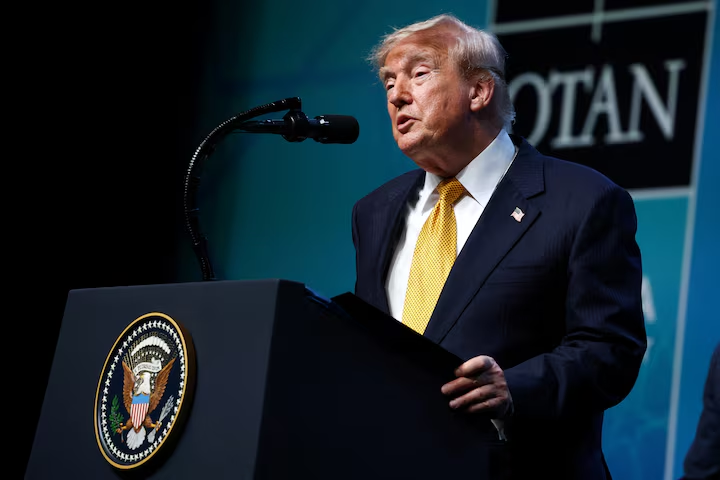
The Judge Williams Trump settlement ruling has become a major legal development involving former President Donald Trump, the Internal Revenue Service (IRS), and questions about the use of the federal court system. U.S. District Judge Kathleen Williams ruled that a controversial settlement connected to Trump’s lawsuit against the IRS could not stand, finding serious concerns about the purpose and structure of the agreement.
The decision has attracted national attention because it involved a lawsuit filed by Trump against a federal agency under his own administration. The ruling has raised broader discussions about government accountability, presidential conflicts of interest, and the limits of settlement agreements in federal courts.
Background of Trump’s IRS Lawsuit
The legal dispute began after the unauthorized disclosure of Trump’s tax records by a former IRS contractor. Trump filed a lawsuit seeking billions of dollars in damages, arguing that the government failed to protect his confidential financial information.
The lawsuit involved claims against the IRS over the handling of his tax information. However, the case later became controversial after Trump and the Justice Department reached a settlement agreement that included significant financial and legal provisions.
The proposed settlement included the creation of a large compensation fund described by supporters as a way to help victims of alleged government overreach. Critics argued that the agreement raised concerns because of its connection to Trump and his political allies.
What Did Judge Kathleen Williams Rule?
In the Judge Williams Trump settlement ruling, the federal judge rejected the legitimacy of the settlement and determined that the agreement could not be used as a valid legal resolution.
Judge Williams concluded that the lawsuit did not represent a traditional dispute between opposing parties. She argued that the circumstances surrounding the case raised concerns because Trump, as president, had influence over the government officials involved in the settlement discussions.
According to the ruling, the court process was improperly used to provide legal support for an agreement that offered benefits to Trump and related interests. The judge also stated that the settlement could not be cited in future legal or administrative proceedings.
Why the Settlement Became Controversial
The agreement faced criticism because it involved several unusual elements. One major issue was the proposed creation of a nearly $1.8 billion fund connected to claims of government “weaponization.” Critics questioned whether such a fund had a proper legal basis and whether taxpayer money could be used in this manner.
Another major concern was the relationship between the parties involved. Federal lawsuits typically involve opposing sides presenting competing arguments before a judge. In this case, Judge Williams questioned whether the lawsuit involved a genuine legal conflict or whether the court was being asked to approve an agreement already reached by both sides.
Impact on Trump and His Legal Team
The ruling creates additional legal challenges for Trump’s attorneys and officials involved in negotiating the settlement. Judge Williams referred certain attorneys and Justice Department officials for possible disciplinary review over concerns about professional conduct. (Reuters)
The referral does not automatically mean that lawyers will face punishment. Instead, it allows professional organizations to review whether ethical rules were violated.
For Trump, the ruling removes the protections and benefits that supporters said were provided through the settlement. The decision may also influence future legal disputes involving presidential authority and government agencies.
Constitutional and Legal Questions Raised
The Judge Williams Trump settlement ruling has highlighted important constitutional questions about the separation between personal interests and government authority.
Legal experts have focused on whether a president can pursue a lawsuit against an agency controlled by the executive branch and then reach a settlement involving government resources.
The case also raises questions about the responsibility of courts to examine settlements carefully, especially when one party has significant influence over the other.
Federal judges generally have authority to ensure that legal proceedings are conducted fairly and that agreements are not used to bypass normal judicial requirements.
Political Reactions and Public Debate
The ruling has triggered strong reactions from both supporters and critics of Trump.
Supporters argue that Trump had legitimate concerns regarding the handling of his private tax information and that the lawsuit represented an effort to hold government agencies accountable.
Critics say the settlement process created an unusual situation where government power and personal interests became closely connected. They argue that the ruling demonstrates the importance of judicial oversight.
The decision is expected to remain part of broader debates about executive power, government transparency, and legal ethics.
What Happens Next?
Following Judge Williams’ decision, the future of related legal actions remains uncertain. The ruling may lead to additional reviews of attorney conduct and could influence how similar government settlements are handled in the future.
The case also serves as a reminder that federal courts have the authority to examine whether agreements comply with legal standards, even after parties attempt to resolve disputes through settlements.
As legal proceedings continue, the Judge Williams Trump settlement ruling is likely to remain a significant topic in discussions about presidential power, government accountability, and the role of the judiciary in reviewing executive actions.
Conclusion
The Judge Williams Trump settlement ruling represents a major legal setback for the controversial IRS settlement involving Donald Trump. Judge Kathleen Williams’ decision questioned the purpose of the lawsuit, rejected the settlement agreement, and raised concerns about attorney conduct.
Beyond the immediate impact on Trump’s legal position, the ruling highlights broader issues involving conflicts of interest, government authority, and the responsibility of courts to protect the integrity of the legal system.
As further reviews and possible appeals develop, the case will continue to attract attention as an important chapter in the ongoing debate over presidential power and federal accountability. (Reuters)
As Trump family-linked businesses continue to attract attention, questions about potential conflicts of interest and government contracts remain a major political debate. Learn more about Trump’s Sons Invest Heavily in Defense Tech and the Controversy Over Pentagon Deals.