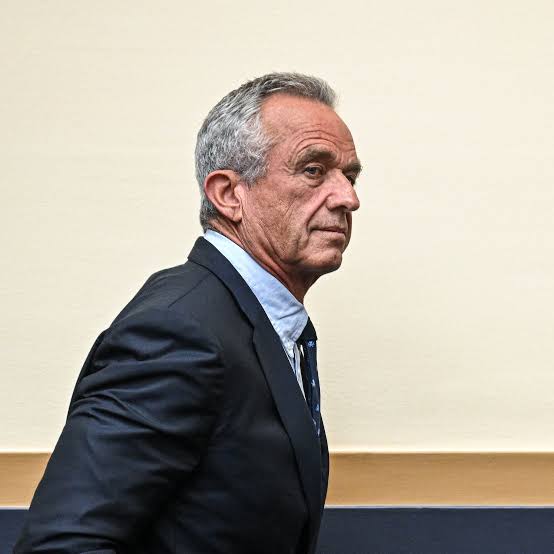
The RFK Jr. Hatch Act complaint has become a major topic in Washington after allegations surfaced that Health and Human Services (HHS) Secretary Robert F. Kennedy Jr. may have violated federal rules governing political activity by executive branch employees. The complaint has reignited debate over the limits of political engagement by government officials and whether the Hatch Act is being applied consistently across administrations.
As the controversy gains attention, legal experts, ethics watchdogs, and political observers are closely examining the facts behind the complaint, the potential consequences, and what it could mean for Kennedy’s future role in the Trump administration.
What Is the RFK Jr. Hatch Act Complaint?
The RFK Jr. Hatch Act complaint refers to a formal allegation submitted to the U.S. Office of Special Counsel (OSC), the independent federal agency responsible for enforcing the Hatch Act.
The complaint alleges that Robert F. Kennedy Jr., while serving as Secretary of Health and Human Services, engaged in political activities that may have violated restrictions placed on federal executive branch employees.
Although the exact allegations depend on the specific complaint filed, Hatch Act complaints generally involve claims that federal officials:
- Used their official position for political purposes.
- Participated in partisan political events while acting in an official capacity.
- Used government resources to influence elections.
- Mixed official government duties with campaign-related activities.
The Office of Special Counsel will determine whether sufficient evidence exists to warrant a formal investigation.
What Is the Hatch Act?
The Hatch Act is a federal law enacted in 1939 to ensure that government programs remain politically neutral and that federal employees do not use their official authority to influence elections.
The law generally prohibits most executive branch employees from:
- Using official authority to interfere with elections.
- Soliciting or receiving political contributions.
- Engaging in partisan political activity while on duty.
- Using government property or official titles for campaign purposes.
However, certain high-ranking officials—including Cabinet secretaries—have broader latitude for political speech, although they are still subject to important restrictions.
The law attempts to balance First Amendment rights with the need for a politically impartial federal workforce.
Why Was the Complaint Filed?
According to reports surrounding the controversy, ethics advocates argue that Kennedy may have crossed the line between official government responsibilities and political advocacy.
The complaint reportedly focuses on whether:
- Official government appearances included partisan messaging.
- Public statements were made in a way that benefited political campaigns.
- Government resources or staff were used during political activities.
- Official social media or communication channels promoted partisan interests.
Supporters of the complaint argue that public officials must strictly separate governing from campaigning.
Kennedy’s supporters, meanwhile, maintain that his comments fall within protected political expression and that Cabinet members often speak publicly about administration policies.
Who Investigates Hatch Act Violations?
The primary agency responsible for investigating Hatch Act violations is the U.S. Office of Special Counsel (OSC).
The OSC reviews complaints by:
- Gathering evidence.
- Reviewing official communications.
- Interviewing witnesses if necessary.
- Determining whether a violation occurred.
If the OSC concludes that the Hatch Act was violated, it may recommend disciplinary action.
For most federal employees, cases can proceed before the Merit Systems Protection Board (MSPB). Cabinet officials, however, are generally subject to different enforcement mechanisms because they serve at the pleasure of the President.
Possible Outcomes of the RFK Jr. Hatch Act Complaint
Several outcomes are possible depending on the findings of investigators.
No Violation Found
Investigators may conclude that Kennedy’s actions complied with federal law, ending the matter without penalties.
Warning or Advisory Opinion
If officials believe the conduct approached the legal boundary but did not constitute a serious violation, they could issue guidance or a warning.
Formal Finding of a Violation
Should investigators determine that Kennedy violated the Hatch Act, the Office of Special Counsel could publicly announce its findings and recommend corrective action.
Political Consequences
Even if legal penalties are limited, ethics investigations often carry political consequences. Public scrutiny, congressional oversight, and media attention can shape public perception regardless of the investigation’s outcome.
Why the Complaint Matters
The RFK Jr. Hatch Act complaint matters because it raises broader questions about ethics and accountability in government.
Both Republican and Democratic administrations have faced Hatch Act allegations over the years. Previous investigations involving senior officials have sparked debates over whether enforcement has been consistent across different political parties.
Ethics organizations argue that maintaining public trust requires equal application of the law regardless of political affiliation.
Supporters of administration officials often counter that Hatch Act complaints are increasingly being used as political tools rather than solely as ethics safeguards.
RFK Jr.’s Role in the Trump Administration
Since joining the Trump administration as Secretary of Health and Human Services, Robert F. Kennedy Jr. has remained one of the administration’s most closely watched Cabinet members.
Known for his outspoken views on public health, vaccine policy, food regulation, and environmental issues, Kennedy frequently appears in national media and at public events.
Because of his high public profile, questions about where official policy discussions end and political advocacy begins have attracted significant attention.
His supporters argue that public communication is an essential part of leading a federal department.
Critics respond that Cabinet officials must exercise extra caution to avoid even the appearance of using government authority for partisan purposes.
Historical Context
Hatch Act investigations are not uncommon.
Officials from multiple presidential administrations have faced complaints involving campaign appearances, political speeches, social media posts, and use of government property.
Many cases result in warnings rather than severe penalties, although some have led to public reports criticizing officials’ conduct.
The law continues to evolve as government communication increasingly occurs through social media platforms and digital channels.
Political Reactions
Reaction to the RFK Jr. Hatch Act complaint has largely fallen along political lines.
Supporters of Kennedy argue:
- The complaint is politically motivated.
- Cabinet officials routinely defend administration policies.
- No evidence has yet proven wrongdoing.
Critics argue:
- Federal ethics rules must be enforced consistently.
- High-ranking officials should be held to the highest standards.
- Independent review is necessary to preserve public confidence.
Congressional committees may also monitor developments depending on the findings of the Office of Special Counsel.
What Happens Next?
The next steps depend on the Office of Special Counsel’s review process.
Investigators may:
- Request documents.
- Review public statements.
- Examine official travel and communications.
- Seek additional information from the Department of Health and Human Services.
The investigation could conclude relatively quickly or take several months depending on the complexity of the allegations.
Until a formal determination is issued, the complaint itself does not establish that any violation occurred.
Conclusion
The RFK Jr. Hatch Act complaint highlights the continuing importance of ethics laws governing federal officials. While the allegations have generated significant political debate, the Office of Special Counsel will ultimately determine whether the facts support claims that Robert F. Kennedy Jr. violated the Hatch Act.
Regardless of the final outcome, the case underscores the challenges faced by high-profile executive branch officials who must balance public communication, policy advocacy, and political neutrality. As the review proceeds, the complaint is likely to remain a closely watched issue in both legal and political circles, with implications that extend beyond one Cabinet official to broader questions about accountability and ethical governance in the federal government.
For more insight into the growing divisions within the Republican Party and how internal disagreements are influencing legislative priorities, read our analysis on House Republican Conservative Rebellion: Why GOP Divisions Are Reshaping Congress in 2026. This article explores the key lawmakers, policy disputes, and the potential impact of the GOP’s internal conflict on Congress and the 2026 political landscape.