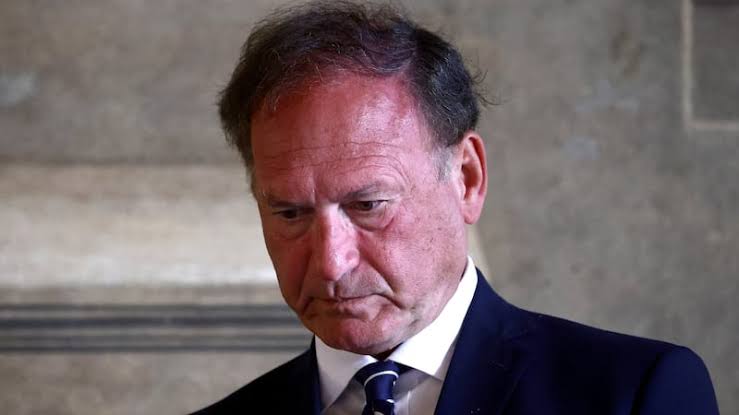
The Alito Sotomayor courtroom disagreement became one of the most talked-about moments of the U.S. Supreme Court’s 2026 term, highlighting the growing ideological divide between the Court’s conservative and liberal justices. What is normally a highly formal institution witnessed an unusually public exchange between Justice Samuel Alito and Justice Sonia Sotomayor after a major immigration ruling, drawing widespread attention from legal experts, lawmakers, and the public.
Beyond the dramatic courtroom moment, the disagreement reflects broader debates surrounding immigration, executive authority, constitutional interpretation, and the future direction of the Supreme Court. At the same time, several other national stories—including the trump administration tps cancellation, supreme court tps litigation, Gregg Phillips, Anna Paulina Luna house blockade, the Lincoln Memorial Reflecting Pool, Monsanto, homeless veterans in the US, and Robert F. Kennedy Jr.—continue shaping America’s political landscape.
What Happened During the Alito Sotomayor Courtroom Disagreement?
The dispute unfolded after the Supreme Court announced a closely watched immigration decision involving asylum seekers waiting outside U.S. borders. Justice Samuel Alito authored the majority opinion supporting the government’s authority in the case.
Justice Sonia Sotomayor responded by taking the unusual step of reading her lengthy dissent aloud from the bench. Reading a dissent is relatively rare and generally reserved for cases where a justice believes the Court has made a significant legal error.
In her remarks, Sotomayor argued that the ruling could have severe humanitarian consequences, warning that vulnerable migrants could face greater risks because of the decision.
Alito’s Unexpected Response
Following Sotomayor’s remarks, Justice Alito delivered an unusually sharp response from the bench.
According to courtroom reports, Alito remarked that had he known Sotomayor intended to read her full dissent, he would have added more comments to his own opinion. Observers described the exchange as an extraordinary departure from the Supreme Court’s traditionally restrained public demeanor, with some noting audible reactions inside the courtroom.
Legal analysts emphasized that disagreements between justices are common in written opinions, but direct exchanges during opinion announcements remain uncommon.
Why the Supreme Court Disagreement Matters
The disagreement was about far more than courtroom etiquette.
It reflected competing judicial philosophies:
- Conservative justices generally favor a more text-based interpretation of federal law.
- Liberal justices often place greater emphasis on practical consequences and constitutional protections.
- Immigration remains one of the Court’s most divisive issues.
- Public confidence in the Supreme Court continues to face scrutiny amid politically significant rulings.
As the Court continues deciding cases involving executive power, elections, and immigration, ideological differences are becoming increasingly visible.
Supreme Court TPS Cases Remain Under the Spotlight
Another major issue attracting national attention is Supreme Court TPS litigation.
Temporary Protected Status (TPS) protects eligible immigrants from deportation while allowing them to work legally in the United States during crises affecting their home countries.
Recent legal battles involving the trump administration tps cancellation have raised questions about how much authority presidents possess when ending TPS protections.
Although the courtroom disagreement centered on asylum law rather than TPS specifically, both issues demonstrate how immigration policy increasingly reaches the nation’s highest court.
Trump Administration TPS Cancellation Continues to Influence Debate
The trump administration tps cancellation remains one of the defining immigration controversies in recent years.
Supporters argue that TPS should remain temporary and eventually expire once conditions improve abroad.
Critics contend that many TPS recipients have lived in the United States for decades, built families, and contributed significantly to local economies.
As legal challenges continue, Supreme Court decisions will likely shape future immigration policy for years.
Gregg Phillips and Continuing Election Controversies
Outside the Supreme Court, Gregg Phillips continues to attract public attention because of his involvement in election-related investigations and political activism.
Although Phillips’ legal matters are unrelated to the Alito-Sotomayor exchange, election integrity remains a recurring issue in national political discussions.
Courts across the country continue handling election-related litigation, reinforcing the judiciary’s central role in resolving politically sensitive disputes.
Anna Paulina Luna House Blockade
Another story drawing headlines is the Anna Paulina Luna house blockade.
Representative Anna Paulina Luna has repeatedly appeared in national political coverage due to congressional disputes and procedural conflicts.
While separate from Supreme Court litigation, congressional tensions frequently intersect with judicial debates over constitutional authority and separation of powers.
Lincoln Memorial Reflecting Pool Remains a National Symbol
The Lincoln Memorial Reflecting Pool continues serving as one of America’s most recognizable landmarks.
Located on the National Mall in Washington, D.C., it has hosted countless historic gatherings, civil rights demonstrations, presidential events, and public celebrations.
Its symbolic importance often grows during moments of national political division, making it a frequent backdrop for news coverage.
Monsanto and Ongoing Legal Battles
The name Monsanto continues appearing in legal news because of litigation involving agricultural chemicals and environmental claims.
Numerous lawsuits have examined product safety, corporate responsibility, and consumer protection.
These cases illustrate how complex legal questions frequently advance through federal courts before potentially reaching the Supreme Court.
Homeless Veterans in the US Remain a National Challenge
While political disagreements dominate headlines, homeless veterans in the US remain an urgent public policy issue.
Federal agencies, nonprofit organizations, and local governments continue working to reduce veteran homelessness through:
- Affordable housing initiatives
- Mental health services
- Employment assistance
- Substance abuse treatment
- Long-term support programs
Many advocates argue that bipartisan cooperation is essential for addressing veterans’ needs regardless of broader political disagreements.
Robert F. Kennedy Jr. Continues to Shape Public Debate
Robert F. Kennedy Jr. remains a prominent figure in national politics and public health discussions.
His positions on healthcare, environmental issues, and federal policy continue generating debate among supporters and critics alike.
Although unrelated to the Alito-Sotomayor disagreement, Kennedy’s policy positions often intersect with constitutional questions that may eventually reach federal courts.
What the Courtroom Exchange Reveals About the Supreme Court
The Alito Sotomayor courtroom disagreement demonstrated that even within one of America’s most tradition-bound institutions, ideological tensions can occasionally become highly visible.
Public exchanges between justices remain rare because the Court traditionally projects institutional unity despite internal disagreements.
Legal scholars note that passionate dissents have historically played an important role in American constitutional development. Today’s minority opinions sometimes become tomorrow’s majority rulings, making strong dissents an enduring feature of Supreme Court history.
Whether one agrees with Justice Alito’s majority opinion or Justice Sotomayor’s dissent, the exchange underscores the enormous influence the Supreme Court holds over immigration policy, constitutional interpretation, and executive authority.
Conclusion
The Alito Sotomayor courtroom disagreement stands out as one of the defining moments of the Supreme Court’s recent term. An unusually direct exchange between two senior justices highlighted deep ideological divisions over immigration law and the role of the judiciary.
At the same time, broader national conversations continue around supreme court tps, trump administration tps cancellation, Gregg Phillips, Anna Paulina Luna house blockade, the Lincoln Memorial Reflecting Pool, Monsanto, homeless veterans in the US, and Robert F. Kennedy Jr. Together, these issues illustrate how legal decisions, politics, and public policy remain closely intertwined in shaping the future of the United States.