Introduction
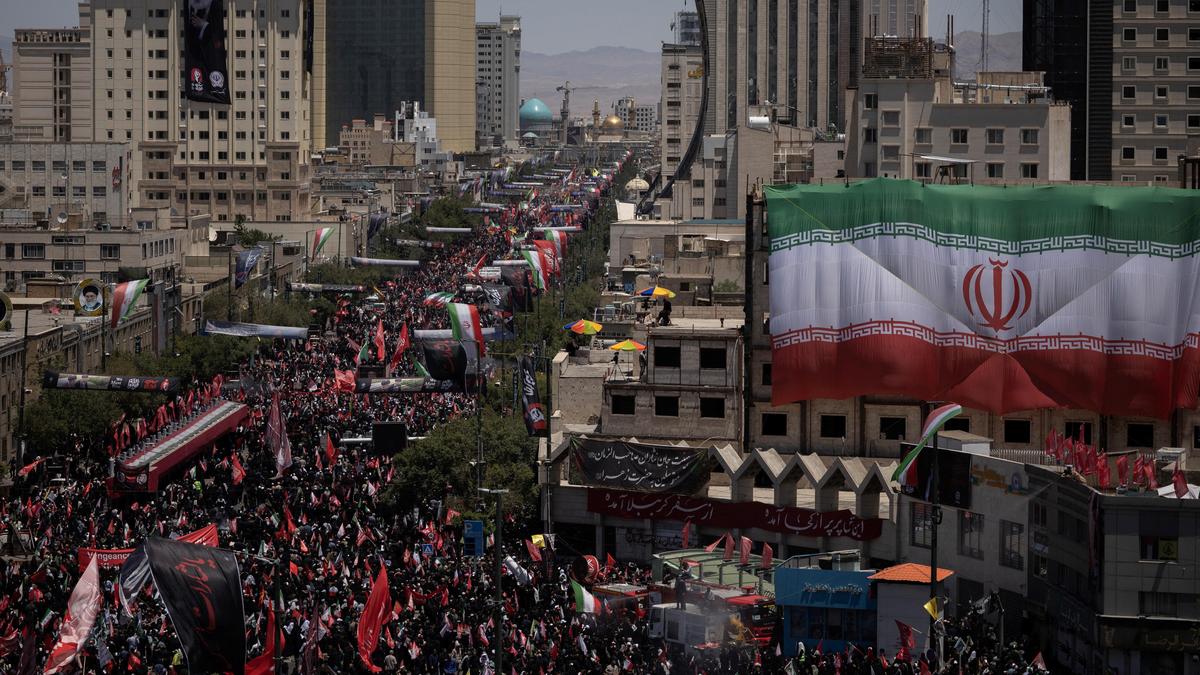
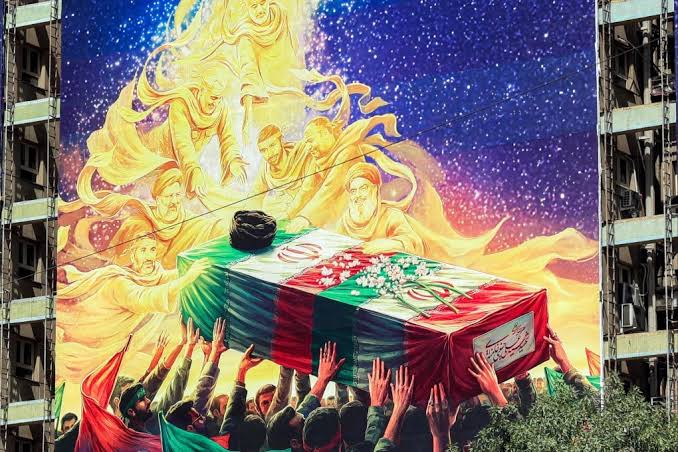
Iran has begun one of the most significant state ceremonies in its modern history as the body of late Supreme Leader Ayatollah Ali Khamenei was brought to Tehran’s Grand Mosalla religious complex ahead of a large-scale public funeral. The ceremony, expected to draw millions of mourners, comes months after Khamenei’s death during the Iran-Israel conflict and marks a pivotal moment for the Islamic Republic’s political and religious leadership.
The funeral is being closely followed around the world as Iranian officials, foreign dignitaries, religious leaders, and thousands of supporters gather in Tehran. Security remains exceptionally tight amid concerns over regional tensions and the possibility of renewed conflict.
Ayatollah Khamenei’s Body Arrives at Tehran Grand Mosalla
State media and multiple international news organizations confirmed that Ayatollah Ali Khamenei’s body was transferred to Tehran’s Grand Mosalla, where it will lie in state before funeral prayers and a nationwide mourning procession.
The Grand Mosalla, one of Iran’s largest religious complexes, has been decorated with black mourning banners, flowers, and portraits of the late Supreme Leader. Thousands of mourners gathered early to pay their respects, while officials prepared for ceremonies expected to continue over several days.
Iranian authorities have described the funeral as both a religious event and a symbol of national unity following months of military conflict.
Why Was the Funeral Delayed?
Although Ayatollah Khamenei died earlier during the Iran-Israel war, Iranian authorities postponed the public funeral because of ongoing military operations and security concerns.
Officials said holding a massive public gathering during active conflict posed significant risks. The delay allowed authorities to organize extensive security arrangements while waiting for a temporary reduction in hostilities.
The funeral now coincides with a fragile ceasefire, allowing millions of supporters to participate in nationwide mourning ceremonies.
Massive Security Across Tehran
Security forces have deployed heavily throughout Tehran for the funeral events.
Authorities have implemented measures including:
- Road closures around Grand Mosalla
- Restricted airspace over Tehran
- Additional Revolutionary Guard and police units
- Crowd-control barriers
- Medical emergency stations
Iran remains on high alert amid fears that regional instability could continue during the funeral period. Officials have repeatedly warned that any attempt to disrupt the ceremonies would receive a strong response.
Millions Expected to Attend
Government officials expect one of the largest funeral gatherings in Iranian history.
Public mourning events are scheduled across several cities, with the main ceremonies beginning in Tehran before continuing to major religious centers. Millions of people are expected to participate over several days, making it one of the country’s largest state-organized public events since the 1979 Islamic Revolution.
Many participants traveled overnight from different provinces carrying Iranian flags, religious banners, and portraits of the late Supreme Leader.
International Delegations Attend
Several foreign delegations have arrived in Tehran to participate in the funeral ceremonies.
Representatives from countries maintaining diplomatic ties with Iran, along with regional political and religious figures, are attending official memorial events. International participation reflects Iran’s continuing diplomatic relationships despite ongoing geopolitical tensions.
Analysts note that attendance by foreign leaders is also being closely watched as an indicator of Iran’s international alliances following the recent conflict.
Political Significance of the Funeral
The funeral represents far more than a religious ceremony.
For Iran’s leadership, the event serves several purposes:
- Demonstrating political stability
- Reinforcing public support
- Showcasing national unity
- Honoring the country’s longest-serving Supreme Leader
- Sending a message of resilience during a period of regional uncertainty
State media have emphasized themes of resistance, national sovereignty, and continuity of governance throughout the official mourning period.
Regional Reactions
The funeral has attracted global attention because of its implications for Middle East politics.
Governments across the region are monitoring developments carefully, particularly given ongoing tensions involving Iran, Israel, and the United States. Analysts believe the funeral could influence future diplomatic negotiations and regional security discussions.
At the same time, international observers continue watching for any announcements regarding Iran’s future political direction following the leadership transition.
What Happens Next?
Following public viewing in Tehran, funeral events are expected to continue with additional religious ceremonies before the late leader’s burial.
Authorities have planned several days of official mourning, with processions extending to important religious sites before final burial arrangements are completed. Millions are expected to participate throughout the country.
Live Updates Summary
- Ayatollah Ali Khamenei’s body has arrived at Tehran’s Grand Mosalla.
- Large crowds of mourners have gathered for public viewing.
- Security remains at its highest level across the capital.
- Foreign delegations are attending official ceremonies.
- Funeral events are expected to continue over several days.
- The ceremony is being viewed as a defining political and religious moment for Iran following the recent conflict.
Conclusion
The arrival of Ayatollah Ali Khamenei’s body at Tehran’s Grand Mosalla marks the beginning of a historic state funeral that is expected to draw millions of mourners and international attention. Beyond honoring Iran’s late Supreme Leader, the ceremony represents a major political event during a sensitive period for the Islamic Republic. As funeral rites continue, governments and observers around the world will be watching closely for signs of Iran’s future direction, regional diplomacy, and leadership transition.