
The phrase “Weimar America” has become one of the most debated political comparisons in recent years. Historians, political commentators, and constitutional scholars have increasingly used it to describe growing concerns about the future of American democracy. While opinions differ sharply over whether the comparison is appropriate, the discussion has become impossible to ignore.
The idea does not necessarily suggest that the United States is destined to repeat the tragic history of Germany’s Weimar Republic. Instead, it serves as a warning about political instability, declining trust in democratic institutions, and deep societal polarization.
One conservative writer closely associated with the concept is Rod Dreher, who argued that America’s challenges are not only political but also cultural. His interpretation has sparked widespread debate across both conservative and liberal circles.
What Does “Weimar America” Mean?
The term refers to comparisons between modern America and the Weimar Republic, Germany’s democratic government that existed between 1919 and 1933 before Adolf Hitler came to power.
The Weimar Republic faced enormous pressures, including:
- Severe political polarization
- Economic crises
- Hyperinflation
- Weak coalition governments
- Violent street clashes
- Growing distrust of democratic institutions
Many historians believe these conditions created an environment where extremist movements gained support.
When people discuss Weimar America, they are asking whether similar warning signs are appearing in today’s United States—not whether history will repeat itself exactly.
Why Are Experts Raising Concerns?
Several trends have prompted comparisons between the two periods.
Political Polarization
American politics has become increasingly divided.
Democrats and Republicans disagree not only on policy but often question each other’s legitimacy. Compromise has become more difficult, while political rhetoric has grown increasingly confrontational.
Many scholars argue that extreme polarization weakens democratic institutions by reducing public trust.
Declining Confidence in Institutions
Public confidence in Congress, the media, elections, and other institutions has fluctuated over the past decade.
When citizens lose confidence in democratic systems, political instability often increases.
Economic Anxiety
Although the United States remains one of the world’s strongest economies, rising housing costs, inflation, wealth inequality, and concerns over economic opportunity have fueled political frustration.
Economic insecurity historically creates fertile ground for populist politics.
Information Warfare
Unlike Weimar Germany, today’s America faces a new challenge: social media.
False information spreads rapidly online, making it harder for voters to distinguish verified facts from political narratives.
Rod Dreher’s View of Weimar America
Among conservatives, Rod Dreher helped popularize the phrase after the 2016 election.
Writing about Weimar America, Dreher argued that America’s greatest vulnerabilities were cultural rather than purely economic.
According to his analysis, growing cultural fragmentation, declining social cohesion, and the erosion of shared values created conditions similar to those that weakened Weimar Germany.
His argument does not claim America will inevitably become authoritarian but suggests societies become unstable when cultural divisions deepen faster than institutions can respond.
Historians Warn Against Oversimplification
Not every historian agrees with the comparison.
Historian Eric D. Weitz has argued that America differs fundamentally from Weimar Germany.
He points out several important distinctions:
- The U.S. economy remains vastly stronger.
- American democratic institutions have existed for more than two centuries.
- The United States has a long constitutional tradition.
- Germany after World War I faced military defeat, international humiliation, and crippling reparations.
According to Weitz, while America certainly faces political challenges, it does not closely resemble Germany during the early 1930s.
Arguments Supporting the Comparison
Those who believe the analogy has value point to several similarities:
- Growing political extremism
- Increasing distrust of elections
- Highly polarized media environments
- Declining faith in traditional institutions
- Rising populist movements
- Cultural conflict dominating public debate
Supporters say these warning signs deserve attention before they worsen.
Importantly, they argue that the comparison functions as a historical caution rather than a prediction.
Arguments Against the Comparison
Critics believe the analogy exaggerates today’s political environment.
They note that Weimar Germany experienced:
- Massive hyperinflation
- Millions unemployed
- Frequent political assassinations
- Armed militias battling openly in the streets
- Multiple failed governments
- Constitutional collapse
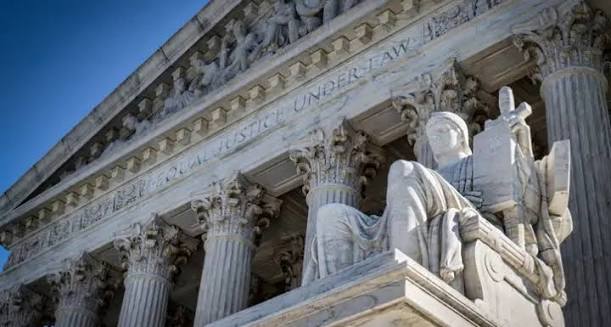
The United States, despite political tensions, continues to hold regular elections, maintain an independent judiciary, and operate under a stable constitutional framework.
Many scholars therefore caution against using historical comparisons too loosely.
Why the Debate Matters
Whether one accepts the Weimar comparison or rejects it, the discussion reflects genuine concerns about democratic resilience.
Healthy democracies depend on:
- Peaceful transfers of power
- Respect for election outcomes
- Independent courts
- Free media
- Public trust in institutions
- Political compromise
When these pillars weaken simultaneously, democratic governments become more vulnerable.
History shows that democracies rarely collapse overnight. Instead, institutional erosion often occurs gradually through increasing political conflict and declining public confidence.
Lessons from History
The history of the Weimar Republic offers several important lessons:
Strong institutions matter.
Independent courts, legislatures, and constitutional safeguards help prevent democratic backsliding.
Political compromise remains essential.
Extreme polarization can make governing nearly impossible.
Economic stability supports democracy.
Periods of prolonged hardship often fuel political anger.
Democratic norms require public support.
Constitutions alone cannot preserve democracy without widespread civic commitment.
These lessons explain why historians continue studying Weimar Germany nearly a century later.
Is America Really Becoming “Weimar America”?
There is no consensus.
Some political analysts argue the comparison highlights legitimate warning signs.
Others believe America’s institutional strength makes the analogy historically inaccurate.
Even those skeptical of the comparison acknowledge that rising polarization, declining institutional trust, and increasingly confrontational politics deserve serious attention.
The debate itself demonstrates the importance of historical memory. Looking at past democratic failures can help modern societies identify potential risks before they become crises.
Conclusion
The phrase “Weimar America” has become shorthand for concerns about the future of American democracy. Whether used by historians, political scientists, or commentators like Rod Dreher, the comparison is intended primarily as a warning rather than a prediction.
America today differs significantly from Weimar Germany in its economic strength, constitutional traditions, and institutional durability. At the same time, rising political polarization, declining trust in public institutions, and intense cultural conflict have encouraged many observers to revisit one of history’s most famous examples of democratic collapse.
Ultimately, the debate over Weimar America is less about repeating history and more about understanding how democracies remain resilient in times of profound political division.(The American Conservative)
Also Read: Iran Ceasefire Collapse Sparks Democratic Outrage: Jeffries and Murray Target Trump — Explore how the collapse of the Iran ceasefire intensified political divisions in Washington, with Democratic leaders sharply criticizing the Trump administration’s foreign policy approach.