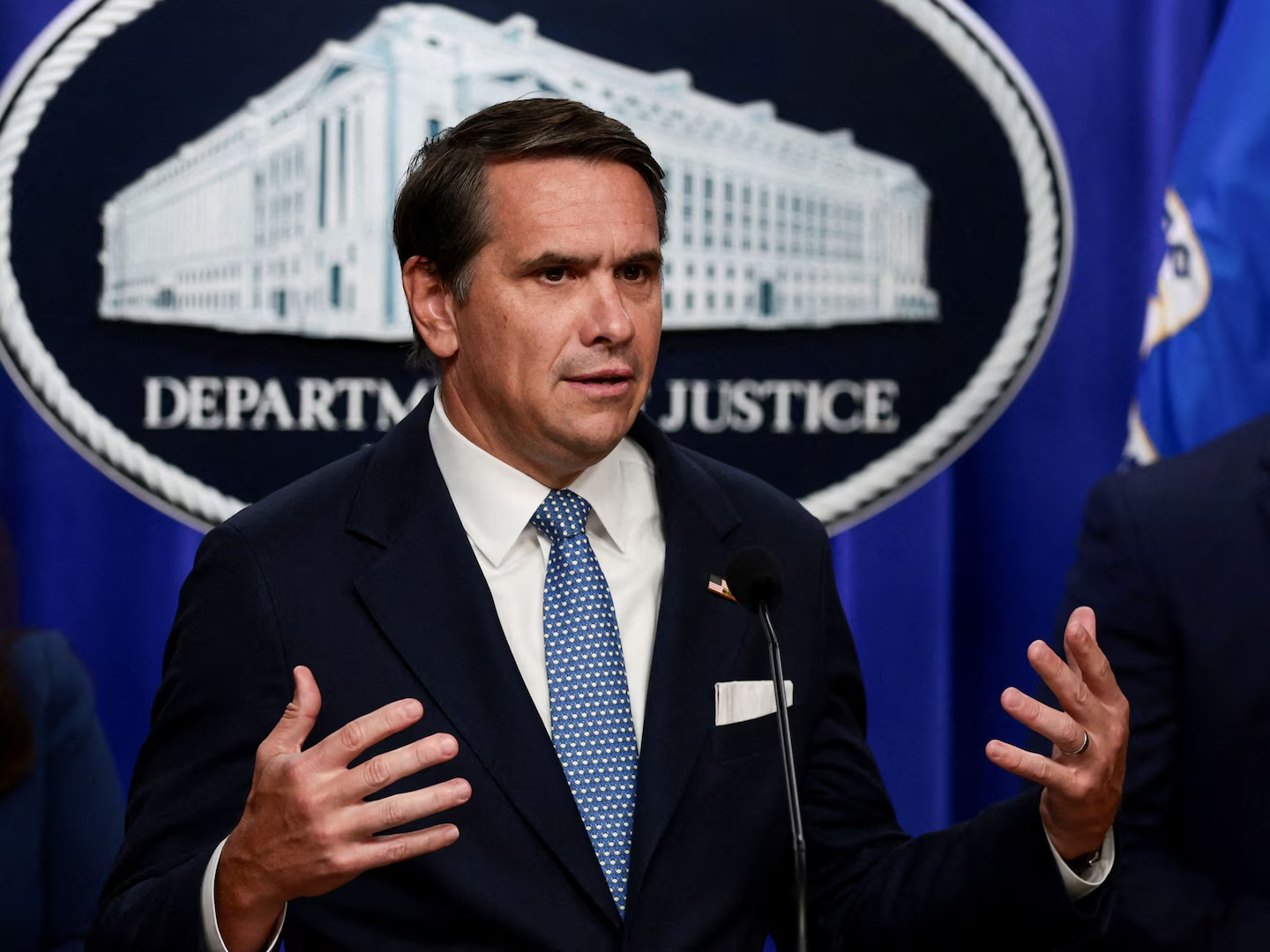
Todd Blanche faced one of the most consequential moments of his legal and political career as he appeared before the Senate Judiciary Committee for his confirmation hearing to become the next Attorney General of the United States. The hearing drew intense national attention as lawmakers questioned Blanche about his leadership of the Justice Department, his close relationship with President Donald Trump, controversial investigations, and concerns about the department’s independence.
The confirmation hearing highlighted deep partisan divisions over the future direction of the Department of Justice (DOJ). Republican senators largely defended Blanche’s record, while Democrats argued that the department had become increasingly politicized under his interim leadership.
Here are the key moments from Todd Blanche’s confirmation hearing on Capitol Hill.
Todd Blanche Faces Tough Questions
Serving as Acting Attorney General since April 2026, Todd Blanche entered the hearing with significant political pressure. Before joining the Justice Department, Blanche was widely known as President Donald Trump’s personal defense attorney during multiple criminal cases.
Democratic senators repeatedly questioned whether Blanche could independently enforce federal law without political influence from the White House.
Blanche insisted that every decision made during his tenure had been based on evidence and existing law rather than political considerations. He rejected accusations that the DOJ had been used to target President Trump’s political opponents.
Independence of the Justice Department Dominates Hearing
One of the central themes throughout the hearing was the independence of the Justice Department.
Several Democratic members asked Blanche whether he would refuse requests from President Trump that conflicted with federal law or Justice Department policy.
Blanche maintained that the Attorney General must always follow the Constitution and federal law regardless of political pressure. However, he also argued that presidents are entitled to express opinions about law enforcement priorities, saying there was nothing inappropriate about those conversations so long as prosecutorial decisions remained lawful.
His responses failed to satisfy several Democratic senators, who argued that recent DOJ actions suggested increasing political influence over federal investigations.
Questions About Investigations Into Trump’s Political Rivals
Another major issue involved ongoing investigations targeting several individuals publicly criticized by President Trump.
Lawmakers questioned whether these investigations were initiated because of legitimate evidence or political motivations.
Blanche rejected claims that the DOJ was pursuing politically motivated prosecutions. He emphasized that every investigation follows established legal standards and prosecutorial review procedures before charges are considered.
He argued that criticism of individuals by elected officials should not automatically prevent legitimate investigations if evidence exists.
Senators Raise Concerns Over the Anti-Weaponization Fund
One of the most controversial topics involved the now-abandoned Anti-Weaponization Fund.
The fund had originally been proposed to compensate individuals who claimed they had been unfairly targeted by the criminal justice system. It quickly faced bipartisan criticism before ultimately being withdrawn.
During the hearing, senators questioned Blanche about his role in defending the proposal before later announcing that it would be discontinued.
Blanche acknowledged that the proposal generated significant concern and confirmed that the fund would no longer move forward. Several Republicans also expressed frustration over how the proposal had been handled.
Jeffrey Epstein Files Draw Scrutiny
Another sensitive topic centered on the Justice Department’s handling of records related to convicted sex offender Jeffrey Epstein.
Lawmakers questioned Blanche regarding document releases that reportedly contained significant redaction errors, exposing sensitive information that should have remained confidential.
Blanche defended the department’s efforts while acknowledging that mistakes had occurred during the document release process. He pledged that future releases involving sensitive records would undergo stronger review procedures.
Press Freedom Concerns
Several senators also challenged Blanche over aggressive leak investigations conducted under his leadership.
Particular attention focused on subpoenas issued to journalists following reports concerning security issues involving a Qatari-gifted Air Force One aircraft.
Civil liberties advocates have argued that the subpoenas could discourage investigative journalism and threaten press freedom.
Blanche defended the department’s actions, stating that unauthorized disclosure of classified information can threaten national security and that leak investigations remain an important responsibility of the Justice Department.
Republicans Largely Rally Behind Blanche
While Democrats offered sharp criticism, Republican senators generally praised Blanche’s legal experience and management of the Justice Department.
Many Republicans argued that criticism of Blanche reflected broader political disagreements rather than concerns about his qualifications.
However, attention remained focused on a handful of Republican senators viewed as potential swing votes, particularly those who had previously voiced concerns about recent DOJ controversies.
With the Senate Judiciary Committee closely divided, Blanche’s nomination depends heavily on maintaining unified Republican support.
Confirmation Outlook
Political analysts believe Blanche remains likely to advance out of committee if Republicans remain united.
Democrats are expected to unanimously oppose the nomination, making every Republican vote particularly significant.
Even if approved by committee, the nomination could generate extensive debate on the Senate floor because of ongoing concerns surrounding Justice Department independence and executive authority.
The hearing demonstrated that Blanche’s confirmation process is likely to remain one of the year’s most closely watched political battles.
Why the Hearing Matters
The Attorney General serves as the nation’s chief law enforcement officer, overseeing federal criminal prosecutions, civil rights enforcement, national security investigations, and constitutional litigation.
Who leads the Justice Department often shapes major federal priorities involving election security, public corruption, organized crime, immigration enforcement, and constitutional rights.
Supporters argue Blanche has the legal experience needed to manage one of the federal government’s most powerful agencies.
Critics, however, warn that his previous role as President Trump’s personal attorney creates unavoidable concerns about impartiality and public confidence in the Justice Department.
Final Thoughts
Todd Blanche’s confirmation hearing showcased the intense political divisions surrounding the Department of Justice during President Trump’s second administration. Senators pressed him on issues ranging from DOJ independence and politically sensitive investigations to press freedom, the Anti-Weaponization Fund, and the handling of the Epstein files.
Although Republicans appeared largely supportive, Democrats remained deeply skeptical about whether Blanche could separate legal decision-making from politics. As the confirmation process continues, the Senate’s final vote will determine not only Blanche’s future but also the direction of the Justice Department during the remainder of the administration. (AP News)
Want to understand the broader context behind the confirmation hearing? Read our in-depth analysis of The Trump Team’s Worst Predictions About the Iran War: What Went Wrong and Why It Matters, where we examine how the administration’s failed forecasts shaped U.S. foreign policy, political debate, and national security decisions.