The U.S. House of Representatives has delivered one of the clearest signs yet that Democratic views on Israel are undergoing a significant transformation. In a closely watched vote, more than 100 House Democrats backed an amendment that would have ended billions of dollars in U.S. military aid to Israel, even though the proposal ultimately failed by a wide margin. The vote highlighted growing divisions within the Democratic Party over the ongoing war in Gaza and America’s long-standing military partnership with Israel.
While Republicans overwhelmingly rejected the amendment, the number of Democrats who supported it represented an unprecedented shift in congressional politics. The debate has now become one of the defining foreign policy issues heading into the 2026 midterm elections, with lawmakers increasingly facing pressure from both pro-Israel advocates and progressive voters demanding changes to U.S. policy.
House Rejects Amendment to End Israel Aid
The amendment, introduced by Republican Representative Thomas Massie of Kentucky, sought to eliminate approximately $3.3 billion in annual U.S. military assistance to Israel. Although the measure was defeated by a vote of 314-104, the level of Democratic support surprised many political observers.
Among those voting in favor were several high-profile Democratic lawmakers, including former House Speaker Nancy Pelosi and House Democratic Whip Katherine Clark. Their support demonstrated that skepticism toward unconditional military assistance is no longer limited to the party’s progressive wing.
Most Republicans voted against the amendment, with Massie standing as the only Republican supporting the proposal.
Why the Vote Matters
For decades, military assistance to Israel has enjoyed broad bipartisan backing in Congress. Since World War II, the United States has provided Israel with hundreds of billions of dollars in military, economic, and security assistance, making Israel one of America’s closest allies in the Middle East.
However, the ongoing conflict in Gaza has dramatically reshaped political attitudes.
Many Democratic lawmakers argue that continued military aid should be conditioned on Israel’s compliance with international humanitarian standards. Others believe unconditional support undermines U.S. credibility on human rights and diplomacy.
Supporters of the amendment said Congress must reconsider how American taxpayer dollars are used during prolonged military operations that have resulted in widespread civilian casualties and humanitarian concerns.
Democratic Party Shows Growing Divide
The vote exposed a clear split within Democratic leadership.
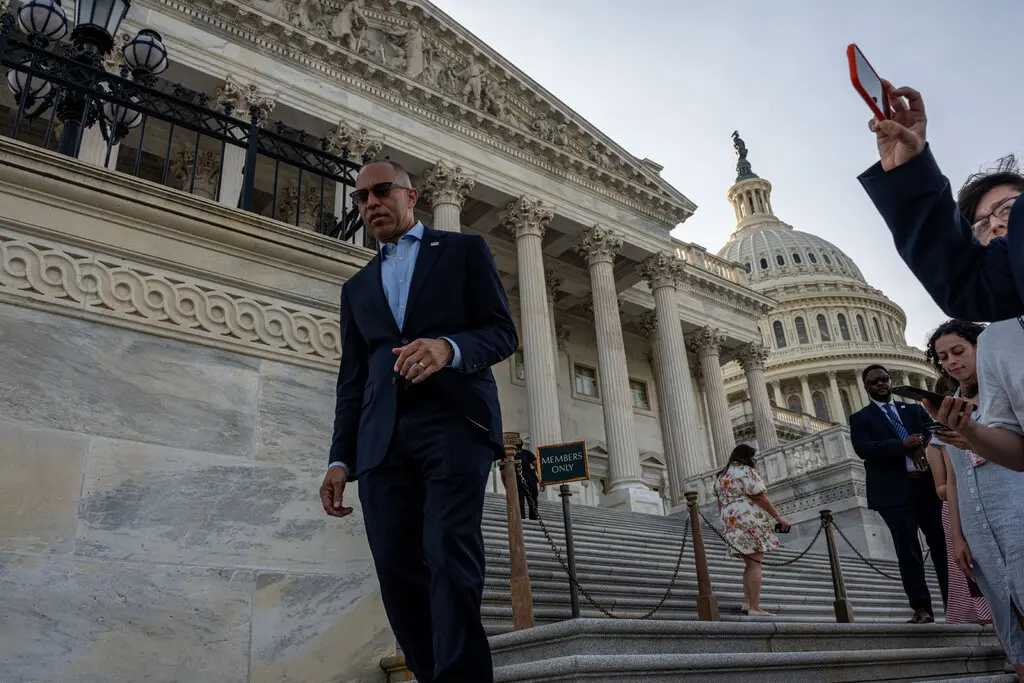
House Democratic Leader Hakeem Jeffries opposed the amendment, describing it as too broad despite acknowledging that U.S.-Israel relations require significant changes moving forward. Other senior Democrats took the opposite position, illustrating how divided the party has become on Middle East policy.
Political analysts note that this division reflects broader shifts among Democratic voters, particularly younger Americans who increasingly express sympathy for Palestinians and favor stronger conditions on military assistance.
The issue has become especially influential during Democratic primary elections, where candidates’ positions on Israel now receive greater scrutiny than in previous election cycles.
Progressive Pressure Continues to Grow
Progressive lawmakers have spent months urging Congress to reassess U.S. military support for Israel.
Many argue that continued weapons transfers should depend on greater protections for civilians and expanded humanitarian access to Gaza.
Several lawmakers who supported the amendment emphasized that their vote reflected concerns about civilian suffering rather than opposition to Israel’s existence or security.
Organizations representing progressive Democrats have likewise called for increased congressional oversight of military assistance programs.
Although the amendment failed, supporters believe the vote itself demonstrates that congressional opinion is shifting more rapidly than many expected.
Republicans Stand Firm Behind Israel
Republican lawmakers largely maintained their long-standing support for military assistance to Israel.
Many argued that Israel remains America’s most important strategic ally in the Middle East and continues to face serious security threats from Hamas, Hezbollah, and Iran-backed militant groups.
Republican leaders accused Democrats supporting the amendment of weakening America’s alliances during an unstable period in the region.
Several GOP lawmakers also argued that reducing military aid could embolden hostile actors and undermine regional stability.
These contrasting positions highlight the widening partisan divide over U.S. foreign policy in the Middle East.
Gaza Conflict Continues to Influence Washington
The war in Gaza remains central to the congressional debate.
Since fighting intensified, international organizations have repeatedly raised concerns about civilian casualties, humanitarian access, infrastructure destruction, and regional instability.
The Biden administration initially maintained strong military support for Israel following the October 7 attacks, while President Donald Trump’s administration has continued emphasizing Israel’s right to defend itself during renewed regional tensions.
As the conflict enters another year, lawmakers from both parties continue debating whether U.S. military assistance should include additional conditions or oversight.
The House vote represents one of the strongest congressional signals that these discussions are likely to continue.
Political Impact Before the Midterms
The timing of the vote is politically significant.
With the 2026 midterm elections approaching, Democratic candidates face increasing pressure from different factions within the party.
Progressive voters have demanded stronger criticism of Israeli military operations, while moderate Democrats remain cautious about abandoning decades of bipartisan support for Israel.
Campaign strategists believe Israel policy could become an important issue in competitive Democratic primaries, particularly in districts with younger voters.
Republicans, meanwhile, are expected to use the vote to argue that Democrats are becoming increasingly divided on national security and foreign policy.
Could Future Votes Be Different?
Although this amendment failed comfortably, many analysts believe future proposals concerning military assistance to Israel may attract even greater support.
Polling has shown changing public attitudes among Democratic voters regarding the Israeli-Palestinian conflict, and several advocacy groups expect continued congressional efforts to impose conditions on military aid rather than eliminate it entirely.
Even organizations that opposed Massie’s amendment described the vote as politically significant because it reflects changing attitudes inside Congress.
Future appropriations bills and defense legislation could include more narrowly targeted proposals focusing on oversight, humanitarian requirements, or restrictions on specific weapons systems.
What Happens Next?
Because the amendment failed, current U.S. military assistance to Israel remains unchanged.
However, the debate surrounding American support for Israel is unlikely to fade.
Congress is expected to revisit the issue during upcoming budget negotiations and future foreign aid legislation. As public opinion continues evolving, lawmakers from both parties may face increasing pressure to redefine America’s role in the Middle East.
Whether this week’s vote represents a temporary protest or the beginning of a lasting policy shift remains uncertain. What is clear is that support for Israel is no longer the overwhelmingly bipartisan issue it once was. The House vote has exposed a changing political landscape that could shape U.S. foreign policy debates for years to come. (The Guardian)
Related: Trump Revives 2020 Election Claims in Primetime White House Address — Explore how President Trump’s latest White House speech renewed debate over the 2020 election and what it could mean for the 2026 midterm elections.