Explosions shook the Syrian capital of Damascus on Tuesday during a landmark diplomatic visit by French President Emmanuel Macron, raising fresh concerns over security and stability in the war-torn nation. The blasts occurred near the Four Seasons Hotel, where Macron was expected to stay, while he was meeting Syrian President Ahmad al-Sharaa at the presidential palace. Despite the explosions, French officials confirmed that Macron was safe, and his diplomatic schedule continued as planned.
The incident comes at a pivotal moment for Syria as it attempts to rebuild international relationships following years of civil war and political isolation. Macron’s visit—the first by a European Union head of state since the fall of Bashar al-Assad’s government—was intended to strengthen diplomatic cooperation and discuss reconstruction, regional security, and economic recovery.
Explosions Strike Central Damascus
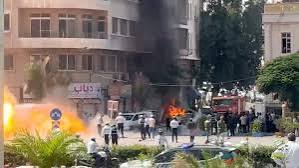
Witnesses reported hearing at least two loud explosions in central Damascus shortly before noon. Thick black smoke was seen rising into the sky, while videos circulating on social media appeared to show damaged vehicles and emergency responders rushing to the scene.
According to Syrian state media, the explosions were caused by explosive devices, though authorities initially provided few additional details regarding casualties or suspects. Security forces quickly cordoned off the affected area and increased patrols around government buildings and hotels.
The exact motive behind the attack remains under investigation. As of the latest reports, no organization has officially claimed responsibility.
Macron’s Historic Visit Continues
President Emmanuel Macron arrived in Damascus for what many observers described as a historic diplomatic breakthrough. France has played an active role in encouraging Syria’s political transition following the collapse of Bashar al-Assad’s regime in late 2024.
Macron met Syrian President Ahmad al-Sharaa to discuss:
- Syria’s reconstruction efforts
- Counterterrorism cooperation
- Economic investment opportunities
- Regional stability
- Humanitarian assistance
- Future diplomatic relations between France and Syria
Despite the nearby explosions, Macron’s meetings continued under heightened security. French officials stated there was no direct threat to the president, and his delegation remained secure throughout the visit.
Why Macron’s Visit Matters
The French president’s trip represents a major shift in European engagement with Syria.
For years, many Western nations limited diplomatic contact with Damascus during Syria’s prolonged civil war. However, following political changes and the formation of a new Syrian government led by Ahmad al-Sharaa, several countries have begun cautiously rebuilding diplomatic ties.
France has positioned itself as one of the leading European supporters of Syria’s reconstruction while continuing to advocate for democratic reforms, protection of minorities, and economic modernization.
Macron also traveled with representatives from several major French companies interested in future investment opportunities across infrastructure, transportation, finance, and energy sectors.
Security Concerns Remain High
Although large-scale fighting has significantly decreased compared to previous years, Syria continues to face persistent security threats.
The Damascus explosions highlight ongoing risks posed by extremist groups, sleeper cells, and political instability. Just days before Macron’s arrival, another bombing in Damascus killed multiple civilians, underscoring the fragile security environment facing the country’s transitional government.
Analysts note that isolated attacks remain one of the biggest challenges confronting Syria’s efforts to attract foreign investment and normalize diplomatic relations.
International Reactions
Governments across Europe and the Middle East closely monitored developments as news of the explosions spread.
French authorities emphasized that the visit demonstrated France’s commitment to supporting Syria’s long-term stability despite security challenges.
Political analysts believe the decision to continue the visit despite the explosions sends a symbolic message that terrorism will not derail diplomatic engagement.
Meanwhile, international security experts urged continued vigilance, noting that reconstruction efforts cannot succeed without sustained improvements in public safety.
Impact on Syria’s Reconstruction
Syria hopes renewed diplomatic engagement will encourage:
- Foreign investment
- Infrastructure rebuilding
- Economic recovery
- Humanitarian assistance
- Tourism revival
- Job creation
The country’s new leadership has sought stronger partnerships with European nations after years of sanctions and diplomatic isolation.
Macron’s visit was expected to produce several bilateral agreements covering economic cooperation, infrastructure development, and financial assistance. The explosions, however, serve as a reminder that rebuilding confidence among international partners remains a difficult process.
What Happens Next?
Syrian authorities have launched an investigation into the explosions.
Investigators are expected to examine surveillance footage, collect forensic evidence, and determine whether extremist organizations or other actors were involved.
Meanwhile, Macron’s visit continues to be viewed as a significant milestone in Syria’s gradual return to international diplomacy.
The success of future diplomatic initiatives will likely depend on the government’s ability to improve security, maintain political stability, and continue implementing reforms that reassure international partners.
Global Implications
The Damascus explosions come amid broader geopolitical shifts in the Middle East.
Several regional and international governments are reassessing their relationships with Syria after years of conflict. France’s engagement may encourage additional European nations to consider renewed diplomatic ties if political and security conditions continue to improve.
At the same time, today’s incident illustrates that Syria’s transition remains vulnerable to acts of violence capable of disrupting high-profile international events.
For investors, diplomats, and humanitarian organizations, the coming months will be critical in determining whether Syria can provide the stable environment necessary for long-term reconstruction and international cooperation.
Conclusion
The explosions that rocked Damascus during President Emmanuel Macron’s historic visit underscore the delicate balance between diplomatic progress and ongoing security challenges in Syria. While the blasts did not interrupt Macron’s meetings with Syrian leaders, they highlighted the continuing threats facing a nation striving to rebuild after years of conflict.
As investigations continue, the international community will closely watch whether Syria can strengthen security while advancing political reforms and economic recovery. Macron’s decision to proceed with his visit signals continued European interest in Syria’s future, but lasting stability will remain the ultimate measure of success.
For more on bipartisan leadership and evidence-based policymaking, read our coverage of ” Bill Frist Calls for Taking Politics Out of Climate Change Debate,” where the former U.S. Senate Majority Leader urges leaders to prioritize science and collaboration over political divisions.