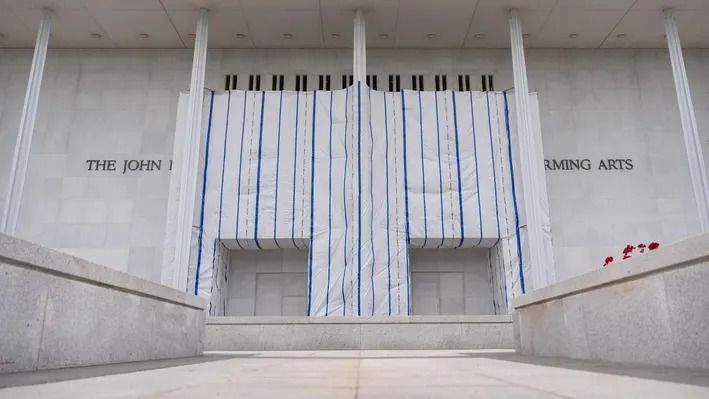
The phrase “Kennedy Center tarp” has recently attracted attention online as visitors, arts enthusiasts, and political observers noticed large protective coverings installed around portions of the iconic performing arts complex in Washington, D.C. While a tarp may seem like a minor maintenance detail, the development has generated significant discussion about the condition of the building, ongoing renovations, and the future direction of one of America’s most important cultural institutions.
The John F. Kennedy Center for the Performing Arts, commonly known as the Kennedy Center, serves as the nation’s premier performing arts venue. Hosting concerts, theater productions, dance performances, educational programs, and the annual Kennedy Center Honors, the institution is a symbol of American culture and artistic achievement.
As images of the Kennedy Center tarp circulated online, many people began asking what prompted its installation and whether it reflects larger issues facing the landmark venue.
What Is the Kennedy Center Tarp?
The term “Kennedy Center tarp” generally refers to large protective coverings placed over sections of the Kennedy Center building during maintenance, repair, or renovation work.
Tarps are commonly used on major public buildings to:
- Protect structures from weather damage
- Shield ongoing construction projects
- Prevent water infiltration
- Cover scaffolding and work areas
- Enhance safety for visitors and workers
Because the Kennedy Center is located along the Potomac River and experiences exposure to varying weather conditions throughout the year, periodic maintenance is essential to preserve the facility’s exterior and infrastructure.
When a tarp becomes visible on a nationally recognized landmark, it naturally attracts public attention and raises questions about the scope of work taking place behind the scenes.
Why Maintenance Matters at the Kennedy Center
Opened in 1971, the Kennedy Center is now more than five decades old. Like any large public building, aging infrastructure requires regular upgrades and repairs.
The complex contains:
- Multiple performance halls
- Rehearsal spaces
- Administrative offices
- Educational facilities
- Public gathering areas
- Extensive exterior architecture
Maintaining these spaces involves continuous investment in roofing, waterproofing, structural systems, electrical infrastructure, HVAC equipment, and accessibility improvements.
Protective tarps are often a temporary but necessary part of these maintenance efforts.
Experts in historic preservation note that preventive maintenance is generally more cost-effective than allowing small issues to become major structural problems. As a result, large cultural institutions frequently undertake repair projects that may temporarily alter the appearance of the building.
Public Interest in the Kennedy Center
The attention surrounding the Kennedy Center tarp reflects the institution’s unique role in American public life.
Unlike many arts venues, the Kennedy Center operates not only as a performance space but also as a national cultural symbol. Millions of visitors attend performances, tours, and public events every year.
Because of its prominence, even relatively routine maintenance activities can become newsworthy.
Public interest has increased in recent years due to discussions surrounding:
- Federal support for the arts
- Cultural programming decisions
- Leadership changes
- Facility modernization efforts
- Preservation of historic public spaces
As a result, visible construction work often becomes part of broader conversations about the institution’s future.
The Importance of Preserving National Cultural Landmarks
The Kennedy Center joins a long list of American landmarks that require ongoing preservation work.
Historic public buildings face several challenges:
Aging Infrastructure
Materials naturally deteriorate over time due to weather exposure, temperature changes, and daily use.
Increased Visitor Traffic
Popular destinations experience significant wear and tear from millions of annual visitors.
Modern Safety Standards
Buildings often require upgrades to meet current safety, accessibility, and environmental regulations.
Technological Improvements
Modern performance venues demand advanced sound systems, lighting technology, and digital infrastructure.
Protective coverings such as tarps allow workers to address these issues while minimizing disruptions to daily operations.
How Renovations Impact Visitors
For visitors attending performances or tours, the presence of a tarp can create temporary inconveniences. Certain entrances, walkways, or exterior views may be partially restricted during construction periods.
However, venue administrators typically aim to keep performances and public programming running smoothly throughout maintenance projects.
Benefits of renovation work include:
- Improved visitor safety
- Better accessibility
- Enhanced energy efficiency
- Protection of historic architecture
- Upgraded audience experiences
Most visitors ultimately benefit from investments that extend the life of the facility and improve its long-term functionality.
Social Media Reactions to the Kennedy Center Tarp
As photos and videos of the Kennedy Center tarp appeared online, reactions ranged from curiosity to speculation.
Some observers viewed the tarp as evidence of necessary preservation work, while others questioned whether larger renovation projects were underway.
Social media often amplifies visual changes to well-known landmarks, particularly when official details are limited. In many cases, temporary construction measures can generate more attention than the actual repair work itself.
Experts caution against drawing conclusions solely from the presence of a tarp, as protective coverings are standard practice across the construction and preservation industries.
The Future of the Kennedy Center
The Kennedy Center continues to evolve as audience expectations, technology, and cultural programming change.
Future priorities are expected to include:
- Facility modernization
- Expanded educational outreach
- Enhanced accessibility initiatives
- Sustainability improvements
- Continued preservation of historic architecture
Maintaining the physical condition of the building will remain a critical component of these efforts.
Temporary construction features such as tarps may occasionally become visible, but they often represent investments in the institution’s long-term success rather than signs of decline.
Why the Kennedy Center Tarp Matters
At first glance, a tarp covering part of a building may seem insignificant. However, when the structure involved is one of America’s most recognized cultural landmarks, even routine maintenance can attract national attention.
The Kennedy Center tarp serves as a reminder that preserving major public institutions requires continuous care, funding, and planning. Behind the protective coverings are efforts to ensure that future generations can continue enjoying world-class performances in a safe and well-maintained environment.
As renovation and preservation projects move forward, the Kennedy Center remains a central part of America’s artistic and cultural landscape. Whether visitors come for a Broadway production, a symphony concert, a dance performance, or the prestigious Kennedy Center Honors, maintaining the facility is essential to preserving its legacy.
Conclusion
The growing interest in the Kennedy Center tarp reflects the public’s connection to one of the nation’s most important cultural institutions. While tarps are typically temporary construction tools, their presence often signals important maintenance and preservation efforts taking place behind the scenes.
Rather than indicating a problem, the Kennedy Center tarp highlights the ongoing work required to protect and modernize a landmark that has served artists and audiences for more than fifty years. As the institution continues to evolve, these investments will help ensure that the Kennedy Center remains a vibrant home for American arts and culture for decades to come.