The Trump administration has issued subpoenas to several New York Times journalists following the newspaper’s reporting on security concerns surrounding the newly introduced Air Force One aircraft. The move has sparked a renewed debate over press freedom, government leak investigations, and the limits of protecting confidential journalistic sources.
According to multiple reports published on July 11, federal prosecutors are seeking testimony from reporters who contributed to stories about alleged security vulnerabilities involving the new presidential aircraft, which was reportedly gifted by Qatar and later modified for presidential use.
The subpoenas represent one of the most closely watched legal confrontations between the Trump administration and the national media this year.
Why Were the Journalists Subpoenaed?
The subpoenas stem from The New York Times’ recent reporting that raised questions about whether the new Air Force One possessed the same advanced defensive capabilities as the traditional presidential aircraft fleet.
The newspaper reported, citing anonymous government officials, that security experts had expressed concerns about the aircraft’s readiness, particularly regarding advanced missile defense systems and other protective technologies typically installed on Air Force One. The report also suggested that the Secret Service recommended using the older presidential aircraft during part of President Donald Trump’s overseas travel.
Federal investigators now appear to be examining how sensitive information reached reporters.
What Do the Subpoenas Seek?
Reports indicate that the subpoenas require several New York Times journalists to testify before a federal grand jury investigating the disclosure of information related to Air Force One security.
Among the reporters reportedly subpoenaed are:
- Julian E. Barnes
- Eric Lipton
- Tyler Pager
- Eric Schmitt
Federal agents reportedly delivered some subpoenas directly to journalists’ homes. (AP News)
Neither the Department of Justice nor the White House initially provided detailed public explanations regarding the ongoing investigation.
What Was the Original Air Force One Story About?
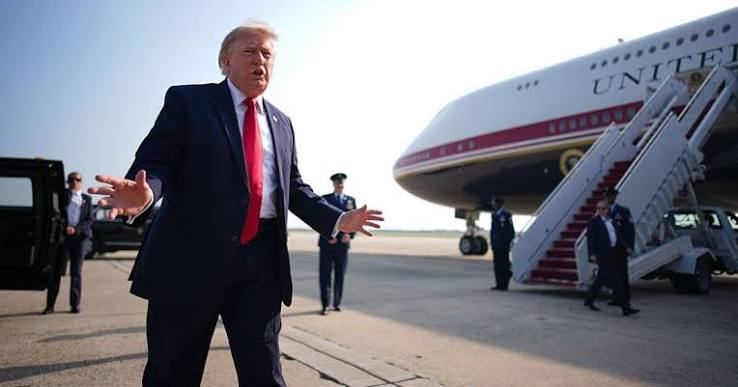
The controversy centers on a Boeing 747-8 aircraft that entered presidential service after being donated by Qatar and undergoing extensive modifications.
According to The New York Times’ reporting:
- The aircraft allegedly lacked certain advanced defensive systems normally found on Air Force One.
- Security officials reportedly questioned whether the plane was fully prepared for operations during heightened international tensions.
- President Trump reportedly switched from the newer aircraft to an older Air Force One during part of his return trip from Europe, fueling speculation about possible security concerns.
Administration officials have strongly disputed those claims.
White House Rejects Security Concerns
The White House has firmly denied that the aircraft has any security shortcomings.
Officials described the plane as a modern presidential aircraft equipped with extensive security measures designed to protect the president and accompanying personnel.
White House communications officials argued that operational decisions involving presidential travel often include strategic misdirection and should not automatically be interpreted as evidence of security problems.
President Trump also dismissed speculation that any Iranian threat prompted the aircraft change, saying he routinely faces security threats because of his position.
Why Press Freedom Advocates Are Concerned
Media organizations and First Amendment advocates argue that compelling journalists to testify about confidential sources can have a chilling effect on investigative reporting.
The New York Times criticized the subpoenas, saying that federal agents appearing at reporters’ homes represents an extraordinary step that could discourage whistleblowers from providing information on matters of public interest.
Legal experts note that while leak investigations are not uncommon, subpoenaing journalists remains controversial because it places government investigative powers in direct conflict with protections for a free press.
Are Journalists Required to Reveal Their Sources?
Not necessarily.
Federal law does not provide journalists with an absolute nationwide shield from revealing confidential sources. Instead:
- Some states have shield laws protecting reporters.
- Federal courts generally evaluate subpoena requests individually.
- Judges often balance government interests against First Amendment protections.
If prosecutors argue that testimony is essential to a criminal investigation involving classified or sensitive information, courts may require journalists to appear before a grand jury.
Whether reporters ultimately disclose confidential sources depends on future legal proceedings.
A Pattern of Leak Investigations
The latest subpoenas are not occurring in isolation.
Earlier this year, the Justice Department also issued subpoenas involving reporters from other major news organizations during separate leak investigations. Those subpoenas were later withdrawn.
Successive administrations from both political parties have investigated unauthorized disclosures involving national security, although each case has generated debate over how aggressively the government should pursue reporters versus the original leakers.
Why Air Force One Security Matters
Air Force One is far more than a presidential aircraft.
It functions as:
- A secure airborne command center.
- A communications hub during national emergencies.
- A military-grade aircraft equipped with specialized defensive technologies.
- A platform capable of supporting presidential command functions during crises.
Because of these responsibilities, any report questioning its defensive capabilities naturally attracts significant public and governmental attention.
The administration maintains that the aircraft currently meets required security standards, while critics continue asking for greater transparency regarding the modifications made before it entered service.
Legal Questions Moving Forward
Several important legal issues are likely to shape the coming weeks:
- Will journalists challenge the subpoenas in federal court?
- Will prosecutors insist on testimony regarding confidential sources?
- Could the investigation lead to criminal charges against government officials accused of leaking sensitive information?
- How will courts balance national security interests with First Amendment protections?
These questions could have lasting implications for both investigative journalism and future government leak investigations.
Political Impact
The subpoenas arrive amid continuing tensions between President Trump and several major national news organizations.
Supporters of the administration argue that unauthorized disclosures involving presidential security deserve criminal investigation regardless of who published them.
Critics counter that aggressive legal action against reporters risks discouraging investigative journalism that informs the public about government activities.
As the legal process unfolds, the dispute is expected to remain a major issue in discussions about executive power, national security, and press freedom.
Conclusion
The subpoenas issued to several New York Times journalists represent the latest chapter in a growing conflict over national security reporting and government transparency. While federal investigators seek answers about the source of sensitive information concerning the new Air Force One, journalists and media organizations argue that protecting confidential sources remains essential to independent reporting.
The investigation is still in its early stages, and no court has yet ruled on whether the journalists will ultimately be required to provide testimony. Regardless of the legal outcome, the case is already shaping a broader national conversation about press freedom, executive authority, and the balance between protecting classified information and informing the public. (AP News)
Related: Read our complete coverage of Trump Subpoenas New York Times Journalists as Pressure on Media Escalates to understand how this latest legal action fits into the administration’s broader relationship with the press.