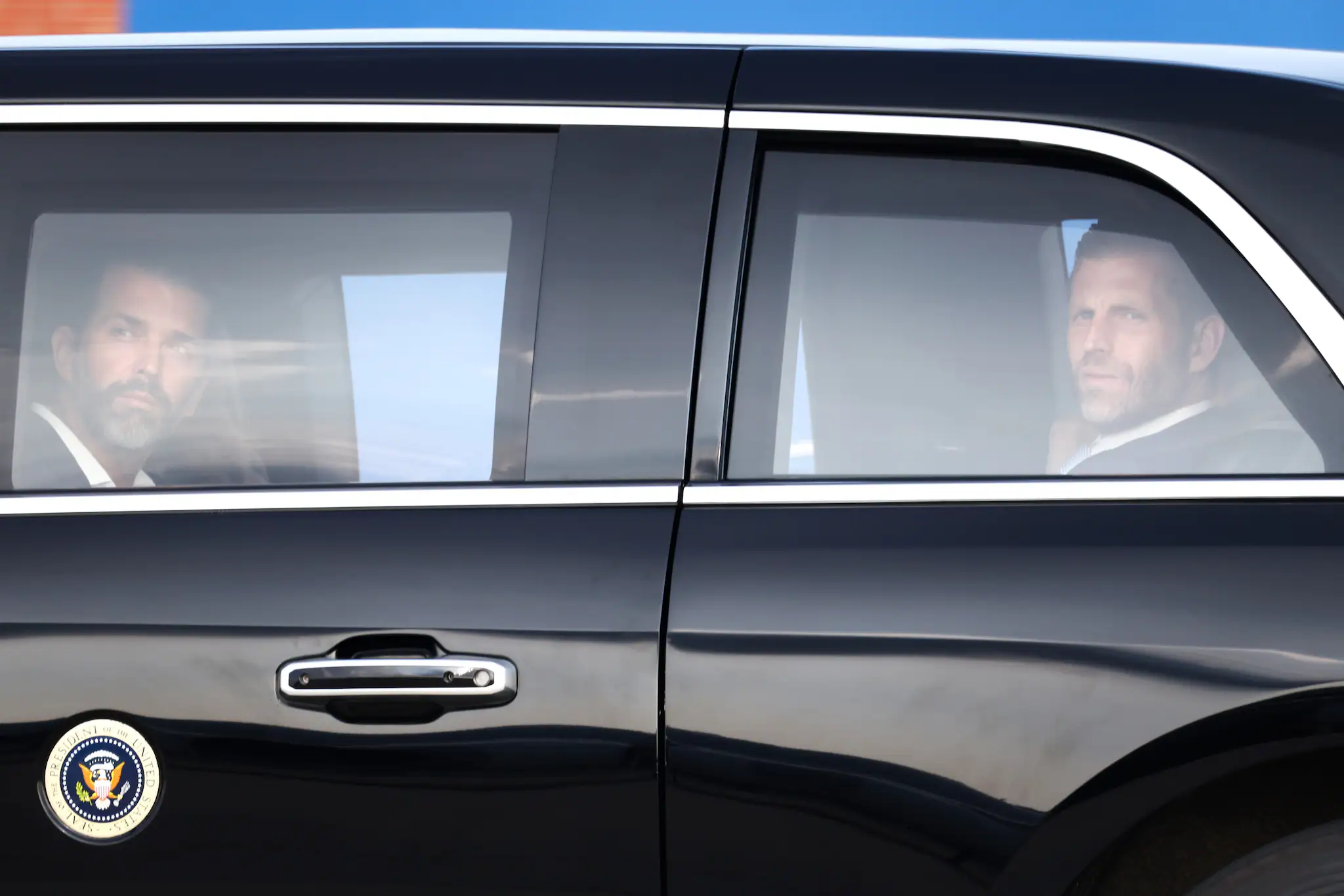
As the Trump administration continues directing significant resources toward modernizing the U.S. military, Donald Trump Jr. and Eric Trump are increasingly becoming influential investors in the fast-growing defense technology sector. Their investment activity has drawn widespread attention because it overlaps with an administration aggressively expanding Pentagon spending on artificial intelligence, drones, autonomous weapons, cybersecurity, and next-generation defense systems.
While supporters argue the investments reflect confidence in America’s defense industry and technological leadership, critics have raised questions about ethics and potential conflicts of interest given their close relationship to the president. Regardless of political viewpoints, the growing involvement of the Trump family in defense technology represents one of the most closely watched business developments of the administration.
Why Defense Technology Is Booming
Defense technology has become one of the hottest investment sectors in the United States. Global conflicts, geopolitical competition with China and Russia, rapid advances in artificial intelligence, and growing demand for autonomous military systems have encouraged both government agencies and private investors to pour billions into emerging defense companies.
The Pentagon is increasingly prioritizing technologies such as:
- Artificial intelligence for battlefield decision-making
- Autonomous drones
- Counter-drone systems
- Robotics
- Space-based defense capabilities
- Cybersecurity
- Advanced surveillance systems
The Trump administration has emphasized accelerating military modernization, creating significant opportunities for companies developing these technologies.
Donald Trump Jr. and Eric Trump Expand Their Investments
According to recent reports, investment firms connected to Donald Trump Jr. and Eric Trump have invested in numerous defense technology startups and established military contractors. Many of these investments occurred after President Donald Trump’s return to the White House.
Donald Trump Jr. has been associated with investment firm 1789 Capital, while Eric Trump has participated through investment vehicles connected to American Ventures and Dominari Holdings. These firms have targeted businesses developing advanced military technologies that align with future Pentagon priorities.
Their investments span companies working in:
- Military drones
- Artificial intelligence
- Space technology
- Defense software
- Autonomous robotics
- National security infrastructure
Industry analysts say venture capital has become a major driver of innovation in defense as startups increasingly compete with traditional military contractors.
Focus on SpaceX and Anduril
Reports indicate that a significant share of the Trump-linked investment funds has gone toward high-profile companies including SpaceX and Anduril Industries, both widely recognized as leaders in next-generation defense technology.
SpaceX continues expanding its role in national security through satellite communications, launch services, and military space operations.
Meanwhile, Anduril has become one of America’s fastest-growing defense startups by developing AI-powered surveillance systems, autonomous drones, border security technologies, and advanced battlefield software.
Both companies have secured substantial government contracts in recent years as defense priorities shift toward technology-driven warfare.
Investment in America’s Drone Industry
The Trump family’s defense investment strategy also includes growing interest in domestic drone manufacturing.
Recent reporting highlighted backing for companies seeking to strengthen U.S. drone production while reducing dependence on foreign manufacturers. Defense officials have repeatedly warned Congress that America must rapidly improve its drone capabilities to remain competitive against evolving global threats.
Military planners increasingly view inexpensive autonomous drones as critical components of future warfare after lessons learned from conflicts in Ukraine and the Middle East.
Pentagon Spending Continues to Rise
The timing of these investments coincides with increased government spending on defense modernization.
The administration has emphasized:
- Expanding AI research
- Strengthening missile defense
- Improving drone technology
- Enhancing cybersecurity
- Modernizing military equipment
- Supporting domestic manufacturing
This broader strategy has benefited many companies operating within the defense technology ecosystem.
Ethical Questions and Political Debate
Not everyone views these investments positively.
Government ethics experts have questioned whether close family members of a sitting president should invest in industries that receive large amounts of federal funding. Critics argue that even if no laws are violated, the appearance of overlapping political influence and financial interests could undermine public confidence.
The White House has rejected allegations of wrongdoing, maintaining that government contracts are awarded through established procurement processes and that companies earn contracts based on technical merit and competitive performance rather than political connections.
The companies themselves have similarly stated that their success is driven by innovation and operational capabilities.
Investors See Long-Term Growth
Defense technology has become increasingly attractive for institutional investors and venture capital firms.
Several factors are driving optimism:
- Rising global defense budgets
- Increased geopolitical instability
- AI-powered military applications
- Government support for domestic manufacturing
- Demand for autonomous systems
- Growing space-defense initiatives
Many analysts believe defense technology could remain one of the fastest-growing sectors over the next decade as governments continue investing heavily in national security.
What It Means for the Defense Industry
The Trump family’s investments illustrate a broader shift occurring across the defense sector.
Traditional defense contractors are now competing alongside technology startups developing software-driven military solutions. Venture capital firms that once focused primarily on Silicon Valley software companies are increasingly backing businesses serving the Pentagon and allied governments.
This changing landscape could accelerate innovation while reshaping how military technology is developed, financed, and deployed.
Looking Ahead
Whether viewed as smart business strategy or a source of ethical controversy, Donald Trump Jr. and Eric Trump’s growing presence in defense technology has become a significant political and financial story.
As the Trump administration continues prioritizing military modernization and national security investments, companies developing AI, drones, robotics, cybersecurity, and advanced defense systems are likely to remain central to U.S. policy and private investment.
The debate surrounding these investments is expected to continue, particularly as Congress, ethics watchdogs, and political opponents examine the relationship between government spending and private financial interests. At the same time, defense technology is positioned to remain one of the most influential sectors shaping America’s military capabilities and economic future.(newrepublic)
Want to learn more about one of the key figures behind these investments? Read our detailed guide on Donald Trump Jr.: Age, Wife, Children, Net Worth to explore his personal life, career, family, and estimated wealth.