
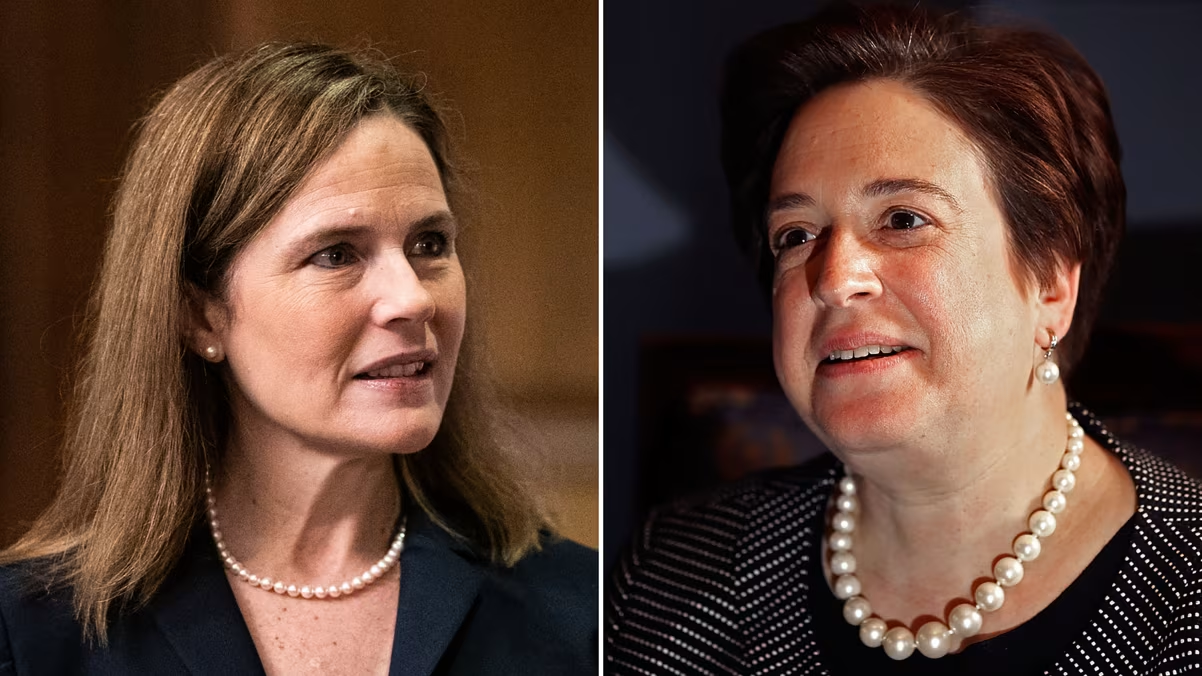
The Justices Barrett and Kagan hearings have drawn significant public attention as the U.S. Supreme Court remains at the center of major constitutional debates. Although Amy Coney Barrett and Elena Kagan joined the Court through separate confirmation processes years apart, their hearings continue to be referenced whenever Americans discuss judicial philosophy, Senate confirmation standards, and the future direction of the nation’s highest court.
From questions about constitutional interpretation to discussions surrounding precedent, abortion, executive power, religious liberty, and the role of judges, both confirmation hearings offered a revealing look into how each justice approaches the law. Today, legal scholars, journalists, and lawmakers often compare the two hearings to understand how confirmation politics have evolved and what they reveal about the changing judicial landscape.
Why the Justices Barrett and Kagan Hearings Still Matter
The confirmation hearings for Justice Elena Kagan and Justice Amy Coney Barrett were held under very different political circumstances, yet both became defining moments in modern Supreme Court history.
Justice Elena Kagan was confirmed in 2010 after serving as Solicitor General of the United States. Her hearings focused heavily on constitutional interpretation, executive authority, and whether judges should exercise judicial restraint.
Justice Amy Coney Barrett’s 2020 confirmation occurred just weeks before the presidential election following the death of Justice Ruth Bader Ginsburg. Her hearings generated intense political debate because of the timing and the potential shift in the Court’s ideological balance.
Together, the Justices Barrett and Kagan hearings highlight how Supreme Court confirmations have become increasingly important political events, with enormous implications for constitutional law and public policy.
Elena Kagan’s Confirmation Hearing
Elena Kagan entered her confirmation hearings with an impressive legal background that included serving as Dean of Harvard Law School and U.S. Solicitor General.
Throughout the hearings, senators questioned her about:
- Constitutional interpretation
- Executive branch authority
- Free speech protections
- Second Amendment issues
- Judicial impartiality
- Federal powers
Kagan repeatedly emphasized that judges should apply the law rather than pursue political agendas. She avoided making commitments on future cases, explaining that it would be inappropriate for a nominee to prejudge issues that could eventually reach the Supreme Court.
Her calm and measured responses earned praise from many legal observers, even as partisan disagreements remained.
Amy Coney Barrett’s Confirmation Hearing
Justice Amy Coney Barrett’s confirmation hearing became one of the most closely watched judicial proceedings in recent history.
The hearing addressed numerous controversial issues, including:
- Abortion rights
- The Affordable Care Act
- Religious liberty
- Gun rights
- Election-related litigation
- Constitutional originalism
Barrett consistently declined to express opinions on cases that might come before the Court. Instead, she stressed that judges must follow the Constitution and applicable legal precedents rather than personal beliefs.
Her judicial philosophy of originalism and textualism became a central topic throughout the hearing, with senators seeking clarification on how those approaches influence judicial decision-making.
Comparing the Justices Barrett and Kagan Hearings
Although the political environments differed significantly, the two hearings shared several similarities.
Judicial Independence
Both nominees emphasized that Supreme Court justices must remain independent from political pressure. Each stated that judges are obligated to interpret the law rather than legislate from the bench.
Avoiding Future Case Discussions
Like most modern nominees, both Barrett and Kagan declined to comment on specific legal disputes that could later reach the Court. This longstanding practice reflects concerns about maintaining judicial impartiality.
Constitutional Interpretation
One of the biggest differences involved constitutional philosophy.
Justice Barrett explained her commitment to originalism and textualism, arguing that constitutional meaning should generally be understood according to the text and its historical context.
Justice Kagan, while also emphasizing fidelity to the Constitution, has often been associated with a more pragmatic approach that considers precedent and practical legal consequences alongside constitutional text.
These differing judicial philosophies continue to shape legal debates today.
Political Context Behind the Hearings
Politics played a major role in both confirmation processes.
Kagan’s nomination came during President Barack Obama’s administration, when Senate Democrats held control, making confirmation more straightforward despite Republican opposition.
Barrett’s nomination occurred under President Donald Trump following Justice Ruth Bader Ginsburg’s death. The Senate moved quickly to complete the confirmation before Election Day, prompting intense national debate over whether the vacancy should have been filled before voters cast their ballots.
The contrasting political circumstances became almost as widely discussed as the nominees themselves.
Major Topics Raised During the Hearings
Several constitutional issues appeared repeatedly throughout both hearings.
Constitutional Interpretation
Senators questioned how each nominee understood the Constitution and the limits of judicial authority.
Judicial Precedent
Questions centered on the doctrine of stare decisis, which generally encourages courts to respect previous decisions while allowing limited circumstances for reconsideration.
Separation of Powers
Both nominees answered questions regarding the balance between Congress, the President, and the judiciary.
Individual Rights
Discussions included free speech, religious liberty, due process, and equal protection under the Constitution.
Public Interest in the Hearings
Interest in Supreme Court confirmations has grown dramatically over the past two decades.
Millions of Americans watched portions of both hearings because Supreme Court decisions increasingly affect major public issues, including:
- Healthcare
- Voting rights
- Immigration
- Religious freedom
- Environmental regulation
- Administrative law
- Civil rights
The hearings offered voters an opportunity to hear directly from nominees before lifetime appointments were confirmed.
How the Hearings Continue to Influence the Court
Today, the judicial philosophies discussed during the Justices Barrett and Kagan hearings continue to influence Supreme Court decisions.
Justice Barrett has participated in landmark cases involving constitutional interpretation, administrative law, and federal authority.
Justice Kagan has authored influential majority opinions, concurrences, and dissents that often emphasize statutory interpretation and practical legal reasoning.
Although they occasionally agree on legal questions, their differing approaches sometimes produce contrasting opinions in closely divided cases.
Lessons From the Confirmation Process
The hearings demonstrate several important features of the American constitutional system.
First, Supreme Court nominations receive extensive public scrutiny because justices serve lifetime appointments.
Second, confirmation hearings rarely produce direct answers on future cases, reflecting longstanding judicial ethics.
Third, constitutional philosophy has become one of the most significant factors influencing Senate debate.
Finally, the hearings illustrate how the Supreme Court remains deeply connected to national conversations about law, governance, and constitutional rights.
Conclusion
The Justices Barrett and Kagan hearings remain important milestones in modern Supreme Court history. While conducted under different political circumstances, both confirmation proceedings showcased the constitutional principles, judicial philosophies, and legal reasoning that continue to shape the Court today.
As the Supreme Court addresses some of the nation’s most consequential legal disputes, understanding these hearings provides valuable insight into how individual justices approach constitutional interpretation and why confirmation hearings remain among the most closely watched events in American government. Whether examining judicial independence, constitutional text, or the role of precedent, the hearings continue to inform public understanding of the Supreme Court and its lasting influence on American law.(cnn)