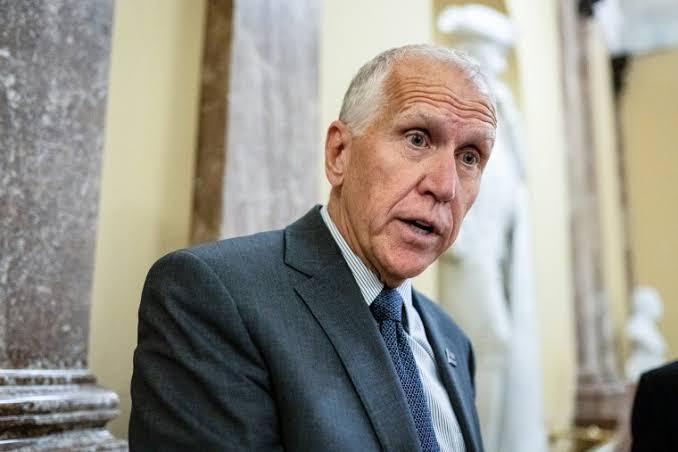
A growing dispute within the Republican Party has placed the SAVE America Act at the center of a heated Senate battle. North Carolina Republican Senator Thom Tillis has taken an unusually aggressive stance against the legislation, signaling that he is prepared to delay or even block its progress unless significant concerns are addressed. The development has surprised many lawmakers, as Republicans have largely remained united on immigration and border security legislation in recent years.
The latest confrontation highlights broader divisions within the GOP over immigration policy, federal spending, and the role of Congress in shaping long-term border reforms. While supporters argue the SAVE America Act would strengthen immigration enforcement and improve national security, Tillis believes certain provisions could create unintended legal, economic, and administrative consequences.
As debate intensifies, political observers are watching closely to see whether Republican leaders can negotiate a compromise or whether the legislation will face significant delays in the Senate.
What Is the SAVE America Act?
The SAVE America Act is a proposed piece of legislation designed to strengthen immigration enforcement while introducing new measures aimed at improving border security and enhancing verification systems.
Although specific versions of the legislation have varied over time, proposals commonly include provisions such as:
- Increased border enforcement funding
- Expanded employment verification requirements
- Stronger penalties for immigration violations
- Enhanced cooperation between federal and state authorities
- Reforms affecting asylum and visa processing
Supporters argue these measures are necessary to restore confidence in the nation’s immigration system and reduce unlawful border crossings.
Opponents, however, contend that some provisions could create unnecessary burdens for businesses, state governments, and lawful immigrants while raising constitutional and implementation concerns.
Why Thom Tillis Opposes the Current Version
The phrase “Tillis goes scorched-earth on SAVE America Act” reflects the unusually forceful tone the senator has adopted during Senate negotiations.
Rather than quietly expressing reservations, Tillis has openly criticized aspects of the legislation and warned Republican leadership that he is willing to use Senate procedural tools to prevent the bill from advancing until changes are made.
His concerns reportedly focus on several issues:
Administrative Challenges
Tillis has argued that some requirements could be difficult for federal agencies and state governments to implement efficiently.
He believes legislation should be practical rather than simply politically appealing.
Economic Impact
The senator has frequently emphasized the importance of maintaining a stable workforce while improving border security.
Business organizations have previously warned that sweeping immigration restrictions could create labor shortages in agriculture, construction, hospitality, and manufacturing.
Legal Questions
Another concern involves potential constitutional challenges.
Tillis has often supported legislation that can survive judicial review, arguing that laws tied up in lengthy court battles ultimately fail to deliver meaningful reforms.
Why Republican Leaders Support the Bill
Many Senate Republicans believe the SAVE America Act represents an opportunity to demonstrate a firm stance on immigration before future elections.
Supporters argue the legislation would:
- Strengthen border security
- Improve immigration enforcement
- Reduce illegal immigration
- Increase accountability within federal agencies
- Address public concerns over border management
For these lawmakers, delaying the bill risks weakening the party’s message on one of its most important policy issues.
Internal GOP Divisions Become Public
Although disagreements frequently occur behind closed doors, the Tillis dispute has become unusually public.
Several Republican senators continue backing the legislation without major changes, while others have privately expressed concerns similar to Tillis’s regarding implementation and long-term consequences.
The disagreement illustrates that immigration remains one of the most complicated issues within the Republican conference despite broad agreement on securing the border.
Instead of debating whether reform is necessary, senators are increasingly debating how those reforms should be written.
Democrats Closely Watching the Debate
Democrats have largely criticized the SAVE America Act, arguing that many provisions place too much emphasis on enforcement while failing to address broader immigration reforms.
Some Democratic senators have suggested bipartisan negotiations would produce more durable legislation than bills supported by only one party.
If Republican disagreements continue, Democrats could gain additional leverage during Senate negotiations.
Senate Rules Give Tillis Significant Influence
Unlike the House of Representatives, where majority leadership often controls legislative timing more directly, the Senate allows individual senators considerable procedural influence.
By objecting to unanimous consent requests, demanding additional debate time, or offering amendments, senators can significantly slow legislation.
This means Tillis does not necessarily need enough votes to defeat the SAVE America Act outright.
Instead, he may simply delay consideration until leadership agrees to negotiate changes.
Possible Outcomes
Several scenarios remain possible as negotiations continue.
Compromise Version
Republican leaders could revise portions of the bill to address Tillis’s concerns while preserving its central objectives.
This outcome would likely satisfy both party leadership and moderate Republicans.
Delayed Vote
Leadership could postpone Senate consideration until broader consensus develops.
This would avoid an embarrassing internal party conflict while allowing additional negotiations.
Senate Stalemate
If neither side compromises, procedural disputes could significantly delay the legislation.
Although this would not necessarily kill the bill, it could reduce momentum and complicate the legislative calendar.
Bipartisan Negotiations
If Republican divisions deepen, lawmakers from both parties could pursue a revised immigration package incorporating elements acceptable across the aisle.
While politically difficult, bipartisan agreements have occasionally emerged on immigration issues in the past.
Political Implications
The dispute extends beyond one piece of legislation.
Republicans have consistently highlighted immigration and border security as major campaign issues.
Internal disagreements over flagship legislation could complicate messaging heading into future elections.
For Tillis, however, taking an independent position is not unprecedented.
Throughout his Senate career, he has occasionally broken with members of his own party when he believed legislation required additional refinement.
Supporters view this as evidence of pragmatic leadership.
Critics argue it unnecessarily slows important policy initiatives.
Public Reaction
Conservative activists remain divided.
Some support Tillis’s insistence on crafting legislation that can withstand legal scrutiny and practical implementation.
Others believe delaying the SAVE America Act weakens Republican efforts to respond quickly to immigration concerns.
Business organizations are also watching closely because employment verification and labor market provisions could directly affect hiring practices across multiple industries.
Immigration advocacy groups, meanwhile, continue monitoring whether negotiations soften or strengthen enforcement measures.
What Comes Next?
Senate leaders are expected to continue discussions in an effort to avoid a prolonged procedural battle.
If compromises can be reached, the SAVE America Act may still advance with bipartisan or near-party-line support.
If negotiations fail, however, Tillis appears prepared to continue using Senate procedures to delay the legislation, potentially reshaping both the bill itself and the broader debate over immigration reform.
For now, the headline remains accurate: Tillis goes scorched-earth on SAVE America Act, threatening to stall it, underscoring that even within unified political parties, major policy proposals can face significant resistance from influential lawmakers determined to reshape legislation before it becomes law.
Conclusion
The clash over the SAVE America Act demonstrates the complexity of modern immigration policymaking in Washington. While many Republicans view the bill as a necessary step toward stronger border security, Senator Thom Tillis has emerged as one of its most vocal internal critics, arguing that the legislation should be legally sound, economically practical, and administratively workable. Whether his opposition leads to meaningful revisions or merely delays the bill, the outcome will likely influence future immigration debates and reveal how much leverage individual senators still wield in shaping major legislation. As negotiations continue, the SAVE America Act remains one of the most closely watched issues on the Senate agenda, with implications extending well beyond Capitol Hill.
Want to learn more about the official website at the center of major presidential announcements? Read our complete guide to The White House.gov: History, Purpose, Key Features, and How to Use the Official White House Website to explore its history, services, and how Americans can access official White House information online.