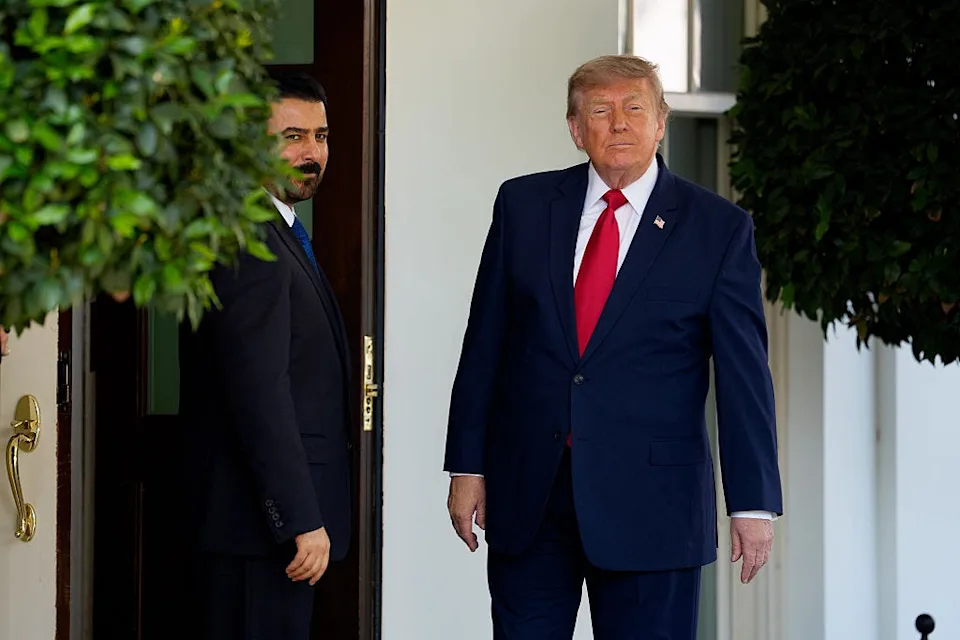
President Donald Trump’s approval rating is hovering near the lowest level of his political career, according to the latest national polling, as Americans express growing concerns over the economy, inflation, the ongoing conflict with Iran, and rising fuel prices. While Trump continues to maintain strong support among Republican voters, recent surveys suggest that independent voters are increasingly dissatisfied, creating fresh political challenges ahead of the 2026 midterm elections.
Several respected polling organizations, including Reuters/Ipsos, Marist, Pew Research Center, Economist/YouGov, and Silver Bulletin, have all reported approval numbers that remain near or at record lows for Trump’s second term. Although individual polls vary, the overall trend points toward declining public confidence in the president’s handling of key national issues.
Latest Poll Shows Approval Near Historic Low
A recent Reuters/Ipsos poll found that just 35% of Americans approve of Trump’s job performance, while the figure remains only slightly above the record low of 34% recorded earlier this year. The survey also noted that Trump’s approval is approaching the lowest point of his first presidency, when it fell to 33% in late 2017.
Other polling organizations report similar findings.
- Marist Poll placed Trump’s overall approval at 36%, the lowest of his second term.
- Pew Research Center found approval at 34%, also marking a second-term low.
- Economist/YouGov recorded 34% approval and 59% disapproval, representing Trump’s weakest weekly rating across both presidencies.
Although poll numbers differ depending on methodology, the broader trend remains consistent: public approval has steadily weakened over recent months.
Economy Becoming Trump’s Biggest Political Challenge
Economic concerns have emerged as one of the primary reasons behind Trump’s declining popularity.
For much of his political career, Trump enjoyed relatively strong ratings on economic management. However, recent inflation concerns, higher consumer prices, and uncertainty surrounding international trade have weakened that advantage.
According to the latest Marist survey, only about one-third of Americans approve of Trump’s handling of the economy—his weakest economic rating ever in that poll. Meanwhile, Reuters/Ipsos found that many Americans expect gasoline prices to continue rising as tensions in the Middle East intensify.
Higher living costs remain one of the most significant issues for voters heading toward the midterm elections.
Iran Conflict Weighs on Public Opinion
Foreign policy has also become a growing source of public dissatisfaction.
Recent military escalation involving Iran has generated widespread concern among Americans. A Reuters/Ipsos survey found that nearly eight in ten Americans expect a prolonged conflict, while relatively few believe the fighting will end quickly.
The same polling indicated limited public support for expanded military operations and growing worries that continued conflict could increase gasoline prices and place additional pressure on the U.S. economy.
Political analysts say these concerns are likely contributing to Trump’s broader approval decline.
Inflation Still Hurting White House Ratings
Inflation remains another major obstacle for the administration.
CNN polling analysis cited in recent reports suggests Trump’s approval on inflation has deteriorated dramatically over the past year. Net approval on inflation has fallen sharply, placing his ratings below those recorded by both Joe Biden and Jimmy Carter during comparable periods.
While inflation has moderated compared with previous peaks, many Americans continue to report frustration over:
- Grocery prices
- Housing costs
- Energy expenses
- Insurance premiums
- Everyday household spending
Economic confidence often has a direct influence on presidential approval, making inflation a central political issue heading into 2026.
Immigration Remains a Mixed Issue
Immigration has traditionally been one of Trump’s strongest policy areas.
However, recent polling suggests public opinion has become more divided.
According to recent surveys, trust in Trump’s handling of immigration has fallen noticeably since late 2024. Independent voters have become increasingly critical, while opinions regarding Immigration and Customs Enforcement (ICE) have also shifted negatively.
Republican voters largely continue to support Trump’s immigration agenda, but softer backing among independents could prove politically significant.
Republican Base Continues Strong Support
Despite declining national approval, Trump’s support within the Republican Party remains remarkably resilient.
Most national polling continues to show Republican approval levels above 80%, demonstrating that Trump’s core political coalition remains intact. Poll aggregators also show that while overall approval has slipped, Republican voters remain overwhelmingly supportive.
This strong partisan backing may help limit political damage within GOP primaries but may not be enough to offset losses among independent voters in competitive congressional districts.
Independents Could Decide the Midterms
Political strategists often view independent voters as the deciding factor in national elections.
Recent polling averages suggest Trump’s approval among independents has fallen substantially since the beginning of his second term. Analysts note that similar declines among independents preceded major congressional gains by Democrats during the 2018 midterm elections.
If current trends continue, Republicans could face a more challenging electoral environment in November 2026.
Polling Averages Show Consistent Trend
Although individual surveys produce different results, major polling averages tell a similar story.
Recent national averages generally place Trump’s approval around 39% to 40%, while disapproval ranges between 57% and 58%. Nate Silver’s Silver Bulletin similarly estimates Trump’s net approval at roughly -17 percentage points, an improvement from earlier in the spring but still historically weak.
Political experts caution that presidential approval often fluctuates in response to economic conditions, international events, and legislative outcomes, meaning future numbers could change significantly before the midterms.
What the Numbers Mean Going Forward
Approval ratings are not election predictions, but they remain one of the strongest indicators of a president’s political standing.
For Trump, the latest polling highlights several clear challenges:
- Persistent inflation concerns.
- Economic uncertainty.
- Ongoing conflict involving Iran.
- Rising fuel prices.
- Declining support among independent voters.
At the same time, the president continues to benefit from overwhelming Republican support, giving him a solid political foundation within his party.
Whether approval ratings recover may depend largely on improvements in economic conditions, inflation, foreign policy developments, and consumer confidence over the coming months.
With the 2026 midterm elections approaching, both Republicans and Democrats will closely monitor every new national poll for signs of changing voter sentiment. If current trends persist, Trump’s approval rating could become one of the defining political storylines of the election cycle. (Investing.com)
For more on the legal and political scrutiny surrounding the Justice Department, read our detailed coverage of Todd Blanche Attorney General Confirmation Hearing: Key Moments From Capitol Hill Testimony, where senators questioned the nominee over the Epstein files, DOJ independence, and investigations involving President Trump.