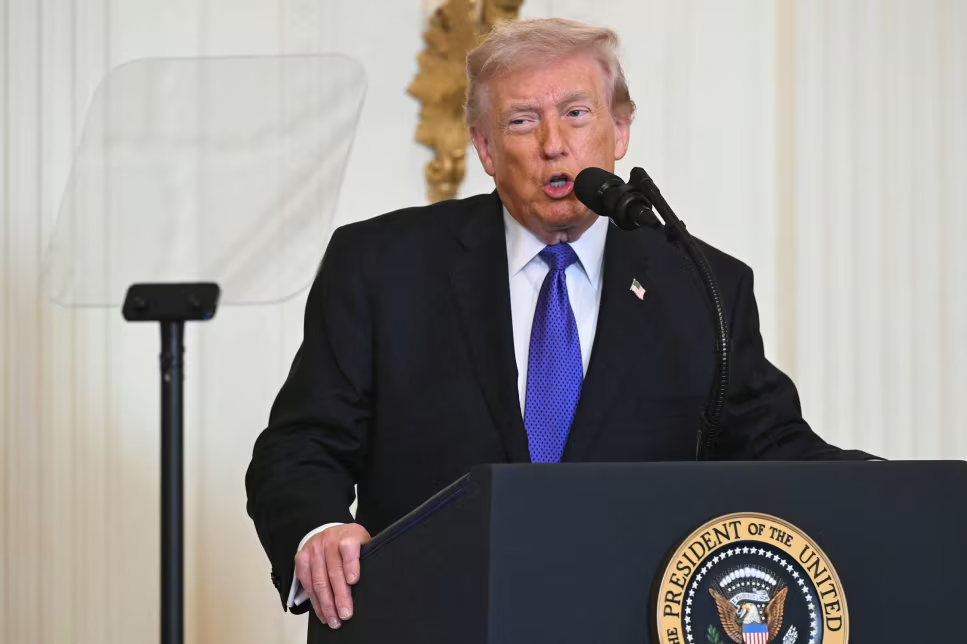
President Donald Trump’s longtime teleprompter operator, Gabriel Perez, is reportedly under investigation by federal regulators over allegations that he used access to confidential speech information to make profitable bets on prediction markets. The case has raised new questions about insider trading risks in emerging betting platforms and the ethical responsibilities of White House employees.
According to sources familiar with the investigation, Perez allegedly earned more than $100,000 by placing wagers on Trump’s speeches through the prediction market platform Kalshi. The trades reportedly focused on “mention markets,” where users bet on whether specific words, phrases, or topics would appear during public speeches.
Trump Teleprompter Operator Gabriel Perez Faces Federal Scrutiny
Gabriel Perez has worked as Trump’s teleprompter operator since 2016 and has been part of the president’s campaign and White House operations for years. His role gave him access to prepared remarks before Trump delivered major addresses, including high-profile speeches watched by millions of Americans.
Investigators are examining whether Perez used nonpublic information gained through his government position to predict Trump’s speech content before it became available to the public. Federal regulators are reportedly reviewing whether those actions violated rules against using confidential information for financial gain.
The Commodity Futures Trading Commission (CFTC), which oversees prediction markets, is involved in the inquiry. Sources said Kalshi identified unusual trading activity and referred the matter to regulators after its internal surveillance systems flagged the trades.
How the Alleged Betting Scheme Worked
The controversy centers around Kalshi’s “mention markets,” a relatively new type of prediction market that allows users to place bets on future events, including whether certain statements or terms will appear in speeches.
Unlike traditional stock market insider trading cases, this investigation involves prediction markets rather than company shares. However, regulators are examining whether access to restricted information gave Perez an unfair advantage over other participants.
Sources said Perez placed bets connected to multiple Trump speeches. These reportedly included major presidential events where the exact wording of remarks could influence betting outcomes. Investigators believe his position inside the White House may have provided information unavailable to ordinary users.
White House Responds to Allegations
The White House has acknowledged the investigation and emphasized that employees are expected to follow strict ethics rules. Officials said staff members must not use government access or confidential information for personal financial benefit.
Perez has reportedly cooperated with regulators during the investigation. Sources indicated discussions over a possible settlement, which could involve returning profits from the trades and agreeing to restrictions on future activity.
The allegations have drawn attention because White House employees often have early access to sensitive information, including policy announcements, speeches, and presidential schedules. Ethics experts argue that maintaining public trust requires strict boundaries between government duties and personal financial activities.
Growing Concerns Over Prediction Market Regulation
The investigation into Trump’s teleprompter operator comes as prediction markets gain popularity across the United States. Platforms such as Kalshi allow users to make predictions on a wide range of events, from economic indicators to political developments and public statements.
Supporters argue prediction markets provide valuable information about public expectations. Critics, however, warn that these platforms could create opportunities for individuals with inside access to profit unfairly.
The Perez case could become an important test for regulators as they determine how traditional insider trading principles apply to newer financial products. While insider trading laws have historically focused on securities markets, officials are now considering how similar concerns apply to event-based trading.
Political Impact of the Investigation
The investigation adds another controversy involving ethics and financial conduct within Trump’s administration. Because the alleged activity involved a presidential aide with access to Trump’s private speech preparations, the case has attracted significant political attention.
Critics argue that government employees must maintain higher ethical standards because they represent public institutions. Supporters of Trump’s administration have said the investigation should follow due process and that allegations should not be treated as proof of wrongdoing before conclusions are reached.
The White House has not suggested that Trump himself was involved in the alleged activity. The investigation is focused on Perez and his reported use of information connected to his role.
What Happens Next in the Investigation?
Federal regulators are expected to continue reviewing trading records, communications, and other evidence related to the alleged bets. The CFTC has not publicly confirmed all details of the investigation, and no criminal charges have been announced against Perez. (
If regulators determine that Perez violated prediction market rules, possible consequences could include financial penalties, repayment of profits, or restrictions from participating in similar markets.
The case may also lead to broader discussions about government ethics policies and whether employees with access to confidential information should face additional restrictions on prediction market participation.
Conclusion
The investigation into Trump teleprompter operator Gabriel Perez highlights growing concerns about insider information and prediction markets. Allegations that a White House employee used advance knowledge of presidential speeches to make profitable bets have sparked regulatory scrutiny and renewed debate over government ethics.
As federal officials continue examining the case, it could shape how regulators approach insider trading concerns in the expanding world of political prediction markets. (AP News)