
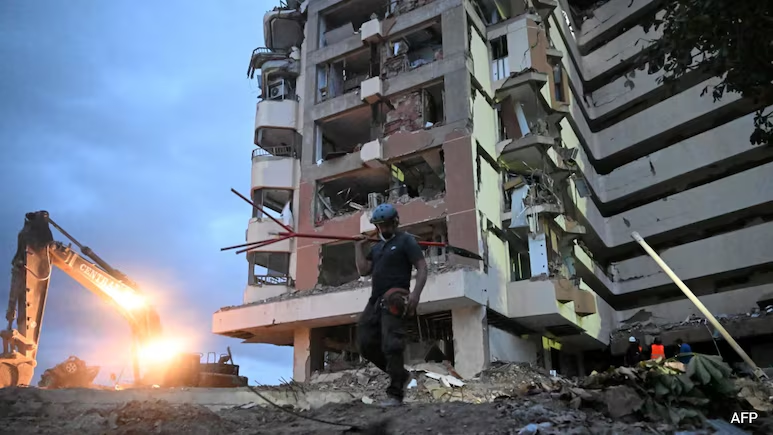
The Venezuela earthquake of 2026 has become one of the deadliest natural disasters in the country’s modern history, leaving thousands dead, tens of thousands injured, and entire neighborhoods in ruins. The catastrophic event triggered a massive humanitarian response as rescue teams, international aid organizations, and neighboring countries rushed to support affected communities.
This article covers everything you need to know about the Venezuela earthquake, including its magnitude, date, latest news, death toll, affected areas, rescue operations, humanitarian crisis, and what comes next.
Venezuela Earthquake Date
The devastating earthquakes struck on June 24, 2026, when two powerful seismic events occurred less than a minute apart along Venezuela’s northern coast.
According to seismic agencies, the first earthquake measured 7.2 magnitude, followed approximately 39 seconds later by an even stronger 7.5 magnitude earthquake. The epicenters were located around 160 kilometers west of Caracas, causing severe shaking across the capital and coastal regions.
The rare sequence of two major earthquakes occurring almost simultaneously dramatically increased destruction across affected cities.
Venezuela Earthquake Magnitude
The two earthquakes were officially recorded as:
- First earthquake: Magnitude 7.2
- Second earthquake: Magnitude 7.5
Experts described the event as a “doublet earthquake,” where two powerful earthquakes strike within seconds of each other on related fault systems. Such events significantly increase structural damage because buildings weakened by the first shock often collapse during the second.
The earthquakes were strong enough to be felt across much of northern Venezuela, with aftershocks continuing for weeks afterward.
Areas Most Affected
The worst destruction occurred in:
- La Guaira State
- Caracas Metropolitan Area
- Coastal communities north of Caracas
- Residential districts with older infrastructure
Entire apartment buildings collapsed while roads, bridges, schools, hospitals, and public facilities suffered extensive damage.
Power outages, communication failures, and transportation disruptions complicated rescue operations during the first several days after the disaster.
Venezuela Earthquake Death Toll
As rescue workers continued searching collapsed buildings, the official death toll steadily increased.
The latest government figures report:
- More than 4,700 deaths
- Over 16,700 injured
- Nearly 18,000 people left homeless
Authorities have warned that these numbers could continue to rise as recovery teams search damaged structures and identify missing individuals.
The disaster has become one of the deadliest earthquakes in Venezuelan history.
Rescue Operations Continue
Immediately after the earthquakes, Venezuela launched one of its largest emergency responses in decades.
Thousands of emergency personnel were deployed alongside:
- Firefighters
- Military units
- Medical teams
- Urban search-and-rescue specialists
- International humanitarian organizations
Specialized rescue equipment, drones, search dogs, and heavy machinery have been used to locate survivors trapped beneath collapsed buildings.
Several countries also dispatched humanitarian assistance, including medical supplies, emergency shelters, food, and rescue experts.
International Aid
The scale of destruction prompted assistance from governments and humanitarian organizations around the world.
The European Union announced additional emergency funding worth €20 million, supplementing earlier aid packages to support:
- Emergency medical services
- Search-and-rescue operations
- Temporary housing
- Water and sanitation
- Food assistance
The United Nations has also appealed for hundreds of millions of dollars to address urgent humanitarian needs.
Humanitarian Crisis Deepens
Weeks after the earthquakes, thousands of displaced families remain in temporary shelters.
Many communities continue facing:
- Limited clean drinking water
- Damaged hospitals
- Interrupted electricity
- Poor sanitation
- Food shortages
- Lack of permanent housing
Healthcare workers have also reported increases in infectious diseases, including diarrheal illnesses and skin infections, due to overcrowded shelters and damaged infrastructure.
Infrastructure Damage
The earthquakes caused widespread destruction to public infrastructure.
Among the reported damage:
- Hundreds of residential buildings collapsed
- Roads became impassable
- Bridges sustained structural damage
- Schools closed indefinitely
- Hospitals suffered partial destruction
- Government offices experienced severe damage
Satellite imagery has shown entire neighborhoods reduced to rubble, particularly in heavily affected coastal communities.
Economic Impact
Beyond the tragic loss of life, the earthquakes have created enormous economic challenges.
Reconstruction costs are expected to reach billions of dollars due to:
- Housing reconstruction
- Transportation repairs
- Healthcare rebuilding
- Public infrastructure replacement
- Business losses
- Tourism disruption
The disaster comes as Venezuela continues to face longstanding economic difficulties, making recovery even more challenging.
Why Was the Earthquake So Destructive?
Several factors contributed to the scale of devastation:
Two Major Earthquakes
Instead of a single earthquake, Venezuela experienced two powerful earthquakes within seconds, dramatically increasing structural failure.
Population Density
Many of the hardest-hit areas are densely populated urban communities where building collapses affected thousands of residents.
Aging Infrastructure
Older buildings not designed for strong seismic activity proved especially vulnerable.
Coastal Geography
The location of the earthquakes concentrated severe shaking across heavily populated northern regions.
Ongoing Recovery Efforts
Recovery is expected to continue for months and possibly years.
Current priorities include:
- Clearing debris
- Restoring electricity
- Repairing transportation networks
- Rebuilding schools
- Expanding temporary housing
- Supporting displaced families
- Restoring healthcare services
International organizations continue coordinating relief supplies while governments discuss long-term reconstruction funding.
Lessons from the Disaster
The Venezuela earthquake highlights the importance of:
- Earthquake-resistant construction
- Modern building codes
- Early warning systems
- Emergency preparedness
- Rapid disaster response
- International humanitarian cooperation
Experts believe future investments in resilient infrastructure could significantly reduce casualties during similar seismic events.
Latest Venezuela Earthquake News
Authorities continue updating casualty figures as recovery operations progress.
The official death toll has surpassed 4,700, while thousands remain displaced. Emergency aid from international partners continues to arrive, and humanitarian organizations are expanding medical care, shelter assistance, and reconstruction support for affected communities. (Reuters)
Conclusion
The Venezuela earthquake of June 24, 2026, marked by twin 7.2 and 7.5 magnitude earthquakes, has become one of the country’s most devastating natural disasters. Thousands of lives have been lost, entire communities have been destroyed, and recovery efforts remain ongoing.
Although rescue operations have saved many survivors, rebuilding homes, infrastructure, healthcare systems, and local economies will require sustained national and international support. As Venezuela moves from emergency response to long-term recovery, the tragedy serves as a powerful reminder of the importance of disaster preparedness and resilient infrastructure in earthquake-prone regions.