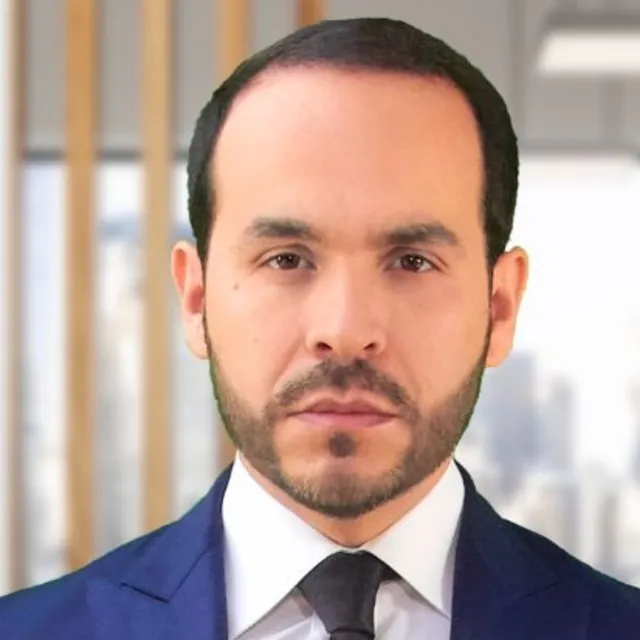
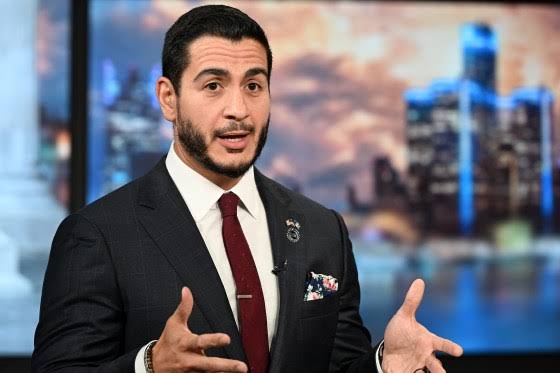
Abdul El-Sayed has emerged as one of the most closely watched progressive candidates in the 2026 U.S. Senate elections. The former Detroit health official entered Michigan’s Democratic Senate primary with an ambitious platform focused on healthcare, working-class economics, campaign finance reform and a stronger public-health system.
The race has attracted national attention because it represents more than a contest between two Democratic candidates. It has become a test of the Democratic Party’s direction, with El-Sayed representing a progressive, grassroots approach while Rep. Haley Stevens has appealed to more moderate and establishment-oriented voters.
As Michigan’s primary results continue to be counted, the Kalshi Michigan Senate primary market has also become a point of interest for political observers looking to understand how prediction markets assessed El-Sayed’s chances.
Who Is Abdul El-Sayed?
Abdul El-Sayed is a physician, epidemiologist and former public health administrator who previously served as executive director of the Detroit Health Department. His background in public health has been a central part of his political identity.
He first gained statewide attention when he ran for Michigan governor in 2018. Although he did not win the Democratic nomination, that campaign helped establish him as an important voice among progressive Michigan Democrats.
In 2026, El-Sayed returned to electoral politics with a campaign for the U.S. Senate seat being vacated by Democratic Sen. Gary Peters.
His campaign has emphasized issues such as universal healthcare, affordable housing, education, prescription drug costs, workers’ rights and campaign-finance reform. His official campaign platform also highlights Medicare for All and changes to the U.S. healthcare system.
Abdul El-Sayed and the Michigan Senate Primary
The 2026 Democratic primary became one of Michigan’s most competitive statewide Democratic contests.
El-Sayed faced Rep. Haley Stevens, while state Sen. Mallory McMorrow was also initially part of the field. The primary was significant because Michigan is an important battleground state, and Democrats are attempting to hold the Senate seat after Peters’ retirement.
The contest also exposed an ideological divide inside the Democratic Party.
El-Sayed positioned himself as an outsider who could mobilize younger voters, progressives and voters dissatisfied with the traditional Democratic establishment. Stevens, meanwhile, emphasized her congressional experience and ability to compete in a politically divided state.
The race attracted substantial outside spending and national endorsements. El-Sayed received support from prominent progressive figures, including Sen. Bernie Sanders and Rep. Alexandria Ocasio-Cortez.
His campaign also argued that its grassroots strategy could compensate for the enormous financial advantage enjoyed by outside groups supporting his opponents.
What Happened in the Michigan Primary?
Michigan voters went to the polls on August 4, 2026, in a primary that was too close to call as vote counting continued.
Early results showed El-Sayed with a narrow advantage over Stevens, but election officials still had significant ballots to count. Reports indicated that Wayne County could be especially important because of its large Democratic electorate.
The uncertainty means that early results should not automatically be interpreted as a final victory.
The outcome is particularly important because the Democratic nominee is expected to face Republican Mike Rogers in November. Rogers, a former congressman, was unopposed in the Republican primary.
El-Sayed has already emphasized the importance of Democratic unity in the general election, indicating that the primary battle would eventually have to give way to the larger contest against Republicans.
Kalshi Michigan Senate Primary: What Did the Prediction Market Show?
The Kalshi Michigan Senate primary market attracted considerable attention during the campaign.
Kalshi operates prediction markets where participants trade contracts based on the likelihood of future events. In election markets, prices can be interpreted as an approximate market-implied probability, although they should not be treated as equivalent to scientific polling.
Before the primary, Kalshi’s Michigan Democratic Senate nominee market showed El-Sayed as the leading candidate. A Kalshi market snapshot listed El-Sayed around 69% while Stevens was around 24%, with McMorrow substantially lower.
Kalshi’s broader election page also showed El-Sayed leading the Michigan Democratic Senate nominee market, with a market price corresponding to roughly a two-thirds probability in the displayed snapshot.
That distinction is important.
A prediction market does not actually count votes. Instead, its prices reflect the expectations of people buying and selling contracts. Those expectations can change rapidly in response to polling, endorsements, campaign news, debates and voter-turnout assumptions.
Therefore, the Kalshi Michigan Senate primary market should be viewed as one indicator of perceived candidate strength rather than a replacement for election results or traditional polling.
Why El-Sayed Became a Prediction-Market Favorite
Several developments helped El-Sayed become a favorite in prediction markets.
First, he demonstrated strong grassroots momentum. His campaign presented itself as a movement rather than a conventional Senate operation.
Second, progressive endorsements increased his national profile. Support from figures such as Sanders and Ocasio-Cortez helped reinforce his position among Democratic voters seeking a more progressive candidate.
Third, polling during the campaign showed that El-Sayed could compete seriously with Stevens. His campaign released a June poll showing him at 34%, compared with 31% for Stevens and 19% for McMorrow.
However, prediction markets did not eliminate uncertainty. Reporting before the primary showed that El-Sayed’s market-implied probability had fallen from earlier highs as Stevens gained ground.
That movement illustrated how quickly election markets can respond when a previously dominant candidate faces a stronger-than-expected challenger.
El-Sayed’s Major Campaign Issues
Healthcare has been one of El-Sayed’s defining issues.
Drawing on his background as a physician and public-health expert, he has argued for major changes to the American healthcare system. His platform includes Medicare for All, reducing prescription drug costs and challenging the influence of large healthcare corporations.
Campaign finance has also been central to his message.
El-Sayed has repeatedly emphasized that he does not accept corporate PAC money and has criticized the role of large outside expenditures in political campaigns. During a May debate, PolitiFact found his statement about not taking corporate PAC money to be accurate under the definition he used.
He has also focused on housing, education, workers’ rights, agriculture and public health.
The Bigger Political Meaning
The Abdul El-Sayed campaign has significance beyond Michigan.
A victory would demonstrate that a progressive candidate can challenge a well-funded Democratic establishment candidate in a major statewide primary.
It would also strengthen arguments from progressives that Democratic candidates can build winning coalitions by emphasizing economic issues, healthcare and grassroots organizing rather than relying primarily on traditional party infrastructure.
At the same time, Stevens’ competitiveness demonstrates that progressive candidates still face questions about electability, coalition-building and support among different parts of the Democratic electorate.
That is why the Michigan Senate primary has attracted national attention.
What Comes Next for Abdul El-Sayed?
If El-Sayed secures the Democratic nomination, the political environment changes immediately.
The primary campaign was largely about which Democrat should represent the party. The general election would be about whether Democrats can hold the Senate seat in a competitive battleground state.
Republican Mike Rogers would provide a very different challenge. El-Sayed would need to expand his coalition beyond the progressive voters who powered his primary campaign.
The general election could therefore test whether his grassroots appeal can translate into support from moderates, independents and voters who did not participate in the Democratic primary.
Abdul El-Sayed and the Future of Michigan Politics
Abdul El-Sayed has already established himself as an influential figure in Michigan progressive politics regardless of the final primary result.
His 2026 campaign brought healthcare, campaign finance, economic inequality and Democratic Party strategy into the center of a high-profile Senate contest.
The Kalshi Michigan Senate primary market added another layer to the story by providing a real-time measure of political expectations. While prediction markets can offer useful information about perceived momentum, the actual election is ultimately determined by votes.
With the Michigan Democratic Senate primary still too close to call as counting continues, El-Sayed’s campaign remains one of the most consequential political stories in Michigan.
Whether he ultimately wins the nomination or falls short, his campaign has demonstrated the growing influence of progressive grassroots politics in a state that remains crucial to the national Democratic coalition.
For a deeper look at his rise to power, presidency, U.S. drug-trafficking conviction, Trump pardon, return to Honduras, and latest legal developments, read our complete guide to Juan Orlando Hernández: Biography, Political Career, Presidency, Conviction, and Latest Developments.