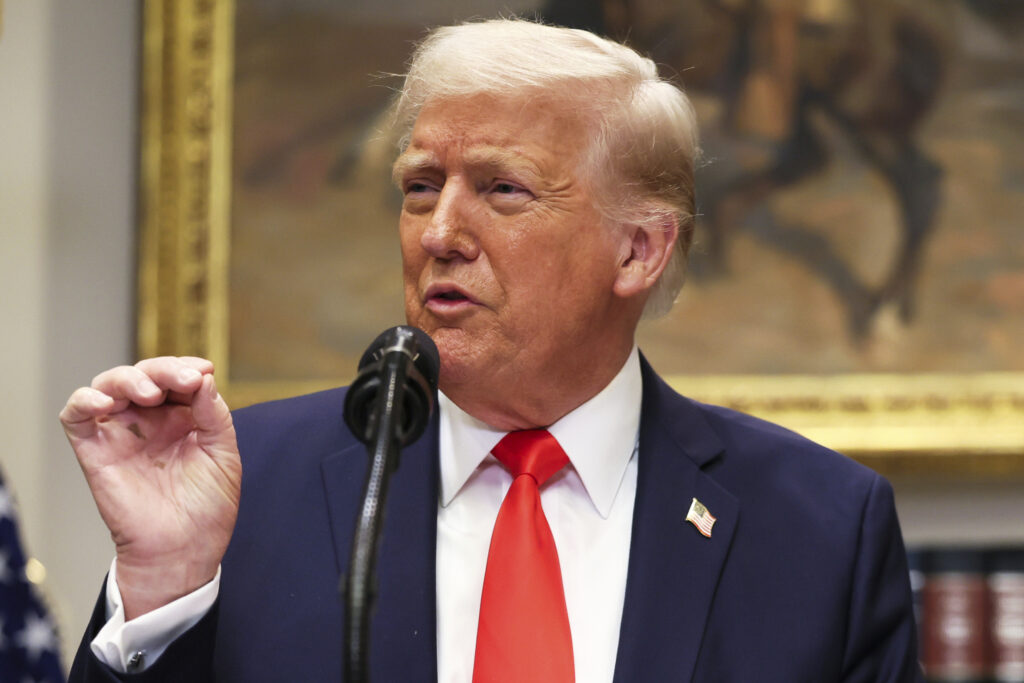
The Trump administration’s effort to reshape U.S. election rules has encountered significant legal resistance, with multiple federal judges blocking or limiting several high-profile initiatives. The growing trump election rules pushback has sparked a nationwide debate over election integrity, voter access, federal authority, and states’ constitutional powers to administer elections.
Over the past several months, courts have ruled against measures involving citizenship verification databases, proof-of-citizenship requirements, mail ballot restrictions, and federal voter roll initiatives. These rulings have become some of the most closely watched legal battles leading into upcoming elections.
Trump Election Rules Pushback Intensifies
President Donald Trump has argued that stronger election rules are necessary to prevent illegal voting and improve public confidence in elections. His administration introduced several executive actions aimed at strengthening voter verification and increasing federal oversight.
However, voting rights organizations, several states, and civil liberties groups challenged many of these measures in federal court, arguing that they exceeded presidential authority and risked disenfranchising eligible voters.
Recent court decisions suggest that judges are carefully examining whether the executive branch can impose nationwide election rules without congressional authorization.
Judge Blocks Trump Voter Database
One of the most significant developments came when a federal court issued a ruling widely described as the judge blocks Trump voter database decision.
The administration had expanded the federal SAVE (Systematic Alien Verification for Entitlements) system so that states could compare voter registration records with federal citizenship information.
Supporters argued the database would help identify non-citizens registered to vote.
Opponents claimed the system contained inaccuracies, exposed sensitive personal information, and could incorrectly flag lawful American citizens—particularly naturalized citizens.
The court concluded that the expanded database violated federal privacy protections and could result in eligible voters being improperly removed from voter rolls.
Judge Blocks Citizenship Database
The ruling has also been widely referred to as the judge blocks citizenship database case because it halted the administration’s effort to create a centralized federal citizenship verification tool for election officials.
According to the court, the government’s revised database collected and shared sensitive information beyond what federal law permits.
Voting rights advocates argued that database errors could create widespread confusion before elections and increase the likelihood of wrongful voter removals.
The administration has indicated it disagrees with the decision and is expected to continue defending its election policies through appeals.
Federal Judge Bars Trump from Implementing Proof of Citizenship Requirement to Vote
Another major setback involved the administration’s proposal requiring documentary proof of citizenship during voter registration.
In a separate ruling, a federal judge bars Trump from implementing proof of citizenship requirement to vote, finding that election administration primarily falls under the authority of Congress and the states rather than unilateral executive action.
The proposed policy would have required many voters to provide documents such as passports, birth certificates, or naturalization papers when registering or updating voter information.
Critics warned that millions of eligible Americans could face additional barriers because many do not possess these documents immediately.
Supporters maintained the rule would strengthen election security by ensuring only citizens vote in federal elections.
The court determined that the President lacked authority to impose the requirement through executive action alone.
Trump Mail Ballot Order Ruling
The administration also attempted to tighten rules governing absentee and mail voting.
The trump mail ballot order ruling became another major legal defeat after a federal judge blocked key portions of an executive order affecting mail ballot processing.
The proposal sought to restrict delivery of mail ballots based on newly created federal citizenship lists.
Several states argued the federal government was attempting to interfere with state election administration and postal operations.
The court agreed that significant parts of the executive order exceeded presidential authority and temporarily halted implementation while litigation continues.
Trump Administration Election Rule Lawsuit
Numerous lawsuits collectively known as the trump administration election rule lawsuit challenge various executive actions affecting elections.
Plaintiffs include:
- Democratic-led states
- Voting rights organizations
- Privacy advocacy groups
- Election administrators
- Civil liberties organizations
Their primary legal arguments include:
- Violation of constitutional separation of powers
- Federal overreach into state election administration
- Privacy violations
- Risk of voter disenfranchisement
- Lack of statutory authority for executive action
The Justice Department has defended the administration’s policies, arguing they are designed to improve election integrity and prevent unlawful voting.
Several cases remain ongoing in federal courts.
Sparkle Sooknanan Judge Ruling
One of the most widely discussed decisions came from U.S. District Judge Sparkle Sooknanan.
The sparkle sooknanan judge ruling concluded that the administration’s revised citizenship verification database violated multiple federal privacy protections.
The court found that officials expanded access to sensitive personal information without sufficient legal authority while creating risks that eligible citizens could be mistakenly identified as ineligible voters.
The ruling emphasized that protecting both election integrity and voter privacy remains essential under federal law.
Trump Voter Roll Purge Ruling
Another phrase frequently appearing in news coverage is the trump voter roll purge ruling.
Opponents argued that relying heavily on federal databases with incomplete or outdated information could cause legitimate voters to be removed from registration lists.
Election experts have long warned that database mismatches can occur because of:
- Name changes
- Clerical errors
- Delayed citizenship record updates
- Data entry mistakes
- Similar personal identifiers
The court expressed concern that widespread automated verification could increase the risk of erroneous voter removals without adequate safeguards.
Why These Cases Matter
The legal battles extend far beyond one administration.
They raise broader constitutional questions about:
- Who controls federal election rules?
- What authority does the President have over elections?
- How should states verify voter eligibility?
- How can election security be balanced with voter access?
- What privacy protections apply to voter information?
Most legal experts agree these questions may ultimately require higher court review if conflicting rulings continue.
Political Reactions
Republican leaders generally argue that stronger verification measures are necessary to prevent illegal voting and restore confidence in election outcomes.
Democratic officials and voting rights advocates counter that documented cases of non-citizen voting remain extremely rare and that stricter documentation requirements could discourage eligible citizens from participating.
The legal dispute has therefore become both a constitutional issue and a major political debate heading into future elections.
What Happens Next?
The Trump administration is expected to appeal several unfavorable rulings.
Meanwhile, states continue preparing for upcoming elections under existing election laws while courts review additional challenges.
Future appellate decisions—and potentially the U.S. Supreme Court—could ultimately determine the extent of presidential authority over election administration.
Until then, the series of court rulings represents one of the largest judicial checks on recent federal election initiatives.
Conclusion
The ongoing trump election rules pushback reflects an evolving legal battle over election security, federal authority, and voting rights. Court decisions blocking the expanded voter database, proof-of-citizenship requirements, and mail ballot restrictions demonstrate the judiciary’s willingness to scrutinize executive actions affecting elections.
As appeals continue, these rulings will likely shape future election policy and define the balance between protecting election integrity and ensuring eligible Americans retain full access to the ballot box.