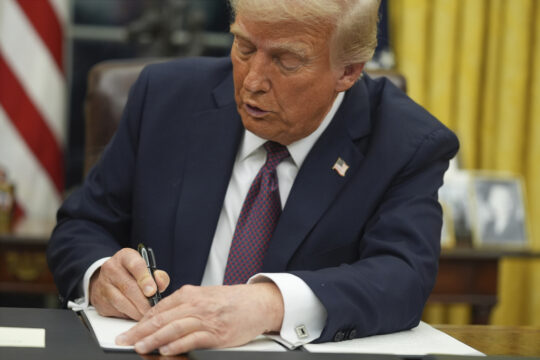
The debate over U.S. election rules has escalated again as legal challenges and court rulings continue to push back against proposed changes linked to election integrity policies. Former U.S. President Donald Trump and his allies have supported stricter voting regulations, including proof-of-citizenship requirements, voter database reforms, and mail-in ballot restrictions. However, these proposals have faced consistent resistance in federal courts and from state officials, leading to a growing legal and political conflict across the country.
This ongoing “Trump election rules pushback” reflects deeper tensions in American democracy—balancing election security concerns with voter access and constitutional rights.
Rising Legal Battles Over Voting Rules
One of the central issues in recent months has been proposals requiring voters to provide documented proof of citizenship when registering to vote in federal elections. Supporters argue that such measures are necessary to prevent voter fraud and strengthen trust in elections. Critics, however, claim that these rules could disenfranchise eligible voters who lack easy access to documentation.
Federal judges in multiple cases have intervened to pause or block aspects of these proposals. In several rulings, courts have questioned whether executive or administrative orders related to voting changes exceed constitutional authority or violate federal election law.
These legal interventions have fueled headlines describing a “judge blocks Trump voter database” narrative, referring to efforts aimed at expanding or restricting voter registration systems under federal oversight.
Federal Judges Block Proof-of-Citizenship Voting Rules
A key flashpoint in the Trump election rules pushback has been the attempt to enforce stricter citizenship verification requirements. In some rulings, federal courts have barred implementation of policies requiring documentary proof of citizenship for federal voter registration forms.
Opponents of the policy argue that it could disproportionately impact marginalized communities, including rural voters, elderly citizens, and people without ready access to passports or birth certificates. Courts have often emphasized that voting rights are protected under the Constitution and that any restrictions must be narrowly tailored and clearly authorized by law.
The phrase “federal judge bars proof of citizenship requirement to vote” has become a recurring headline in coverage of these disputes, signaling the judiciary’s active role in shaping election policy boundaries.
Mail-In Ballot Restrictions Face Pushback
Another major area of contention involves mail-in voting. Policies aimed at tightening mail ballot deadlines, limiting ballot drop boxes, or increasing verification steps have also been challenged in court.
The “Trump mail ballot order ruling” narrative has emerged from cases where judges have blocked or delayed enforcement of stricter absentee voting rules. Supporters of tighter controls argue that mail-in voting is vulnerable to delays and potential fraud. Meanwhile, election administrators and voting rights advocates insist that mail-in ballots are a secure and essential part of modern elections, especially for rural voters, military personnel, and those with disabilities.
Courts have frequently ruled that changes to mail voting procedures must be supported by state legislatures rather than executive directives, reinforcing separation-of-powers principles.
Citizenship Databases and Election Integrity Disputes
Another controversial aspect of the election policy debate is the creation or expansion of citizenship databases intended to verify voter eligibility. Proposals in this area have sparked concerns about data accuracy, privacy, and administrative errors that could wrongly remove eligible voters from registration rolls.
The “judge blocks citizenship database” storyline has emerged in multiple legal challenges where courts have paused implementation of voter verification systems due to concerns over due process and administrative authority.
Critics argue that such systems risk creating bureaucratic hurdles that could suppress voter turnout, while supporters maintain they are essential for maintaining accurate voter rolls and preventing non-citizen voting.
States Push Back Against Federal-Level Election Directives
Election law in the United States is heavily decentralized, meaning states play a primary role in administering elections. This structure has led to significant friction when federal-level proposals attempt to standardize or modify voting procedures.
Several states have joined lawsuits challenging sweeping election directives, arguing that they violate states’ rights under the Constitution. State election officials often claim that last-minute federal changes create confusion, increase administrative burden, and risk undermining public confidence in election outcomes.
This legal resistance has become a defining feature of the broader Trump election rules pushback landscape.
Political Divide Over Voting Laws Intensifies
The debate over voting regulations has become deeply polarized. Supporters of stricter rules, including many aligned with Donald Trump, argue that reforms are necessary to restore trust in the electoral system.
On the other side, voting rights organizations and many Democratic-led states argue that the changes are politically motivated and could suppress turnout among key voter groups.
This divide has turned voting policy into one of the most litigated areas in American politics, with courts frequently acting as the final arbiter when legislative or executive actions are challenged.
The Role of the Courts in Election Policy
Federal courts have become central players in shaping election law through injunctions, stays, and final rulings. Judges often evaluate whether proposed changes violate constitutional protections, federal statutes, or administrative procedures.
In many of the recent Trump election rules pushback cases, courts have emphasized three recurring principles:
- Election changes should be enacted by legislatures, not unilateral executive action
- Voting restrictions must not create undue burden on eligible voters
- Administrative systems must ensure accuracy without risking disenfranchisement
These principles continue to guide judicial reasoning as new cases emerge.
Impact on Future Elections
The outcome of these legal battles could significantly influence how future U.S. elections are conducted. If stricter voting rules are ultimately upheld, states may adopt more uniform identification and verification systems. If courts continue to block these policies, the current patchwork of state-level voting laws is likely to remain in place.
The uncertainty surrounding election rules also fuels political messaging and campaign strategies, as both parties attempt to frame voting access and election security as central issues.
Conclusion
The Trump election rules pushback reflects a broader struggle over the future of American democracy. At the center are competing visions of election integrity and voter accessibility, with courts repeatedly stepping in to interpret constitutional boundaries.
As legal challenges continue, the debate over voter ID laws, citizenship verification, and mail-in ballot rules will remain a defining issue in U.S. politics. Whether these policies expand or remain blocked will depend heavily on future judicial decisions and legislative actions across states.