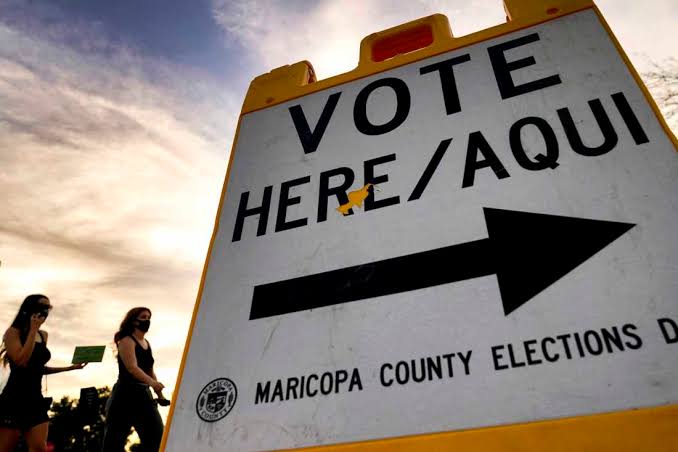
The U.S. Supreme Court has agreed to review one of the most significant election law cases in recent years, placing Arizona’s voter registration rules under national scrutiny. The case centers on whether the state can require documentary proof of U.S. citizenship from voters registering through certain state procedures, even though federal law already requires applicants to swear under penalty of perjury that they are citizens.
The decision could influence election administration across the United States, particularly as several states consider stricter voter registration requirements ahead of future elections. It also renews the long-running legal debate over the balance between election security and voter access.
Why the SCOTUS Arizona Voter Registration Case Matters
Arizona has been at the center of voting rights litigation for more than two decades. State lawmakers have repeatedly argued that stronger verification measures are necessary to ensure that only eligible U.S. citizens vote in elections.
Voting rights organizations, however, argue that documentary citizenship requirements create unnecessary barriers for eligible voters, especially naturalized citizens, Native Americans, students, military families, and elderly voters who may not have immediate access to birth certificates, passports, or other qualifying documents.
The Supreme Court’s review will determine whether Arizona’s latest voter registration requirements are compatible with federal election law.
What Is Proof of Citizenship Voting?
The proof of citizenship voting requirement means voters must provide official documents proving they are U.S. citizens before completing voter registration.
Commonly accepted documents include:
- U.S. birth certificate
- U.S. passport
- Certificate of Naturalization
- Certificate of Citizenship
- Certain tribal identification documents where permitted by state law
Supporters argue these requirements help protect election integrity by ensuring only eligible citizens are registered to vote.
Critics argue that documented cases of noncitizen voting are extremely rare and that millions of eligible Americans may not have easy access to the required paperwork.
Background of Arizona’s Election Laws
Arizona first adopted proof-of-citizenship requirements through Proposition 200 in 2004. Since then, the state has repeatedly defended its election laws in federal courts.
In 2013, the U.S. Supreme Court ruled in Arizona v. Inter Tribal Council of Arizona that Arizona could not reject the federal voter registration form solely because applicants failed to provide documentary proof of citizenship. The Court held that the National Voter Registration Act (NVRA) requires states to “accept and use” the federal registration form for federal elections.
That ruling became one of the most important precedents governing voter registration across the country.
Why Is the Supreme Court Hearing the Case Again?
The latest legal challenge involves Arizona laws enacted in 2022 that expanded citizenship verification requirements for voter registration.
Among the challenged provisions, Arizona requires documentary proof of citizenship for certain voter registration methods and authorizes election officials to verify citizenship records under specific circumstances.
Federal district and appellate courts blocked key portions of those laws, concluding they likely conflict with federal law.
Arizona officials appealed, arguing that states possess constitutional authority to establish reasonable procedures that protect election integrity while ensuring only eligible citizens participate in elections.
The Supreme Court has now agreed to hear the dispute during its upcoming term.
Arizona’s Arguments
Supporters of Arizona’s position argue that:
- States have constitutional authority to administer elections.
- Documentary proof strengthens confidence in election results.
- Citizenship verification prevents unlawful voter registration.
- Election officials should have flexibility to confirm voter eligibility.
Arizona officials maintain that these requirements are reasonable safeguards rather than barriers to voting.
Arguments from Voting Rights Groups
Opponents argue that Arizona’s requirements violate federal law and unnecessarily burden eligible voters.
They contend that:
- The federal voter registration form already requires applicants to swear under penalty of perjury that they are U.S. citizens.
- Documentary proof requirements disproportionately affect naturalized citizens, elderly voters, rural residents, students, and low-income Americans.
- Many eligible voters do not possess passports or certified birth certificates.
- Federal law was designed to simplify voter registration rather than create additional paperwork.
Voting rights advocates also point to studies showing that documented cases of noncitizen voting remain exceptionally rare.
Federal Law vs. State Authority
At the heart of the SCOTUS Arizona voter registration case is the balance between state authority and federal election law.
Congress enacted the National Voter Registration Act to make voter registration more accessible and establish consistent standards for federal elections.
Arizona argues that the law sets minimum requirements but does not eliminate a state’s authority to verify voter eligibility.
Opponents respond that allowing each state to impose additional documentation requirements would undermine Congress’s goal of creating a uniform federal registration system.
The Supreme Court must determine where the constitutional balance lies.
Potential Nationwide Impact
Although the lawsuit focuses on Arizona, its impact could extend well beyond the state.
If Arizona prevails:
- Other states may adopt similar proof of citizenship voting laws.
- Election officials could receive broader authority to verify voter eligibility.
- More litigation over voter registration requirements may follow.
If the challengers prevail:
- States may remain limited in imposing additional documentary requirements beyond federal law.
- The federal voter registration process would likely remain unchanged.
- Existing voter registration protections under the National Voter Registration Act would be reinforced.
Election officials across the country are closely watching the case because it could reshape voter registration policies nationwide.
Broader Election Law Debate
The Arizona case arrives amid ongoing national discussions over election administration, voter identification laws, absentee voting, and election security.
Several states have introduced or considered legislation addressing:
- Voter ID requirements
- Mail voting procedures
- Early voting access
- Citizenship verification
- Election security measures
The Supreme Court’s decision could become one of the most significant election law rulings in years, providing guidance for lawmakers and election officials across the United States.
When Will the Supreme Court Decide?
The Supreme Court is expected to hear oral arguments during its upcoming term, with a ruling likely in 2027.
Legal experts believe the decision will clarify the relationship between federal voter registration laws and state authority over election administration.
Because the case addresses a recurring constitutional issue, its ruling could influence election policy and future voting rights litigation for many years.
Conclusion
The SCOTUS Arizona voter registration case represents a major legal battle over election administration and voting rights. The Court’s decision will determine whether Arizona can enforce stricter documentary citizenship requirements or whether federal law limits the state’s authority.
Regardless of the outcome, the ruling is expected to have nationwide consequences for voter registration, election integrity, and the ongoing debate surrounding proof of citizenship voting. As states continue exploring election reforms, this Supreme Court case could become a defining precedent for future federal and state election laws.