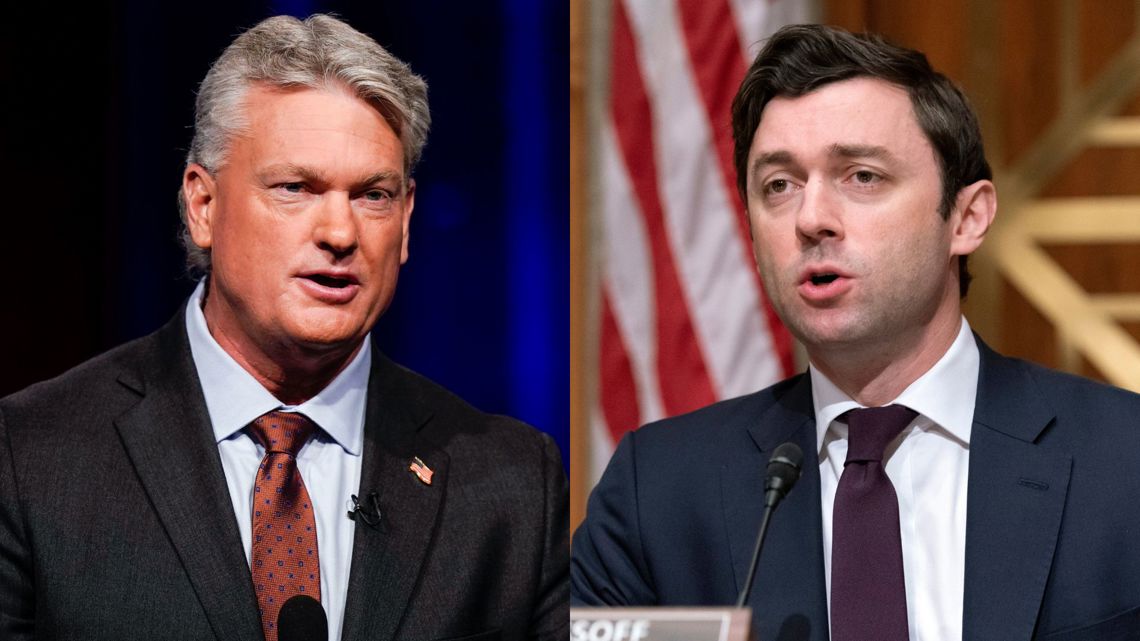
The 2026 United States Senate election in Georgia is already shaping up to be one of the most closely watched races in the country. Democratic incumbent Jon Ossoff is seeking another six-year term, while Republican Congressman Mike Collins has emerged as one of the leading GOP contenders. Although the general election remains months away, early polling, fundraising, and campaign strategies are drawing national attention because control of the U.S. Senate could once again hinge on Georgia.
In this article, we examine the latest Jon Ossoff Mike Collins poll, compare both candidates, analyze the political landscape, and explore what the race could mean for the United States Senate in 2026.
Jon Ossoff vs. Mike Collins Poll: Where the Race Stands
Recent public polling suggests that the Georgia Senate race is highly competitive. Most early surveys indicate a virtual tie between Jon Ossoff and Mike Collins, with both candidates polling within the margin of error.
While polling numbers vary by organization, several trends have emerged:
- Jon Ossoff continues to perform strongly among Democratic voters and suburban independents.
- Mike Collins enjoys overwhelming support among Republican voters, especially in rural Georgia.
- Independent voters remain divided, making them a crucial voting bloc.
- The race is expected to tighten further after both parties officially nominate their candidates.
Political analysts caution that early polls primarily measure name recognition rather than final voting intentions. Campaign spending, debates, economic conditions, and voter turnout will likely influence the outcome.
Why This United States Senate Race Matters
The Georgia Senate contest has national significance because Democrats and Republicans are expected to compete for every possible Senate seat.
The United States Senate currently remains one of the most competitive institutions in American politics. If Republicans gain even a small number of seats, they could shift the balance of power. Likewise, Democrats view defending Jon Ossoff’s seat as essential to maintaining influence in Washington.
Georgia has become a true swing state over the past several election cycles, making statewide races unpredictable.
Who Is Jon Ossoff?
Jon Ossoff is the junior United States Senator from Georgia and a member of the Democratic Party.
He first gained national attention during a closely watched special congressional election in 2017. Although he lost that race, Ossoff built a strong political profile that helped him defeat Republican Senator David Perdue in the 2021 runoff election.
His Senate priorities include:
- Voting rights
- Affordable healthcare
- Government accountability
- Infrastructure investment
- Economic development
- National security
Ossoff has frequently positioned himself as a moderate Democrat capable of working across party lines while remaining supportive of Democratic priorities.
Who Is Mike Collins?
Mike Collins currently represents Georgia in the U.S. House of Representatives as a Republican.
Before entering Congress, Collins built a successful trucking business and became well known in conservative political circles.
His campaign focuses on:
- Border security
- Reducing federal spending
- Lower taxes
- Energy independence
- Second Amendment protections
- Conservative judicial appointments
Collins has received significant support from grassroots Republicans and conservative organizations, making him one of the strongest potential challengers to Ossoff.
Comparing Jon Ossoff and Mike Collins
| Category | Jon Ossoff | Mike Collins |
|---|---|---|
| Party | Democratic | Republican |
| Current Position | U.S. Senator | U.S. Representative |
| Political Style | Moderate Democrat | Conservative Republican |
| Major Issues | Healthcare, voting rights, infrastructure | Border security, economy, taxes |
| Core Support | Urban and suburban voters | Rural and conservative voters |
Both candidates are expected to raise tens of millions of dollars, making this one of America’s most expensive Senate races.
Campaign Issues Driving the Election
Several issues are expected to dominate the campaign.
Economy
Inflation, job growth, and wages remain top concerns for Georgia voters.
Republicans argue that Democratic economic policies have increased costs for families.
Democrats point to infrastructure investments and job creation as signs of economic progress.
Immigration
Border security remains one of Mike Collins’ strongest campaign themes.
Republicans continue criticizing the Biden administration’s immigration policies while promising stronger enforcement.
Jon Ossoff supports immigration reform but also advocates improving border management alongside bipartisan legislation.
Healthcare
Healthcare continues to divide both parties.
Ossoff supports expanding affordable healthcare access and lowering prescription drug prices.
Collins argues for reducing federal involvement while encouraging private-sector competition.
Crime and Public Safety
Public safety has become increasingly important across Georgia.
Republicans emphasize stricter law enforcement policies.
Democrats advocate combining crime prevention with community investment and policing reforms.
Fundraising Battle
Money will play a major role throughout the campaign.
Jon Ossoff has consistently ranked among the Democratic Party’s strongest Senate fundraisers.
Meanwhile, Mike Collins is expected to receive substantial financial backing from Republican organizations, business groups, and conservative political action committees.
Outside spending from national organizations could push total campaign expenditures into the hundreds of millions of dollars.
Georgia’s Changing Political Landscape
Georgia has transformed dramatically over the past decade.
Population growth around Atlanta has increased Democratic support in suburban counties, while rural regions remain strongly Republican.
Recent statewide elections demonstrate how evenly divided the electorate has become.
Winning independent voters in suburban counties will likely determine the Senate winner.
Can Polls Predict the Winner?
Polls provide valuable snapshots but cannot guarantee election outcomes.
Factors that may change the race include:
- Presidential approval ratings
- Economic performance
- Candidate debates
- Television advertising
- Early voting
- Mail voting
- Unexpected national events
Historically, Georgia elections have often been decided by very narrow margins.
National Political Implications
Both parties view Georgia as one of the most important Senate battlegrounds.
A Democratic victory would strengthen the party’s efforts to maintain Senate influence.
A Republican win could significantly improve GOP chances of controlling the United States Senate after the 2026 elections.
Political strategists across the country are expected to invest enormous resources into the race.
What Political Experts Are Watching
Election analysts are focusing on several indicators:
- Monthly polling trends
- Candidate favorability ratings
- Fundraising totals
- Independent voter movement
- Suburban turnout
- Rural Republican enthusiasm
If either candidate begins building a consistent lead among independents, the race could quickly shift in their favor.
Election Timeline
The campaign will continue intensifying throughout 2026.
Key milestones include:
- Party primaries
- Candidate debates
- Major fundraising deadlines
- Early voting
- General Election Day
Voter registration efforts and turnout operations are expected to become increasingly important as Election Day approaches.
Final Thoughts
The Jon Ossoff vs. Mike Collins poll highlights what is likely to become one of the most competitive races of the 2026 United States Senate elections. Georgia remains one of America’s premier political battlegrounds, with both Democrats and Republicans investing heavily in securing this crucial Senate seat.
While early polling suggests neither candidate holds a decisive advantage, the campaign is still in its early stages. Economic conditions, voter turnout, fundraising, debates, and national political trends will all shape the final outcome.
For now, the Georgia Senate race remains a true toss-up, and political observers nationwide will continue watching every new poll as Democrats fight to defend Jon Ossoff’s seat and Republicans attempt to flip one of the country’s most important Senate contests.