The U.S. Supreme Court continues to shape the balance of power between the executive branch and independent federal agencies, and Neil Gorsuch has once again found himself at the center of a major constitutional debate. The Court’s recent ruling in Trump v. Slaughter has become one of the most significant legal decisions of 2026, expanding the authority of the president over independent regulatory agencies while raising new questions about the future of the administrative state.
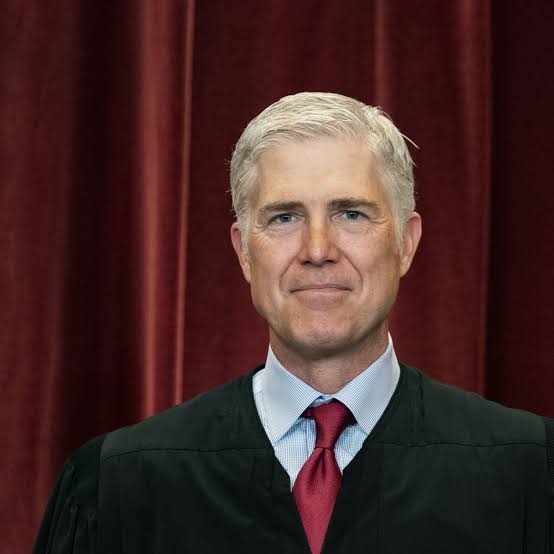
Justice Neil Gorsuch, known for his originalist approach to constitutional interpretation, wrote a separate concurring opinion that has attracted widespread attention from legal scholars. While he agreed with the Court’s ruling, he also warned that the decision exposes broader constitutional problems involving Congress, independent agencies, and executive power.
Who Is Neil Gorsuch?
Neil Gorsuch has served as an Associate Justice of the U.S. Supreme Court since 2017 after being nominated by President Donald Trump. Before joining the nation’s highest court, Gorsuch served on the U.S. Court of Appeals for the Tenth Circuit and built a reputation for careful textual interpretation and constitutional originalism.
Throughout his tenure, Justice Gorsuch has consistently argued that judges should interpret laws according to their original public meaning rather than adapting them to modern political preferences. His opinions frequently emphasize separation of powers, limited government, and adherence to constitutional text.
Those principles were again on display in the Court’s recent Slaughter decision, where Gorsuch supported expanding presidential authority but simultaneously questioned whether Congress can continue delegating vast powers to independent agencies.
Understanding the Slaughter Decision
The Supreme Court’s ruling in Trump v. Slaughter centered on whether the president has the constitutional authority to remove commissioners serving on independent federal agencies like the Federal Trade Commission (FTC).
Rebecca Kelly Slaughter, a Democratic FTC commissioner, challenged her removal after President Donald Trump dismissed her before the expiration of her statutory term. Existing federal law had limited presidential removal to specific circumstances such as inefficiency, neglect of duty, or misconduct.
In a 6-3 decision, the Supreme Court ruled that these statutory restrictions are unconstitutional when applied to executive officers exercising presidential authority. The ruling overturned key portions of the Court’s landmark 1935 decision in Humphrey’s Executor, which had protected the independence of many federal agencies for nearly a century.
Neil Gorsuch’s Concurring Opinion
Although Justice Gorsuch agreed with the Court’s outcome, his separate opinion focused on a much broader constitutional issue.
According to Gorsuch, once the Court recognizes that the president must control executive officers, another question naturally follows: why do independent agencies continue exercising legislative and judicial powers that Congress delegated to them?
He noted that many federal agencies today:
- Write regulations carrying the force of law.
- Investigate alleged violations.
- Enforce those regulations.
- Conduct administrative hearings.
- Issue penalties affecting businesses and individuals.
Gorsuch argued that allowing agencies to combine executive, legislative, and judicial authority creates significant constitutional concerns. His concurrence suggested that future cases may require the Court to reconsider how much authority Congress may delegate to administrative agencies.
Why the President’s Authority Matters
The Constitution assigns executive power to the president, who must ensure that federal laws are faithfully executed.
Supporters of the Court’s decision argue that presidents cannot effectively manage the executive branch if agency leaders remain insulated from presidential oversight.
Under this reasoning:
- The president is elected nationally.
- Executive officials implement presidential policies.
- Voters should know who is politically accountable.
- Independent agencies should not operate entirely outside presidential control.
The Court’s majority concluded that executive officials exercising governmental power must ultimately remain accountable to the president.
Critics Raise Concerns
Not everyone welcomed the ruling.
Critics argue that independent agencies were intentionally designed to reduce political influence over sensitive regulatory matters involving consumer protection, financial markets, labor issues, communications, and elections.
Legal scholars warn that allowing presidents to remove commissioners at will could make regulatory decisions increasingly political.
Opponents also argue that weakening agency independence may create uncertainty for businesses, investors, and consumers who depend on stable regulatory enforcement.
The dissenting justices expressed concern that overturning decades of precedent could fundamentally alter the balance between Congress and the executive branch.
How the Decision Fits Into Neil Gorsuch’s Judicial Philosophy
Justice Gorsuch’s opinion reflects themes that have appeared throughout his Supreme Court career.
He has repeatedly questioned:
- Broad delegations of legislative authority.
- Expansive interpretations of administrative power.
- Judicial doctrines giving agencies wide discretion.
- Government actions lacking clear constitutional authorization.
His opinions often emphasize that Congress—not executive agencies—should make major policy decisions.
Rather than allowing unelected officials to create broad regulatory programs, Gorsuch argues that elected lawmakers must write clear laws while courts enforce constitutional limits.
The Slaughter decision continues this pattern by reinforcing executive accountability while simultaneously questioning whether modern administrative agencies possess too much authority.
Potential Impact on Federal Agencies
The ruling could affect numerous independent agencies beyond the FTC.
Legal experts believe the decision may influence future litigation involving agencies such as:
- Securities regulators.
- Communications commissions.
- Consumer protection agencies.
- Labor boards.
- Financial oversight bodies.
However, the Court also indicated that certain institutions, including the Federal Reserve, occupy a distinct constitutional position.
On the same day it decided Trump v. Slaughter, the Supreme Court refused to allow President Trump to immediately remove Federal Reserve Governor Lisa Cook, signaling that the central bank may receive different constitutional treatment because of its unique monetary policy responsibilities.
Broader Constitutional Questions
Justice Gorsuch’s concurrence suggests that future Supreme Court cases may examine even larger constitutional issues.
Among the unanswered questions are:
- Can Congress continue creating powerful independent agencies?
- Should agencies exercise legislative authority?
- How much rulemaking authority can Congress delegate?
- What constitutional limits exist on administrative adjudication?
These questions could define constitutional law for years to come.
Many scholars believe the Court’s administrative law jurisprudence is entering a new phase, with increasing scrutiny of agency independence and congressional delegations of power.
Public and Legal Reactions
The Slaughter decision has generated strong reactions across the legal community.
Supporters argue that the ruling restores constitutional accountability by ensuring that executive officials answer to the elected president.
Others view the decision as strengthening democratic accountability because voters can reward or punish presidents for agency actions.
Critics, however, warn that reducing agency independence could expose regulatory enforcement to changing political priorities and weaken long-standing institutional safeguards.
Justice Gorsuch’s concurrence has become a major focus of legal commentary because it signals that additional constitutional challenges involving administrative agencies may soon reach the Supreme Court.
Conclusion
Justice Neil Gorsuch remains one of the Supreme Court’s most influential constitutional thinkers. His opinion in the Slaughter decision demonstrates his commitment to original constitutional principles while highlighting unresolved questions about the modern administrative state.
Although the Court expanded presidential authority over independent agencies, Gorsuch’s concurrence suggests that the debate is far from over. His opinion raises fundamental issues about congressional delegation, agency power, and constitutional separation of powers that could shape future Supreme Court rulings for decades.
As new legal challenges emerge, Neil Gorsuch will likely continue playing a central role in defining the constitutional relationship between Congress, federal agencies, and the president, making his opinions essential reading for anyone following the future direction of the U.S. Supreme Court.