Introduction
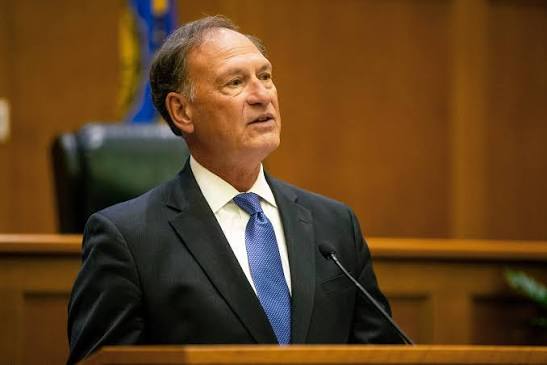
Samuel Alito, often referred to simply as Justice Alito or Sam Alito, remains one of the most influential and closely watched members of the U.S. Supreme Court. Since joining the Court in 2006, Alito has played a pivotal role in shaping constitutional law, particularly on issues involving abortion, religious liberty, gun rights, free speech, and executive authority.
In recent weeks, interest in Alito retirement, NPR Alito retiring, and Alito Supreme Court has surged after a mistaken news report sparked nationwide speculation. While the retirement rumors quickly spread across social media, they were later officially retracted, confirming that Justice Alito has not announced his retirement.
This article explores Samuel Alito’s background, judicial philosophy, landmark decisions, retirement speculation, and what his future could mean for the Supreme Court.
Who Is Samuel Alito?
Samuel Anthony Alito Jr., born on April 1, 1950, in Trenton, New Jersey, has served as an Associate Justice of the U.S. Supreme Court since January 31, 2006. He was nominated by former President George W. Bush to replace Justice Sandra Day O’Connor following a contentious confirmation process.
Before joining the nation’s highest court, Alito built an impressive legal résumé:
- Graduated from Princeton University
- Earned his law degree from Yale Law School
- Served as Assistant U.S. Attorney
- Worked in the Office of the Solicitor General
- Became a judge on the U.S. Court of Appeals for the Third Circuit in 1990
His extensive judicial experience earned him a reputation as a careful constitutional conservative long before his Supreme Court nomination.
Justice Alito’s Judicial Philosophy
Justice Alito is widely regarded as one of the Supreme Court’s leading conservative voices.
He frequently describes his legal approach as originalism and textualism, meaning constitutional provisions and federal laws should generally be interpreted according to their original public meaning and statutory text.
Throughout his tenure, Alito has consistently favored:
- Religious liberty protections
- Broad First Amendment rights
- Expanded Second Amendment protections
- Limits on federal administrative authority
- Strong executive powers in certain circumstances
Supporters argue that he faithfully applies the Constitution as written, while critics contend that many of his rulings have shifted longstanding legal precedents.
Landmark Supreme Court Opinions
Dobbs v. Jackson Women’s Health Organization
Perhaps Justice Alito’s most consequential opinion came in 2022 when he authored the majority opinion in Dobbs v. Jackson Women’s Health Organization.
The ruling overturned Roe v. Wade, ending nearly fifty years of federal constitutional protection for abortion rights and returning abortion regulation to individual states.
The decision dramatically reshaped American politics and remains one of the most significant Supreme Court rulings in decades.
Religious Freedom Cases
Alito has consistently supported expansive protections for religious liberty.
His opinions often emphasize that government actions should not unnecessarily burden sincere religious beliefs, making him a central figure in many First Amendment disputes involving faith-based organizations.
Free Speech
Justice Alito has also written or joined opinions defending broad free speech protections, including controversial expression that many Americans find offensive.
His approach generally reflects skepticism toward government restrictions on speech.
Gun Rights
Alito has consistently interpreted the Second Amendment broadly, supporting individual firearm ownership rights and joining opinions expanding constitutional protections for gun owners.
Why Is “Alito Retirement” Trending?
Searches for Alito retirement, Alito retiring, NPR Alito, and NPR Alito retiring spiked dramatically after an unexpected media error in June 2026.
An NPR article briefly reported that Justice Samuel Alito was retiring from the Supreme Court. However, the report was later withdrawn after the Supreme Court confirmed that no retirement announcement had been made.
NPR issued a formal retraction and acknowledged that the report had been published in error. Veteran Supreme Court correspondent Nina Totenberg, who authored the story, also apologized after the mistake was discovered.
The incident generated widespread discussion because Supreme Court retirements have enormous political implications.
Did Samuel Alito Actually Retire?
No.
As of the latest official information, Justice Samuel Alito has not retired and has made no public announcement indicating plans to leave the Supreme Court.
The Court’s public information office confirmed that reports suggesting otherwise were inaccurate, and NPR formally retracted its story.
Who Is Nina Totenberg?
Nina Totenberg is one of America’s best-known legal journalists and has covered the Supreme Court for decades.
She has reported on numerous landmark constitutional cases and is widely respected for her legal reporting.
The mistaken retirement report became a major media story precisely because of her long-established reputation covering the Court. NPR later explained that the publication resulted from an internal misunderstanding and issued a correction.
Why Would an Alito Retirement Matter?
Supreme Court justices serve lifetime appointments.
If Justice Alito were to retire, the sitting president would nominate a replacement, subject to Senate confirmation.
Because the Supreme Court often decides nationally significant constitutional questions by narrow margins, replacing even one justice could have lasting effects on issues such as:
- Abortion
- Gun rights
- Religious liberty
- Election law
- Federal regulatory authority
- Executive power
That explains why rumors regarding Sam Alito immediately become major political news.
Supporters and Critics
Justice Alito remains among the Court’s most polarizing members.
Supporters argue:
- He consistently follows the Constitution.
- He limits judicial activism.
- He protects religious liberty.
- He defends individual constitutional rights.
Critics argue:
- His opinions have overturned longstanding precedents.
- His jurisprudence has shifted constitutional protections in a more conservative direction.
- His approach has contributed to increasing ideological divisions surrounding the Court.
Regardless of viewpoint, few dispute his influence on modern constitutional law.
Samuel Alito’s Influence on the Supreme Court
After nearly two decades on the bench, Justice Alito has authored or joined many of the Court’s defining decisions.
His legal reasoning continues to shape debates involving:
- Constitutional interpretation
- Federalism
- Separation of powers
- Individual rights
- Administrative law
He is frequently among the most cited justices in contemporary Supreme Court opinions.
What Comes Next?
There has been recurring speculation about when some senior justices might retire, but no official announcement has been made by Justice Alito.
Observers will continue watching future Supreme Court terms, major rulings, and any official statements from the Court regarding the justices’ plans. Until then, reports suggesting that Alito has stepped down remain incorrect.
Conclusion
Samuel Alito remains one of the most consequential figures in American constitutional law. From authoring landmark decisions to shaping the Supreme Court’s conservative jurisprudence, Justice Alito continues to influence legal debates across the United States.
Recent searches for Alito retirement, NPR Alito retiring, Alito retiring, Sam Alito, and Alito Supreme Court were fueled by an erroneous news report that was later retracted. The official position is clear: Justice Alito has not announced his retirement.
Whether admired for his commitment to originalism or criticized for his role in transformative rulings, Samuel Alito’s legacy will continue to be studied as one of the defining judicial careers of the 21st century.