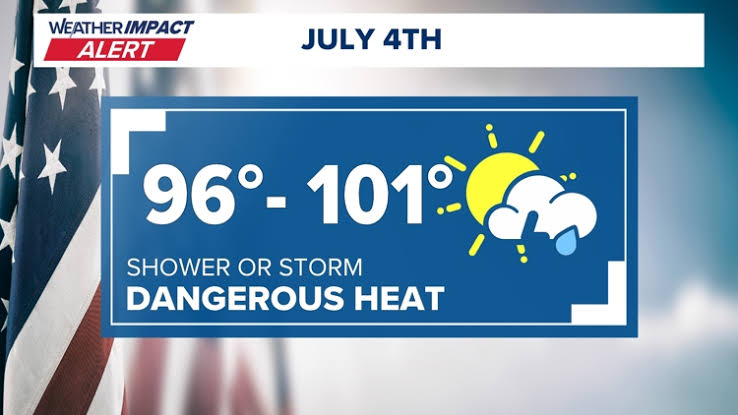
The Fourth of July is one of America’s most celebrated holidays, bringing millions of people together for fireworks, parades, backyard barbecues, concerts, and family gatherings. However, the 2026 Independence Day weekend is unfolding under an intense and dangerous heatwave affecting much of the United States. Meteorologists warn that a powerful heat dome stretching across the Midwest, South, and East Coast is producing record-breaking temperatures and high humidity, creating hazardous conditions for holiday celebrations.
As millions prepare to celebrate America’s 250th Independence Day, weather has become one of the biggest concerns. Cities are modifying schedules, opening cooling centers, and urging residents to take extra precautions against heat-related illnesses.
What Is Causing the Fourth of July Heatwave?
The primary driver behind this year’s extreme temperatures is a weather pattern known as a heat dome. A heat dome forms when a strong high-pressure system traps hot air near the Earth’s surface. As the air sinks, it compresses and warms further, allowing temperatures to climb day after day.
This persistent pattern prevents cooler air and storm systems from moving into affected regions, leading to prolonged periods of extreme heat. Combined with high humidity, the heat index—or “feels like” temperature—can exceed 110°F (43°C) in some locations.
Regions Experiencing the Greatest Heat
Weather forecasts indicate that much of the eastern half of the United States faces significant heat impacts during the Fourth of July weekend.
Areas expected to experience dangerous conditions include:
- Northeast cities including New York, Philadelphia, Boston, and Washington, D.C.
- Midwest states such as Illinois, Indiana, Ohio, and Michigan.
- Southern states experiencing prolonged high temperatures and humidity.
- Portions of the Mid-Atlantic where record highs are possible.
Many communities are expected to see temperatures in the upper 90s or above 100°F, while humidity pushes the heat index even higher. Overnight temperatures are also expected to remain unusually warm, offering little relief.
How Heatwaves Affect Fourth of July Celebrations
Extreme heat changes nearly every aspect of Independence Day festivities.
Fireworks Displays
Many cities are reviewing fireworks schedules because prolonged heat increases wildfire risks, particularly in dry regions of the western United States. Authorities are monitoring weather conditions closely before approving public displays. Some locations have already restricted fireworks due to elevated fire danger.
Parades and Outdoor Events
Parades often involve hours of standing in direct sunlight. Several municipalities have shortened routes, adjusted event times, or increased access to shaded areas and hydration stations to reduce health risks.
Backyard Barbecues
Family cookouts remain a holiday tradition, but extreme temperatures increase the risk of dehydration, food spoilage, and heat exhaustion. Experts recommend keeping perishable foods refrigerated until serving and limiting strenuous outdoor activities during peak afternoon heat.
Health Risks During Extreme Heat
Heatwaves are among the deadliest weather events in the United States because they affect nearly everyone spending extended time outdoors.
Common heat-related illnesses include:
- Heat cramps
- Heat exhaustion
- Heat stroke
- Severe dehydration
- Sunburn
Older adults, infants, pregnant women, outdoor workers, and people with chronic medical conditions face the greatest risks.
Health officials recommend drinking water regularly, avoiding alcohol during peak heat, wearing lightweight clothing, applying sunscreen, and taking frequent breaks in air-conditioned spaces.
Travel Challenges During the Holiday Weekend
Millions of Americans travel during the Fourth of July holiday.
Extreme heat can create transportation problems including:
- Increased vehicle breakdowns due to overheating.
- Airport delays caused by high temperatures affecting aircraft performance.
- Higher fuel consumption from air conditioning use.
- Stress on public transportation systems.
Travelers are encouraged to carry water, monitor weather forecasts, and avoid leaving children or pets inside parked vehicles.
Rising Energy Demand
Heatwaves significantly increase electricity demand as homes and businesses rely heavily on air conditioning.
Utility companies in several regions have warned consumers to conserve electricity during peak hours to reduce strain on the electrical grid. Fortunately, emergency planning has helped minimize widespread outages despite record demand in many areas.
Climate Change and Increasing Summer Heat
Scientists continue to study how climate change influences extreme weather events. While no single heatwave can be attributed entirely to climate change, long-term observations show that heatwaves are becoming more frequent, longer-lasting, and more intense in many regions.
Warmer global temperatures increase the likelihood of prolonged periods of dangerous heat, particularly when combined with persistent atmospheric patterns such as heat domes. Urban areas experience even greater impacts because concrete, asphalt, and buildings absorb and retain heat, creating the “urban heat island” effect.
Tips for Staying Safe This Fourth of July
If you’re planning to celebrate outdoors, follow these safety recommendations:
- Drink water throughout the day.
- Wear loose, light-colored clothing.
- Apply SPF 30 or higher sunscreen.
- Stay in shaded or air-conditioned areas whenever possible.
- Schedule outdoor activities during morning or evening hours.
- Check on elderly relatives and neighbors.
- Never leave children or pets inside vehicles.
- Recognize early symptoms of heat exhaustion and seek medical attention if necessary.
Simple precautions can prevent serious heat-related illnesses.
Looking Ahead
Weather experts expect temperatures to remain above average in many parts of the country through the holiday weekend before gradual cooling arrives in some regions early next week. However, forecasts continue to evolve, and residents should monitor local weather advisories for the latest updates.
Conclusion
The Fourth of July is a time to celebrate freedom, family, and community, but the 2026 holiday also serves as a reminder of the growing challenges posed by extreme weather. From modified parades and wildfire concerns to increased health risks and heavy demand on power grids, this year’s heatwave is reshaping traditional Independence Day celebrations across the United States.
By staying informed, following heat safety guidance, and planning activities carefully, Americans can still enjoy the holiday while protecting themselves and those around them. As heatwaves become a more common feature of summer, preparedness and awareness will remain essential parts of every Fourth of July celebration. (BBC)