
Every year on July 4, Americans celebrate Independence Day with fireworks, parades, and patriotic events. But a common misconception persists: Did the Founding Fathers actually declare independence and sign the Declaration of Independence on July 4, 1776?
The answer is more nuanced than many people realize.
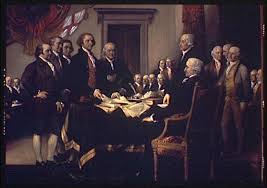
While July 4, 1776 is one of the most significant dates in American history, it was not the day the United States officially voted for independence, nor was it the day most delegates signed the Declaration of Independence. Instead, it marked the day the Continental Congress formally approved the final wording of the Declaration of Independence, creating the document that became America’s founding statement of liberty.
This article explains what actually happened on July 4th, 1776, separates historical fact from myth, and explores why the date remains so important nearly 250 years later.
The Road to Independence
Before July 1776, the thirteen American colonies had spent years resisting British rule.
Tensions grew after Britain imposed taxes such as the Stamp Act and the Townshend Acts without colonial representation in Parliament. Events like the Boston Massacre in 1770 and the Boston Tea Party in 1773 further increased hostility.
By April 1775, fighting had already begun at Lexington and Concord, meaning the American Revolutionary War was underway even before independence was officially declared. Many colonial leaders realized reconciliation with Britain was becoming impossible.
July 2, 1776: The Actual Vote for Independence
One of the biggest historical misconceptions is that America became independent on July 4.
In reality, July 2, 1776 was the day the Continental Congress approved Richard Henry Lee’s resolution declaring the colonies “free and independent States.” Twelve colonies voted in favor, while New York abstained because its delegates lacked instructions.
In a famous letter to his wife Abigail, John Adams predicted that July 2 would become America’s great national holiday, complete with celebrations, fireworks, and festivities.
Ironically, history chose July 4 instead.
What Happened on July 4, 1776?
After approving independence on July 2, Congress spent the next two days reviewing and editing Thomas Jefferson’s draft of the Declaration of Independence.
Jefferson had written the original draft with help from the Committee of Five:
- Thomas Jefferson
- John Adams
- Benjamin Franklin
- Roger Sherman
- Robert R. Livingston
Congress debated the wording, removed several passages—including criticism of the slave trade—and refined the final language.
On July 4, 1776, delegates officially adopted the final version of the Declaration of Independence. That is why the document bears the date “July 4, 1776.”
Was the Declaration Signed on July 4?
Another widespread myth is that all 56 delegates signed the Declaration on July 4.
Historical records show this is not true.
Instead:
- Congress approved the text on July 4.
- Printer John Dunlap immediately produced printed copies.
- Most delegates signed the formal parchment version on August 2, 1776.
- Several delegates signed even later during the following months.
- John Hancock’s large signature became the most famous, giving rise to the American expression “put your John Hancock here.”
Why July 4 Became Independence Day
Although independence was technically approved on July 2, the Declaration itself became the defining symbol of American freedom.
The document:
- Explained why the colonies separated from Britain.
- Announced the decision to the world.
- Presented philosophical principles about liberty and natural rights.
- Inspired future democratic movements worldwide.
Since the official document carried the date July 4, Americans naturally associated independence with that day.
By 1777, the first anniversary celebrations were already taking place on July 4.
The Declaration’s Famous Words
One reason the Declaration became so influential is its powerful language.
Among its best-known lines are:
“We hold these truths to be self-evident, that all men are created equal…”
The Declaration also states that people possess unalienable rights including:
- Life
- Liberty
- The pursuit of Happiness
Although these ideals were not fully realized in 1776, they later inspired movements for civil rights, women’s rights, abolition, and democracy around the world.
Printing the Declaration
Immediately after Congress approved the text, Philadelphia printer John Dunlap worked overnight to produce approximately 200 printed copies known today as the Dunlap Broadsides.
These copies were distributed across the colonies beginning on July 5.
Military commanders, colonial assemblies, and newspapers soon received copies, helping spread news of independence rapidly.
Public Readings Across America
The Declaration was meant to be heard as much as read.
Public officials gathered citizens in town squares to read the document aloud.
One of the most famous readings occurred in New York City on July 9, 1776.
After hearing the Declaration, crowds reportedly pulled down a statue of King George III, symbolizing the rejection of British rule.
The Myth of a Single Historic Day
History often simplifies major events into one memorable date.
In reality, American independence unfolded over several weeks.
June 7, 1776
Richard Henry Lee introduced the resolution for independence.
June 11–28
Thomas Jefferson drafted the Declaration.
July 2
Congress voted in favor of independence.
July 4
Congress approved the final Declaration.
July 5
Printed copies were distributed.
August 2
Most delegates signed the official parchment.
Each milestone played a crucial role in America’s founding.
Why the Declaration Matters Today
The Declaration of Independence remains one of the world’s most influential political documents.
It established several enduring principles:
- Government derives power from the people.
- Individuals possess natural rights.
- Citizens may replace governments that become tyrannical.
- Equality and liberty are foundational democratic ideals.
These concepts influenced constitutions and independence movements across Europe, Latin America, Asia, and Africa.
A New Discovery Ahead of America’s 250th Anniversary
As the United States approaches its 250th anniversary, historians continue uncovering new pieces of Revolutionary history.
In 2026, researchers at the UK’s National Archives discovered an extremely rare early printed copy of the Declaration of Independence among British naval records. The document had been captured during the Revolutionary War and remained unnoticed for nearly 250 years, offering historians fresh insight into how quickly the Declaration circulated during the conflict.
The discovery highlights that even after nearly two and a half centuries, the story of American independence continues to evolve.
Common Myths About July 4, 1776
Myth: America became independent on July 4.
Reality: Congress voted for independence on July 2.
Myth: Everyone signed the Declaration on July 4.
Reality: Most delegates signed the official parchment on August 2.
Myth: The Revolutionary War began after the Declaration.
Reality: Fighting had already started in April 1775.
Myth: July 4 was chosen randomly.
Reality: It marks the official adoption of the Declaration’s final text.
Final Thoughts
So, what actually happened on July 4th, 1776?
The day was not about a dramatic mass signing ceremony or the first vote for independence. Instead, it marked the formal adoption of the Declaration of Independence, the document that clearly announced the American colonies’ separation from Great Britain and articulated the ideals that would define the new nation. (archives.gov)
Although the decisive vote came on July 2 and most signatures followed on August 2, July 4 became the symbolic birthday of the United States because it represents the moment America publicly declared its principles of freedom, equality, and self-government. Nearly 250 years later, those ideals remain at the heart of Independence Day celebrations around the world.