
Colorado Governor Jared Polis is facing intense criticism following his controversial clemency decision involving former Mesa County Clerk Tina Peters, a convicted election official whose case has drawn national attention. The dispute escalated after two members of the governor’s Executive Clemency Advisory Board publicly criticized the decision and were subsequently removed from the board for allegedly violating confidentiality rules.
The incident has reignited debates about executive clemency, transparency in government, election integrity, and the balance of power between governors and advisory boards. This article explains the background of the dispute, why the decision has become so controversial, and what it could mean for Colorado politics.
Who Is Jared Polis?
Jared Polis has served as Colorado’s governor since 2019. Known as a Democrat with libertarian-leaning positions on several issues, Polis has often emphasized criminal justice reform, economic development, education, and individual freedoms.
Throughout his tenure, he has exercised his constitutional authority to grant pardons and commute prison sentences through Colorado’s executive clemency process. While governors possess broad clemency powers, they typically rely on recommendations from the Executive Clemency Advisory Board before making final decisions.
The Tina Peters case, however, became one of the most controversial examples of a governor choosing to override his advisory panel.
Who Is Tina Peters?
Tina Peters served as Mesa County Clerk and Recorder and became nationally known after promoting false claims about the 2020 U.S. presidential election.
She was convicted on multiple criminal counts related to unauthorized access to election systems after allowing individuals to obtain confidential election software and data. She received a lengthy prison sentence, making her one of the highest-profile election-related defendants in the United States.
Her conviction became a rallying point for supporters who claimed she was politically prosecuted, while critics argued the case demonstrated accountability for election officials.
Polis’ Clemency Decision
Governor Polis ultimately decided to reduce Peters’ prison sentence despite two unanimous recommendations from his Executive Clemency Advisory Board advising against clemency.
According to reports, the board reviewed Peters’ application twice and recommended denial both times. Polis nevertheless exercised his constitutional authority to commute part of her sentence.
The governor argued that clemency exists to provide mercy in appropriate circumstances and that the Colorado Constitution grants the governor—not the advisory board—the final authority over clemency decisions.
His office also emphasized that advisory recommendations are not legally binding.
Why Did the Clemency Board Dispute Begin?
The controversy intensified after two advisory board members, Azra Taslimi and Hannah Seigel Proff, publicly criticized the governor’s decision.
In an opinion article and subsequent interviews, the former members stated that:
- The board unanimously opposed granting clemency.
- Peters had shown little evidence of remorse.
- Clemency should not become influenced by political pressure.
- They believed the decision undermined confidence in Colorado’s clemency process.
The board members argued that remaining silent would have compromised public trust.
Why Were Board Members Removed?
Governor Polis dismissed the two advisory board members shortly after their public comments.
According to the governor’s office, the dismissals were not based on disagreement over the recommendation itself but rather on alleged violations of confidentiality requirements governing the Executive Clemency Advisory Board.
Colorado’s executive order establishing the board states that deliberations, recommendations, voting records, and related materials are confidential to encourage candid discussions during the clemency review process.
The governor’s office argued that disclosing internal votes could undermine future deliberations and discourage open participation by board members.
Critics Question the Decision
The dismissals have generated criticism from legal observers, political analysts, and government transparency advocates.
Critics argue that:
- Public accountability should outweigh secrecy in high-profile cases.
- Citizens deserve to understand why advisory recommendations were ignored.
- Removing board members could discourage independent advice.
- Transparency strengthens confidence in executive decision-making.
Some legal experts have questioned whether strict confidentiality should prevent members from explaining why they believed a significant public decision was mistaken.
Supporters Defend Polis
Supporters of Governor Polis argue the governor acted within his constitutional authority.
They note that:
- Governors possess independent clemency powers.
- Advisory boards provide recommendations rather than binding decisions.
- Confidentiality protects future applicants.
- Board members voluntarily agreed to confidentiality requirements upon appointment.
Supporters also argue that allowing advisory members to publicly discuss internal deliberations could weaken the effectiveness of future clemency reviews.
Political Fallout
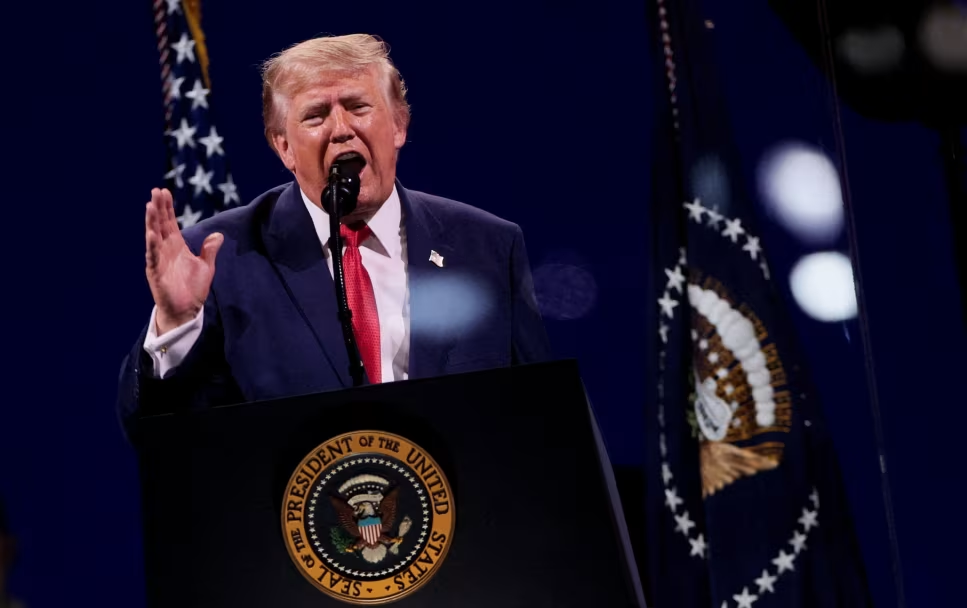
The dispute has drawn national political attention because Tina Peters remains a prominent figure among supporters of former President Donald Trump.
The case intersects with broader national debates involving:
- Election integrity
- Executive clemency
- Criminal justice
- Political influence
- Public trust in elections
The controversy intensified after Trump publicly expressed support for Peters, increasing political scrutiny surrounding the governor’s decision. (News From The States)
How Executive Clemency Works in Colorado
Colorado governors possess constitutional authority to grant:
- Pardons
- Sentence commutations
- Reprieves
The Executive Clemency Advisory Board reviews applications and provides recommendations, but the governor is not legally required to follow those recommendations.
Most clemency decisions occur without significant public attention. However, the Peters case became exceptional because:
- The advisory board reportedly rejected her request twice.
- Members later revealed their recommendations publicly.
- The governor overruled those recommendations.
- The subsequent dismissals created additional controversy.
Legal Questions Raised
Although governors have broad clemency authority, the dispute raises several constitutional and ethical questions:
Executive Authority
How much independence should governors exercise when advisory boards disagree?
Government Transparency
Should advisory recommendations remain confidential after major public decisions?
Board Independence
Can advisory boards remain independent if members fear dismissal after public disagreement?
Public Accountability
Should extraordinary clemency decisions receive greater public explanation?
Legal scholars suggest these questions could influence future discussions about executive clemency procedures nationwide.
Public Reaction
Public opinion has largely reflected broader political divisions.
Supporters of Peters view the commutation as correcting what they consider an excessive punishment.
Critics argue that reducing her sentence risks undermining accountability for election-related crimes and may weaken public confidence in the justice system.
Meanwhile, the removal of the advisory board members has sparked separate debates over government transparency and whistleblower protections.
Looking Ahead
The Jared Polis clemency board dispute is likely to remain a significant political issue in Colorado. While the governor acted within his constitutional authority, the controversy illustrates how executive clemency decisions can become politically charged when they involve nationally recognized figures.
The dispute also raises broader questions about the role of advisory boards, confidentiality in government decision-making, and the balance between executive discretion and public accountability. Regardless of political perspective, the Tina Peters decision has become one of the most closely watched clemency cases in recent Colorado history and may shape future discussions on how executive clemency should be exercised.