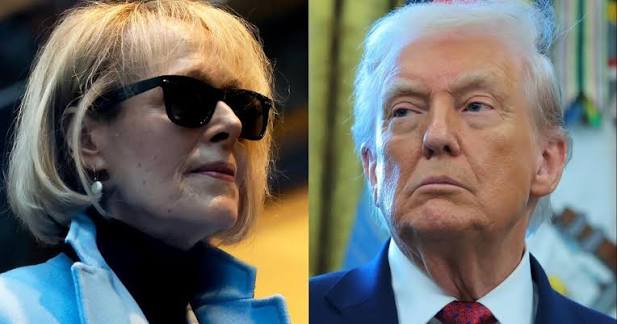
This decision has renewed public attention on the Jean Carroll Trump legal battle, which has become one of the most closely watched civil cases in modern American political history.
Table of Contents
ToggleBackground of the E. Jean Carroll Case
The case began after E. Jean Carroll, a longtime advice columnist and author, alleged that Donald Trump sexually assaulted her in the mid-1990s inside a department store dressing room in New York City.
Carroll later stated that Trump denied the allegations publicly in 2022, calling her claims false and defamatory. These statements triggered a civil lawsuit for both sexual abuse (under New York civil law definitions) and defamation.
A federal jury in 2023 found that:
-
Trump was liable for sexual abuse
-
Trump defamed E. Jean Carroll through public statements
-
Carroll was entitled to damages
The jury awarded her $5 million in damages, a figure that became central to later appeals and the Jean Carroll verdict debates.
What the Supreme Court Did in the Carroll Case
In 2026, the Supreme Court rejected Trump’s request to review and overturn the $5 million verdict.
According to multiple legal reports, the Court issued a brief order without detailed explanation and declined to hear the appeal, leaving the lower court rulings intact.
This means:
-
The $5 million verdict remains enforceable
-
The jury’s findings are still legally valid
-
Trump’s attempt to overturn the decision at the Supreme Court level failed
Legal analysts note that while the Court has been active in other Trump-related cases, it chose not to intervene in this civil damages ruling.
Why Trump Appealed the Verdict
Trump’s legal team argued that the trial was unfair and that the judge allowed improper evidence. Key arguments included:
-
Testimony from other women alleging similar behavior
-
Use of past recordings and statements as evidence
-
Claims of procedural bias in the trial process
However, appellate courts previously ruled that the evidence was admissible and relevant to establishing a pattern of behavior, which supported Carroll’s claims.
The Supreme Court’s refusal to intervene effectively signals that lower court rulings stand as legally sufficient.
Supreme Court E. Jean Carroll Case Context
The phrase “Supreme Court E Jean Carroll” refers to Trump’s final legal attempt to reverse earlier appellate decisions.
Important context:
-
The Supreme Court did NOT re-try the case
-
It simply refused to hear the appeal
-
This leaves the appellate court rulings unchanged
Earlier rulings from the Second Circuit Court of Appeals had already upheld the jury verdict, reinforcing Carroll’s legal victory.
The Full Jean Carroll Verdict Outcome
The case includes multiple legal outcomes across different trials:
1. 2023 Jury Verdict
-
Found Trump liable for sexual abuse and defamation
-
Awarded Carroll $5 million
2. 2024 Civil Jury Verdict (Separate Case)
-
Found Trump liable for additional defamation claims
-
Awarded Carroll approximately $83.3 million
3. Appeals Outcome
-
Federal appeals court upheld the rulings
-
Supreme Court declined to overturn the $5 million verdict
Together, these rulings significantly increased Trump’s financial liability and reinforced Carroll’s credibility in civil court.
Legal Significance of the Case
The E. Jean Carroll Trump case is significant for several reasons:
1. Civil liability standard
Unlike criminal trials, civil cases require a “preponderance of evidence,” meaning the jury only needed to find it more likely than not that the events occurred.
2. Use of past behavior evidence
The courts allowed testimony from other accusers, which became a key point in Trump’s appeal arguments.
3. Presidential accountability
Even though the alleged events occurred decades earlier, courts ruled that civil liability still applies regardless of political status.
4. Supreme Court restraint
By refusing to hear the appeal, SCOTUS allowed lower court rulings to stand without issuing a new constitutional interpretation.
Public and Political Reactions
The case remains politically polarizing. Supporters of Carroll view the rulings as validation of her claims and a landmark civil accountability decision.
Trump and his legal team, meanwhile, have consistently described the lawsuits as politically motivated and unfair.
Despite ongoing criticism from both sides, the courts have repeatedly upheld the jury’s findings through multiple levels of appeal.
What Happens Next?
With the Supreme Court declining review:
-
The $5 million verdict remains final
-
Other related judgments still stand in separate appeals
-
Trump’s legal options for this specific ruling are effectively exhausted
However, additional legal proceedings tied to the broader Carroll litigation may continue depending on pending appeals or enforcement actions.
Conclusion
The E. Jean Carroll case has become a landmark civil legal battle in the United States, combining issues of defamation law, sexual abuse allegations, and high-profile political controversy.
The Supreme Court’s decision not to intervene in the Jean Carroll verdict reinforces the authority of jury findings and appellate court rulings, leaving the $5 million judgment intact and marking another major legal development in the ongoing Jean Carroll Trump litigation.