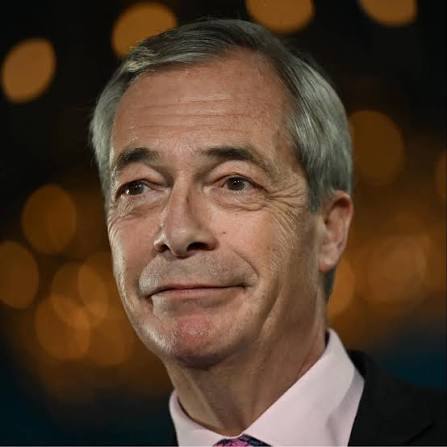
The political landscape in the United Kingdom has been shaken after Reform UK leader Nigel Farage announced that he is stepping down as the Member of Parliament (MP) for Clacton while simultaneously seeking re-election in a dramatic by-election. The announcement comes amid growing scrutiny over undeclared donations and financial disclosures that have dominated headlines over recent weeks.
Farage insists he has done nothing wrong and says his resignation is a move to “clear his name” before the British public. However, opposition parties argue that the controversy raises serious questions about political transparency and campaign finance, making this one of the biggest political stories in Britain this year.
Why Did Nigel Farage Resign as MP?
Nigel Farage announced that he would resign as the MP for Clacton and immediately contest the resulting by-election. According to Farage, the decision is intended to allow voters—not political opponents or parliamentary investigations—to decide whether he deserves to remain in office.
Speaking during a press conference, Farage argued that the allegations surrounding his financial affairs are politically motivated and part of an effort by what he described as the “establishment” to undermine Reform UK’s growing influence.
The resignation is unusual because MPs rarely voluntarily trigger by-elections unless they are leaving politics entirely. Farage, however, has made it clear that he intends to continue leading Reform UK and expects voters to return him to Parliament.
The Donation Scandal Explained
The controversy centers on financial gifts and donations reportedly received by Farage before and after becoming an MP.
Among the most widely discussed issues is a reported £5 million gift from cryptocurrency investor Christopher Harborne, one of Reform UK’s largest financial supporters. Parliamentary authorities have been examining whether the payment should have been disclosed under existing parliamentary rules.
Additional scrutiny has emerged over alleged financial support from George Cottrell, a longtime Farage associate, including claims involving security arrangements, accommodation, and campaign assistance.
Farage strongly rejects suggestions that he violated parliamentary rules. He argues that the financial support complied with applicable regulations and that the allegations are being exaggerated for political purposes. (Reuters)
Parliamentary Investigation Continues
The UK’s Parliamentary Commissioner for Standards has already been reviewing questions surrounding Farage’s financial declarations.
Opposition politicians have called for broader investigations, arguing that public confidence depends upon complete transparency regarding donations received by Members of Parliament.
If investigators ultimately conclude that parliamentary rules were breached, potential sanctions could range from formal criticism to suspension. Serious findings could even trigger additional electoral consequences under existing parliamentary procedures.
At present, however, no final ruling has been issued, and Farage continues to deny any wrongdoing.
Farage Says He Wants Voters to Decide
Rather than waiting for investigations to conclude, Farage has framed the by-election as a public referendum on his political future.
According to the Reform UK leader, voters should determine whether the allegations affect their confidence in him instead of allowing political opponents or media coverage to dictate the outcome.
Supporters argue that this approach demonstrates accountability because Farage is voluntarily putting his parliamentary seat at risk.
Critics counter that the move may also serve as a political strategy designed to rally supporters while investigations remain ongoing.
Impact on Reform UK
The resignation comes at an important moment for Reform UK.
The party has experienced rapid growth in national opinion polls, positioning itself as one of Britain’s fastest-growing political movements. Reform UK has built much of its popularity around issues including immigration, taxation, public spending, and opposition to traditional political parties.
However, recent controversies have complicated that momentum.
Questions over donations and campaign finances have provided political opponents with fresh opportunities to challenge the party’s commitment to transparency.
Whether the scandal damages Reform UK’s electoral prospects may depend heavily on the outcome of the Clacton by-election.
A convincing Farage victory could strengthen his authority.
A poor result could encourage critics who argue that recent controversies have weakened public trust.
Political Reaction
Leaders from Labour, the Liberal Democrats, and other opposition parties have welcomed investigations into Farage’s financial affairs.
Several MPs argue that all elected officials should be held to identical disclosure standards regardless of party affiliation.
Meanwhile, Reform UK has defended its leader, insisting that Farage has complied with legal requirements and accusing opponents of attempting to damage the party through politically motivated attacks.
Political analysts note that the controversy reflects broader debates about campaign financing, political donations, and ethics within British politics.
Could the By-Election Change UK Politics?
The Clacton by-election will likely become one of Britain’s most closely watched political contests.
Farage’s constituency has traditionally been one of Reform UK’s strongest electoral bases, making the result an important indicator of public opinion.
If Farage wins comfortably, he may argue that voters have effectively rejected the allegations against him.
If his majority narrows—or if he loses altogether—the consequences for Reform UK could be significant heading into future national elections.
Political observers across the UK will therefore be watching turnout, voting patterns, and campaign messaging closely.
What Happens Next?
Several important developments are expected over the coming weeks:
- The Clacton by-election campaign will officially begin.
- Parliamentary investigations into Farage’s financial disclosures will continue.
- Political parties will use the controversy to shape broader campaign narratives.
- Reform UK will attempt to reassure supporters while defending its leader.
- Voters will ultimately decide whether Farage retains his parliamentary seat.
Regardless of the outcome, the episode has already become one of the defining political controversies of the year.
Why This Story Matters
Nigel Farage has remained one of Britain’s most influential and polarizing political figures for decades. His leadership has shaped debates on Brexit, immigration, sovereignty, and national identity.
The current donation controversy extends beyond one politician. It highlights broader questions about transparency, campaign finance regulation, and public trust in elected officials.
For Reform UK, the by-election represents more than a contest for a single parliamentary seat—it could determine whether the party continues its political momentum or faces renewed challenges from critics.
As investigations proceed and voters prepare to cast their ballots, the outcome is likely to influence both Farage’s future and the direction of British politics in the months ahead. (BBC)
Also Read: Rahm Emanuel Criticizes Netanyahu in Tel Aviv Speech as U.S. Political Support for Israel Shifts to understand how changing political dynamics are reshaping leadership and policy debates on both sides of the Atlantic.