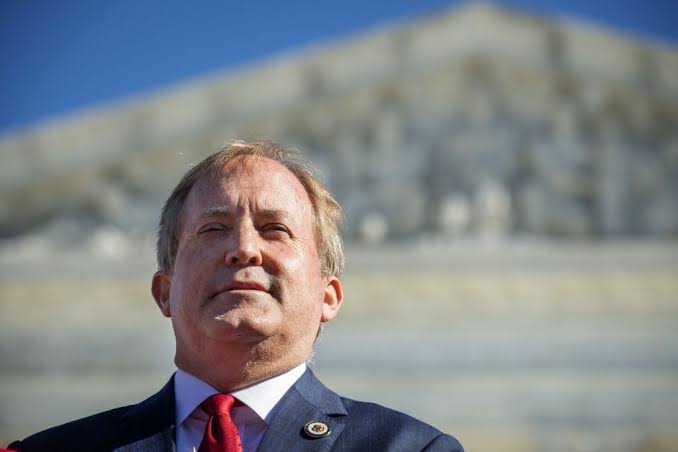
Texas Attorney General Ken Paxton has spent years positioning himself as one of the country’s strongest advocates for election integrity. From launching investigations into alleged voter fraud to promoting strict election enforcement measures, Paxton has consistently argued that protecting elections is essential to preserving democracy.
However, new reporting has placed the Texas attorney general under scrutiny after allegations surfaced that he may have violated the very election residency laws his office has aggressively enforced. The controversy has sparked political debate, legal questions, and accusations of hypocrisy just months before one of Texas’ most closely watched Senate races.
Here’s everything you need to know about the allegations, what Texas law says, Paxton’s response, and what could happen next.
Why Is Ken Paxton Facing Election Law Questions?
The controversy stems from an investigation published by ProPublica and The Texas Tribune, which alleges that Paxton voted in multiple elections while remaining registered at a Collin County address where he may no longer have legally resided. According to the report, Paxton allegedly cast ballots in six elections over the past two years using that registration address.
The issue became public after court records connected to his divorce suggested that Paxton moved out of the Collin County home in 2024, while his voter registration reportedly remained unchanged. Investigators also linked him to another residence in neighboring Denton County through public records and other evidence.
The allegations immediately attracted national attention because Paxton has repeatedly emphasized that Texas voters must register using their true place of residence.
Paxton’s Long Campaign Against Illegal Voting
Election integrity has been one of Ken Paxton’s signature political issues.
Earlier this year, his office announced a statewide tip line encouraging Texans to report suspected illegal voting activity ahead of elections. The Attorney General’s office stated that free and fair elections require strict enforcement of residency requirements and warned voters against using an address where they do not legally reside.
The office has also pursued numerous lawsuits involving election administration, voter registration procedures, and ballot security over the past several years.
Because of this record, critics argue that the latest allegations raise questions about whether the state’s chief law enforcement officer followed the same standards he expected others to meet.
What Does Texas Election Law Require?
Texas election law requires voters to register at the address where they reside.
Residency, however, is not always straightforward. Under Texas law, determining legal residence involves multiple factors rather than simply where someone sleeps each night. Courts may examine where a person intends to live, keeps personal belongings, receives mail, or plans to return after temporary absences.
Election law experts note that residency disputes are often legally complex and highly fact-specific. Simply moving temporarily does not automatically establish a new legal voting residence.
That legal complexity is central to the current controversy.
Why Critics Believe the Law May Have Been Violated
Investigative reporters argue that several pieces of evidence suggest Paxton may have permanently relocated while continuing to vote using his previous address.
Among the evidence cited:
- Divorce filings reportedly stating he moved out of the marital home.
- Public records linking him to another property.
- Mail reportedly delivered to a different residence.
- Property records and photographs allegedly supporting the claim that he had established a new residence elsewhere.
If investigators ultimately conclude that Paxton knowingly voted using an address that no longer qualified as his legal residence, it could potentially violate Texas election law.
However, no court has made that determination.
Paxton’s Campaign Rejects the Allegations
Ken Paxton’s campaign has strongly denied any wrongdoing.
Campaign representatives dismissed the investigation as politically motivated and characterized the reporting as misleading.
Supporters argue that residency determinations involve complicated legal standards rather than simple physical location. They maintain that critics are attempting to damage Paxton’s Senate campaign with speculative allegations rather than proven legal violations.
At this stage, Paxton has not been charged with any election-related offense.
Why the Allegations Carry Political Weight
The controversy extends beyond the legal questions.
Paxton built much of his public reputation around combating election fraud and prosecuting alleged voting violations.
His office has repeatedly warned Texans that using an incorrect residence for voter registration could constitute illegal voting. That makes the current allegations especially politically sensitive because opponents argue they expose an apparent contradiction between Paxton’s public messaging and his own voting record.
Political analysts say the issue could become a major talking point during Texas’ Senate campaign, where Paxton is expected to face intense scrutiny from Democratic opponents.
What Election Experts Are Saying
Election law specialists caution against drawing premature conclusions.
Residency disputes often depend on detailed factual analysis, including a person’s intent to remain or return to a residence.
Experts interviewed by multiple news organizations noted that proving illegal voting based on residency alone can be difficult because Texas law does not rely on one single factor when determining legal residence.
Still, they also emphasized that someone serving as the state’s chief law enforcement officer should be especially familiar with these legal standards.
Could Criminal Charges Follow?
Currently, there are no announced criminal charges against Ken Paxton related to these allegations.
Whether any investigation ultimately leads to legal action depends on whether authorities conclude there is sufficient evidence that he knowingly violated Texas election law.
Given the legal complexity surrounding voter residency cases, many election attorneys believe any potential enforcement decision would require extensive factual review.
For now, the controversy remains based on investigative reporting rather than court findings.
Political Reactions
Democratic officials and voting-rights advocates have pointed to the allegations as evidence that election fraud narratives are sometimes exaggerated while genuine questions can arise involving high-profile political leaders.
Republicans supporting Paxton argue that the reporting represents another politically motivated attack against a conservative official who has frequently challenged federal election policies.
The dispute reflects the broader national debate over election integrity, voter fraud investigations, and residency requirements that has intensified in recent election cycles.
What Happens Next?
Several possibilities remain:
- Additional investigative reporting could reveal new facts.
- Election officials could review the allegations.
- No further legal action may occur if evidence is deemed insufficient.
- The issue could primarily remain a political controversy throughout the Senate campaign.
Until any official determination is made, the allegations remain unproven.
Conclusion
Ken Paxton built his political career on promises to protect election integrity and prosecute illegal voting. Now, allegations that he may have voted using an outdated residence have placed those commitments under intense public scrutiny.
While investigative reports have raised significant questions about whether Paxton complied with Texas residency requirements, his campaign firmly denies any wrongdoing, and no court has concluded that he violated election law.
As Texas heads toward another high-profile election, the controversy is likely to remain a major issue, illustrating how election laws can become central not only to policy debates but also to the political fortunes of those responsible for enforcing them. (The Texas Tribune)
Related: Bernie Sanders recently withdrew his support for Graham Platner following sexual assault allegations, highlighting how political endorsements can quickly change when ethical and legal controversies emerge. Read our full coverage: “Bernie Sanders Removes Support for Graham Platner Over Sexual Assault Allegation.”