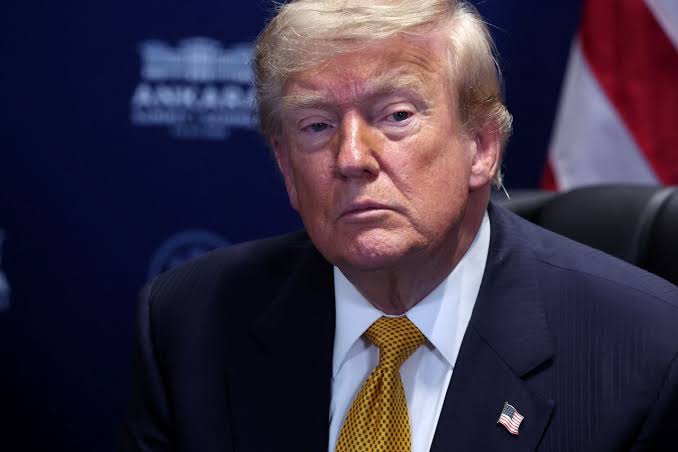
As leaders from the North Atlantic Treaty Organization (NATO) gather for one of the alliance’s most important summits in recent years, President Donald Trump has once again cast doubt on the unity of America’s closest military partners. His remarks ahead of the summit have reignited debates over defense spending, burden-sharing, and the future of transatlantic security.
The 2026 NATO Summit comes at a time of growing geopolitical uncertainty. Russia’s continued aggression in Eastern Europe, ongoing security concerns in the Middle East, and increasing competition with China have made NATO cooperation more critical than ever. Yet Trump’s latest comments suggest that political divisions within the alliance remain difficult to ignore.
Trump Challenges NATO’s Unity
Speaking before departing for the NATO Summit in Ankara, Turkey, Trump questioned whether NATO allies are truly united in supporting common security goals. He argued that several European members continue to rely too heavily on American military protection while failing to contribute enough to their own defense budgets.
Trump reiterated that the United States has carried a disproportionate share of NATO’s defense burden for decades. According to his administration, allies must demonstrate not only financial commitments but also political loyalty during international crises. These remarks come after months of disagreements between Washington and several European capitals over security priorities and military cooperation.
Why Defense Spending Remains the Biggest Issue
Defense spending has become the defining issue of this year’s summit.
For years, NATO members agreed to spend at least 2% of their Gross Domestic Product (GDP) on defense. While many countries have increased military budgets since Russia’s invasion of Ukraine, Trump has argued that the target is no longer sufficient.
His administration is now encouraging allies to work toward spending closer to 5% of GDP on defense over the coming years. NATO Secretary General Mark Rutte has also emphasized that allies must present credible long-term investment plans to strengthen collective defense capabilities.
Several European governments have announced additional defense investments ahead of the summit, hoping to ease tensions with Washington.
Growing Friction Before the Summit
Trump’s criticism extends beyond military budgets.
He has questioned whether some NATO members have shown enough support for recent U.S. foreign policy actions, particularly during the Iran conflict earlier this year. Administration officials have suggested that political solidarity is just as important as financial contributions.
These comments have raised concerns among European diplomats, who fear that public disagreements could weaken NATO’s image at a time when Russia continues to test the alliance’s resolve.
Despite these disagreements, most NATO leaders continue to stress that collective defense remains the alliance’s top priority.
What NATO Leaders Hope to Achieve
The Ankara summit is expected to focus on several major priorities:
- Increasing defense spending across member states.
- Expanding military production and weapons manufacturing.
- Strengthening NATO’s eastern defenses.
- Improving cyber defense and emerging technology cooperation.
- Continuing support for Ukraine.
- Reviewing long-term U.S. military deployments in Europe.
Officials say the summit will also examine NATO’s role in addressing security challenges beyond Europe, including instability in the Middle East and threats in the Arctic region.
European Allies Respond Carefully
European leaders have largely avoided directly confronting Trump before the summit.
Instead, many have emphasized that NATO has become stronger since the start of the Ukraine conflict. Defense budgets have risen substantially across Europe, and several countries are modernizing their armed forces faster than at any point in decades.
British Prime Minister Keir Starmer has urged alliance members to demonstrate unity despite political disagreements, arguing that NATO remains the world’s strongest military alliance.
Officials from Germany, France, Poland, and the Baltic states have similarly stressed that disagreements over spending should not overshadow the alliance’s broader strategic goals.
The Ukraine Question
Ukraine is expected to dominate discussions once again.
Although Ukraine is not yet a NATO member, allies continue to debate long-term security guarantees and military assistance.
President Volodymyr Zelensky is expected to meet several NATO leaders during the summit, seeking additional support as fighting with Russia continues.
Trump has previously expressed mixed views on continued U.S. assistance for Ukraine, making his discussions with allies particularly significant.
Could U.S. Troop Levels in Europe Change?
Another major topic is the future of American military deployments.
The Pentagon is reportedly reviewing U.S. force posture across Europe as part of a broader strategic assessment.
Trump has repeatedly suggested that countries contributing less to NATO should not automatically expect permanent American military protection.
European governments are watching closely for any announcement regarding troop reductions or redeployments following the summit.
Why This Summit Matters
The Ankara summit may prove to be one of NATO’s most consequential meetings in years.
Unlike previous summits focused primarily on Russia or Afghanistan, this gathering will also determine how the alliance adapts to changing U.S. priorities.
Trump’s willingness to publicly question NATO’s unity places additional pressure on European governments to demonstrate both political and financial commitment.
At the same time, NATO leaders hope to project stability in the face of growing international threats.
Market and Global Implications
Financial markets are closely monitoring the summit because NATO decisions often influence defense spending, military contracts, and geopolitical risk.
Defense companies could benefit if member states approve significant increases in military procurement.
Meanwhile, investors will be watching for signs of renewed transatlantic cooperation—or deeper political divisions—that could affect broader global markets.
Looking Ahead
Despite Trump’s criticism, most analysts believe NATO will remain the cornerstone of Western collective defense.
However, the alliance is entering a period of transformation. Rising military expenditures, evolving security threats, and changing U.S. foreign policy priorities are reshaping NATO’s future.
Whether Trump’s pressure ultimately strengthens the alliance by encouraging greater burden-sharing—or deepens divisions among allies—will likely become clearer after the summit concludes.
For now, the world will be watching closely as NATO leaders attempt to balance unity with increasingly complex political realities. (NATO)
Also Read: Trump Media Loses Defamation Lawsuit Against The Washington Post: What It Means for DJT Stock — Learn how the federal court’s dismissal of Trump Media’s lawsuit could impact DJT stock, investor sentiment, and Trump’s broader media strategy.