Trump Media & Technology Group (NASDAQ: DJT), the parent company of Truth Social, has suffered a significant legal setback after a federal judge dismissed its multibillion-dollar defamation lawsuit against The Washington Post. The ruling has drawn attention from investors, legal analysts, and political observers because it could influence market sentiment surrounding DJT stock while also reinforcing the high legal standard required in U.S. defamation cases involving public figures.
The decision does not directly affect Trump Media’s day-to-day operations, but it removes one of the company’s most closely watched legal battles. Investors are now evaluating whether the outcome could impact confidence in the company as it continues expanding its media and technology business.
Why Did Trump Media Sue The Washington Post?
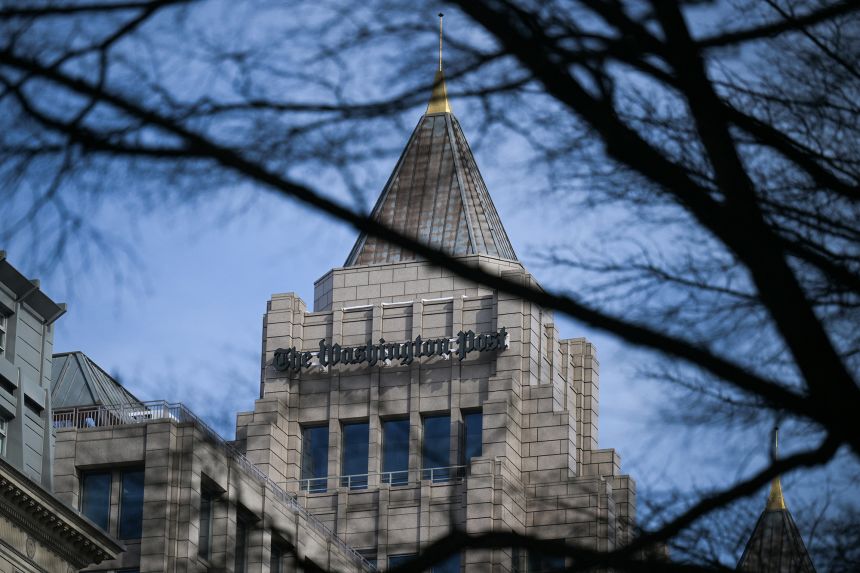
The lawsuit stemmed from a 2023 Washington Post article that examined Trump Media’s finances and reported on an $8 million loan from an obscure financial entity, along with a reported $240,000 finder’s fee connected to the company’s proposed merger partner.
Trump Media argued that portions of the article were false and defamatory and initially sought billions of dollars in damages. Over time, however, the case narrowed significantly, with only two allegedly defamatory statements remaining before the court.
The company maintained that the reporting harmed its reputation among investors and the public.
Why Did the Judge Dismiss the Case?
The federal court granted summary judgment in favor of The Washington Post, concluding that Trump Media failed to produce sufficient evidence showing the newspaper acted with “actual malice.”
Under U.S. defamation law, public figures face a very high legal threshold. They must prove not only that information was false but also that the publisher either knew it was false or acted with reckless disregard for the truth.
Judge Thomas Barber found that the newspaper’s reporter had conducted substantial reporting before publication, including:
-
Reviewing internal company documents
-
Examining financial records
-
Interviewing sources and whistleblowers
-
Reviewing supporting agreements and invoices
Because the reporting process demonstrated extensive verification efforts, the court found insufficient evidence that the publication acted with actual malice.
Understanding the “Actual Malice” Standard
Many people misunderstand defamation law in the United States.
Winning a defamation lawsuit is particularly difficult for politicians, celebrities, and major corporations closely tied to public figures.
The legal standard originates from the landmark 1964 U.S. Supreme Court decision in New York Times Co. v. Sullivan, which protects robust reporting and free speech concerning public officials and public figures.
To prevail, plaintiffs generally must prove:
-
The statement was false.
-
The publisher knew it was false or recklessly ignored the truth.
-
The false statement caused measurable harm.
The judge concluded Trump Media did not satisfy this demanding legal burden.
What Does This Mean for DJT Stock?
Although the lawsuit itself was not central to Trump Media’s underlying business model, the decision may influence investor sentiment.
Several possible implications include:
Reduced Legal Uncertainty
One legal dispute has now been resolved, allowing management to focus on operating the business rather than ongoing courtroom proceedings.
Investor Confidence
Some shareholders may view the dismissal as a negative headline because it represents a legal defeat. Others may see the conclusion of lengthy litigation as removing uncertainty.
No Immediate Financial Penalty
Unlike cases involving monetary judgments against a company, this ruling does not require Trump Media to pay damages to The Washington Post. Instead, the company simply failed to recover the damages it sought.
Focus Returns to Business Performance
Going forward, investors are expected to pay greater attention to:
-
Truth Social user growth
-
Advertising revenue
-
Subscription products
-
Streaming initiatives
-
AI and technology expansion
-
Quarterly earnings
Ultimately, these operational metrics are likely to have a greater impact on DJT stock than the lawsuit itself.
Could Trump Media Appeal?
The company may still have legal options.
Although summary judgment represents a major defeat, parties generally have the right to appeal federal court decisions if they believe legal errors occurred.
At the time of reporting, no final appellate outcome has been announced, and any appeal could take months before reaching resolution.
How Investors Are Interpreting the Decision
Market participants often distinguish between legal headlines and business fundamentals.
Short-term traders may react quickly to negative legal news, creating temporary volatility in DJT stock.
Long-term investors, however, usually focus on broader questions such as:
-
Can Truth Social grow its audience?
-
Can Trump Media diversify revenue?
-
Can the company compete in the digital media market?
-
Will future earnings justify its valuation?
These questions remain far more important than a single court decision.
Broader Impact on Media Defamation Cases
The ruling also reinforces a long-established legal principle.
American courts generally provide strong First Amendment protections for journalists reporting on matters of public interest.
As long as reporters conduct thorough investigations and do not knowingly publish false information, courts often find that the “actual malice” standard has not been met.
Legal experts say the decision fits within decades of precedent protecting investigative journalism involving public figures.
What’s Next for Trump Media?
Trump Media continues pursuing broader business objectives beyond litigation.
The company has emphasized expanding its digital media ecosystem, including Truth Social and other technology initiatives designed to compete in the conservative media landscape.
Investors will now shift attention toward upcoming earnings reports, user engagement metrics, advertising performance, and future strategic announcements rather than courtroom developments.
Whether DJT stock gains or loses momentum over the coming months will likely depend more on financial execution than legal outcomes.
Final Thoughts
The dismissal of Trump Media’s defamation lawsuit against The Washington Post marks an important legal milestone but not necessarily a defining moment for the company’s future. The court ruled that Trump Media failed to establish the “actual malice” required under U.S. defamation law, allowing the newspaper to prevail on summary judgment. (The Washington Post)
For investors, the decision removes one legal overhang while redirecting attention toward the company’s operational performance. Although headlines surrounding the lawsuit may create temporary volatility in DJT stock, long-term valuation will likely depend on revenue growth, platform expansion, user engagement, and overall business execution rather than this single legal defeat.
Related: Read our coverage of DOJ Warns Washington Election Officials of Prosecution Over Noncitizen Voting to understand how the Justice Department is increasing scrutiny over election law enforcement and voting integrity.