
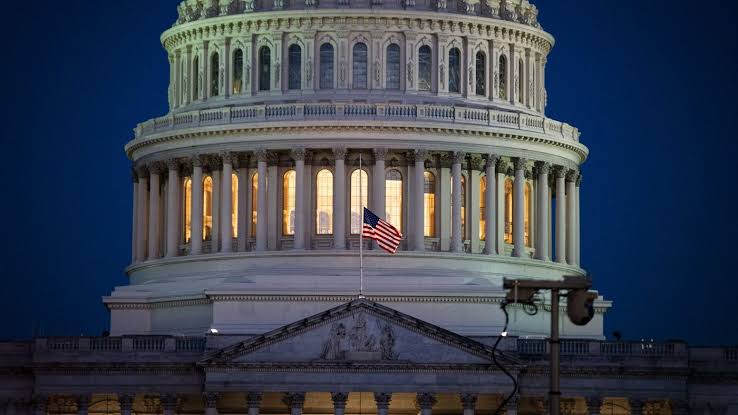
As the 2026 U.S. midterm elections draw closer, the DDHQ House and Senate Forecast has become one of the most closely watched political forecasting tools in America. Decision Desk HQ (DDHQ), known for its election analysis and race projections, provides regularly updated forecasts that estimate which party is more likely to control the U.S. House of Representatives and the U.S. Senate.
Political analysts, journalists, campaign strategists, and voters all rely on DDHQ’s data-driven models to understand the evolving political landscape. Unlike traditional polling alone, the forecast incorporates historical voting trends, fundraising, candidate quality, demographic changes, polling averages, and other election indicators to estimate each party’s chances of winning.
With Republicans defending narrow congressional majorities and Democrats targeting key swing districts, the 2026 election cycle promises to be one of the most competitive in recent history.
What Is the DDHQ House and Senate Forecast?
The DDHQ House and Senate Forecast is an election model created by Decision Desk HQ that predicts the probability of each political party winning congressional control.
Instead of making absolute predictions, DDHQ calculates probabilities based on statistical modeling. The forecast is updated frequently as new polling, fundraising reports, candidate filings, endorsements, and political developments emerge.
The model aims to answer questions such as:
- Which party is favored to control the House?
- Which Senate seats are most competitive?
- Which races could determine congressional control?
- How likely is a party to flip a chamber?
Because elections are dynamic, these probabilities can shift significantly throughout the campaign season.
How DDHQ Builds Its Forecast
Decision Desk HQ combines multiple sources of election data rather than relying on a single metric.
Some of the most important inputs include:
Polling Trends
Public opinion polls remain an essential part of the model. Instead of focusing on one survey, DDHQ evaluates polling averages and the quality of polling organizations.
Historical Election Results
Past voting behavior often provides clues about future outcomes. Districts with consistent partisan lean generally behave differently from highly competitive swing districts.
Candidate Strength
Well-funded incumbents generally perform better than first-time challengers. Candidate experience, endorsements, campaign organization, and fundraising all influence projections.
National Political Environment
Approval ratings for the president, economic conditions, inflation, employment, and major national issues often shape congressional elections.
Demographic Changes
Population shifts, suburban growth, migration patterns, and changing voter coalitions also affect forecasting models.
Why the House Forecast Matters
Control of the House of Representatives determines which party sets the legislative agenda, conducts committee investigations, and influences federal spending priorities.
Even a handful of competitive districts can determine which party holds the majority.
The DDHQ House forecast highlights:
- Toss-up districts
- Lean Republican races
- Lean Democratic races
- Likely Republican seats
- Likely Democratic seats
- Safe districts
Most campaign resources are concentrated in toss-up districts because these races often decide House control.
Why the Senate Forecast Is So Important
Unlike the House, only about one-third of Senate seats are contested every election cycle.
This means a small number of competitive states can determine Senate control.
The DDHQ Senate forecast closely tracks:
- Incumbent popularity
- Statewide polling
- Fundraising
- Candidate recruitment
- Independent voters
- National political trends
Because Senate elections occur statewide, individual candidates often have a larger impact than House races.
Key Battleground States
Several states are expected to receive intense national attention during the 2026 election cycle.
These may include:
- Pennsylvania
- Wisconsin
- Arizona
- Nevada
- Michigan
- Georgia
- North Carolina
These battlegrounds have produced close elections in recent years and could once again determine Senate control.
Competitive House Districts
Across the country, numerous suburban and swing districts are expected to become highly competitive.
Many of these districts were decided by only a few percentage points in previous elections.
Campaign spending is expected to reach record levels as both parties fight for every possible seat.
What Makes DDHQ Different?
Decision Desk HQ has gained national recognition for its election-night projections.
Its forecasting model differs from many traditional political analyses because it emphasizes statistical probability instead of simple political commentary.
Rather than declaring a race “certain,” DDHQ estimates the likelihood of each possible outcome.
For example:
- Party A may have a 65% chance of winning.
- Party B may still have a 35% chance.
This reflects uncertainty rather than absolute certainty.
Factors That Could Change the Forecast
Election forecasts are never static.
Several developments could quickly shift the DDHQ House and Senate Forecast.
Economic Conditions
Inflation, unemployment, consumer confidence, and financial markets often influence voter attitudes.
Candidate Withdrawals
Unexpected retirements or scandals can dramatically reshape competitive races.
Debates
Strong or weak debate performances occasionally move undecided voters.
Major Court Decisions
Supreme Court rulings and other legal developments frequently become campaign issues.
International Events
Foreign policy crises, military conflicts, or global economic disruptions may also influence public opinion.
Polls vs Forecasts
Many voters confuse polls with forecasts.
A poll measures voter preferences at a specific moment.
A forecast estimates what is most likely to happen on Election Day by combining many different sources of information.
This distinction is important because polling can fluctuate from week to week, while forecasting models attempt to capture broader election trends.
Why Political Campaigns Watch DDHQ
Campaign strategists regularly monitor forecasting models to decide where to spend money and allocate resources.
If a district becomes more competitive, campaigns may:
- Increase advertising
- Send high-profile political surrogates
- Expand voter outreach
- Invest in digital campaigning
- Increase fundraising efforts
Forecast changes can directly affect campaign strategy.
Media Attention on DDHQ
During election season, television networks, political reporters, and analysts frequently reference DDHQ forecasts.
The organization’s election-night projections have become especially well known for their speed and statistical rigor.
As more polling data becomes available throughout 2026, media coverage of forecast changes is expected to increase.
Limitations of Election Forecasts
Although sophisticated, no forecasting model guarantees election results.
Unexpected events can always reshape an election.
Examples include:
- Breaking political scandals
- Major economic downturns
- Natural disasters
- International conflicts
- Last-minute shifts in voter turnout
Forecasts should therefore be viewed as probabilities rather than promises.
What Voters Should Watch
As Election Day approaches, several indicators will deserve close attention:
- Updated DDHQ House probabilities
- Senate control projections
- Swing-state polling
- Early voting data
- Fundraising reports
- Independent voter trends
- Candidate debates
- Presidential approval ratings
Together, these factors will provide a clearer picture of the political environment.
Final Thoughts
The DDHQ House and Senate Forecast remains one of the most valuable tools for understanding the evolving 2026 congressional elections. By combining polling, historical data, demographics, fundraising, and political trends into a single probability-based model, DDHQ offers a comprehensive view of the battle for control of Congress.
While forecasts will continue to evolve as campaigns unfold, the race for both the House and Senate is expected to remain highly competitive. A small number of swing districts and battleground states could once again determine which party controls Capitol Hill, making every forecast update closely watched by voters, campaigns, and political observers alike.
Want to learn more about Jay Clayton’s role in the DNI confirmation process, his comments on Jeffrey Epstein, his relationship with Donald Trump, and his estimated net worth? Read our complete coverage: Jay Clayton: Epstein, Trump, Net Worth, DNI.