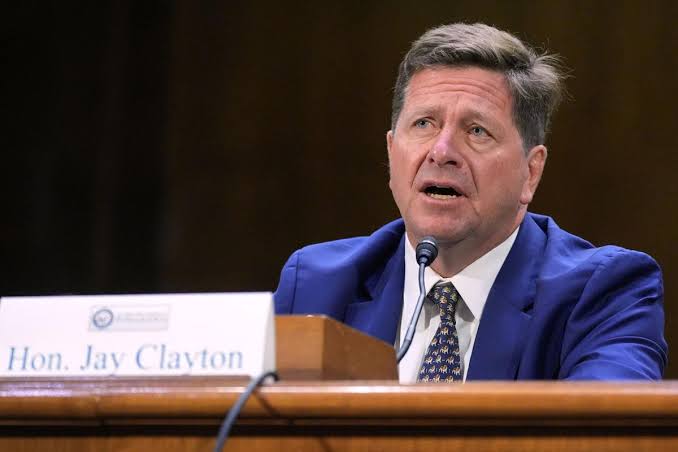
President Donald Trump’s nominee for Director of National Intelligence (DNI), Jay Clayton, came under intense scrutiny during his Senate confirmation hearing after declining to directly acknowledge that Joe Biden won the 2020 presidential election. The exchange quickly became one of the hearing’s defining moments, raising fresh concerns about election integrity, the independence of U.S. intelligence agencies, and the political pressures surrounding one of the nation’s most sensitive national security positions.
Clayton’s testimony comes at a politically charged time as Congress debates intelligence oversight, election security, and the future leadership of the Office of the Director of National Intelligence (ODNI). While supporters argue Clayton is a qualified legal and national security official, critics say his refusal to provide a straightforward answer about the certified results of the 2020 election raises questions about his willingness to place facts above politics.
What Happened During the Hearing?
During questioning before the Senate Intelligence Committee, Democratic senators repeatedly asked Clayton a simple question: Did Joe Biden win the 2020 presidential election?
Rather than giving a direct “yes” or “no,” Clayton responded that Biden had been “certified” as president after the election process concluded. He avoided explicitly stating that Biden won the election despite multiple opportunities to do so.
His answer immediately prompted criticism from Democratic lawmakers, who argued that recognizing certified election results should not be controversial for someone seeking to lead America’s intelligence community.
Clayton maintained that he was not an “election denier” and emphasized that he respects the constitutional process. However, senators continued pressing him over why he would not directly affirm the outcome of the 2020 race.
Why the Question Matters
The Director of National Intelligence oversees America’s 18 intelligence agencies and is responsible for providing independent intelligence assessments to the president and Congress.
The position requires public confidence that intelligence will remain free from political influence.
Since the 2020 election remains one of the most politically divisive events in recent American history, senators argued that acknowledging the certified election outcome is an important test of whether the nominee accepts established facts.
Federal and state election officials, numerous courts, and the Electoral College certified Joe Biden as the winner of the 2020 presidential election. Claims that widespread fraud changed the outcome were rejected in multiple legal proceedings and official reviews.
Democrats Express Concern
Several Democratic senators expressed disappointment with Clayton’s testimony.
Some lawmakers noted that they had initially viewed Clayton more favorably than Acting DNI Bill Pulte, believing he could bring greater stability to the intelligence community.
However, Clayton’s unwillingness to explicitly confirm Biden’s victory appeared to weaken bipartisan support for his nomination.
Senators argued that intelligence leaders must communicate facts clearly, regardless of political consequences.
The hearing also included questions about election security, foreign interference, intelligence independence, and public trust in democratic institutions.
Clayton Defends His Position
Clayton rejected suggestions that he was attempting to undermine confidence in elections.
Instead, he argued that he recognizes the constitutional certification process and believes election security remains an important national security issue.
Throughout the hearing, Clayton attempted to avoid becoming involved in broader political debates over the 2020 election while insisting he would serve the intelligence community independently if confirmed.
Supporters of Clayton argue that his legal background and government experience demonstrate he is capable of managing complex national security responsibilities.
Questions Beyond the Election
The hearing extended well beyond the 2020 election.
Lawmakers also questioned Clayton about Justice Department subpoenas issued to journalists while serving as U.S. Attorney for the Southern District of New York.
The subpoenas were reportedly connected to investigations involving leaked national security information.
Some senators argued the actions could have a chilling effect on press freedom.
Clayton defended the investigations, stating they were aimed at protecting national security rather than targeting journalists themselves.
His answers sparked another debate over balancing government secrecy with First Amendment protections.
Intelligence Community Leadership at Stake
The confirmation hearing arrives during a period of transition for U.S. intelligence leadership.
The Trump administration has emphasized reforms within intelligence agencies, while critics have warned against increased political influence over intelligence assessments.
If confirmed, Clayton would oversee agencies including:
- Central Intelligence Agency (CIA)
- National Security Agency (NSA)
- Defense Intelligence Agency (DIA)
- National Geospatial-Intelligence Agency (NGA)
- National Reconnaissance Office (NRO)
The DNI also serves as the principal intelligence adviser to the president and coordinates intelligence sharing across federal agencies.
Because of these responsibilities, senators argued that public confidence in the DNI’s independence is essential.
Political Implications
Clayton’s testimony reflects the continuing political impact of the 2020 presidential election even years after the vote.
Questions surrounding election legitimacy remain a recurring issue in confirmation hearings involving senior administration officials.
For Democrats, Clayton’s refusal to provide a direct acknowledgment reinforced concerns about political loyalty overriding factual accuracy.
Republicans, meanwhile, have generally focused on election security, intelligence reform, and the need to restore confidence in federal institutions.
The exchange illustrates how debates over the 2020 election continue to shape American politics and influence confirmation battles for key executive branch positions.
What Happens Next?
Following the hearing, the Senate Intelligence Committee is expected to vote on whether to advance Clayton’s nomination to the full Senate.
Although Republicans hold significant support for the nominee, Democratic opposition could make the confirmation process increasingly partisan.
If confirmed, Clayton would replace Acting DNI Bill Pulte and become the nation’s top intelligence official during an important period for U.S. national security, election security, and global geopolitical challenges. (AP News)
Conclusion
Jay Clayton’s refusal to directly confirm that Joe Biden won the 2020 presidential election became the defining moment of his Senate confirmation hearing for Director of National Intelligence. While Clayton acknowledged Biden’s certification as president, his reluctance to explicitly state that Biden won the election drew sharp criticism from Democratic senators and intensified concerns about the independence of America’s intelligence leadership.
The hearing highlighted broader debates over election integrity, national security, press freedom, and political influence within the intelligence community. As the Senate prepares to consider Clayton’s nomination, lawmakers will continue weighing whether his testimony demonstrates the impartial judgment expected of the nation’s highest-ranking intelligence official.
For the latest updates on the devastating disaster, including the death toll, President’s response, rescue operations, and humanitarian relief efforts, read our complete coverage of Venezuela: Earthquake, President, Death Toll, News 2026.