Former Vice President Kamala Harris has emerged as the leading contender among potential Democratic presidential candidates for the 2028 US election, according to a new Focaldata poll conducted in partnership with the Financial Times. The findings suggest Harris remains a prominent figure in the Democratic Party as speculation grows over who will seek the White House next.
The poll, conducted from October 2 to October 5, 2026, surveyed 2,553 US adults and examined potential candidates for the 2028 presidential primaries. Although no formal Democratic nomination contest has begun, the results provide an early snapshot of voter preferences.
2028 Democratic Primary Frontrunners: Who Is Leading?
Harris leads the hypothetical Democratic primary field with 30% support, according to the poll results reported by US media outlets. California Governor Gavin Newsom follows with 15%, while Representative Alexandria Ocasio-Cortez and former Transportation Secretary Pete Buttigieg are tied at 9%.
The results put Harris ahead of her potential rivals, although the race remains in its early stages. Voter preferences could change considerably before the primaries begin, particularly as candidates clarify their intentions and the political environment evolves.
Here is how the leading potential Democratic contenders performed in the poll:
- Kamala Harris: 30%
- Gavin Newsom: 15%
- Alexandria Ocasio-Cortez: 9%
- Pete Buttigieg: 9%
Harris’s lead places her at the center of the discussion surrounding the 2028 Democratic primary frontrunners. However, the poll measures hypothetical preferences rather than support in an officially declared candidate field.
Will Kamala Harris Run for President in 2028?
Harris is one of the most closely watched potential Democratic presidential candidates for 2028. Her experience as vice president and her previous presidential campaign have kept her in the national political conversation.
The latest polling suggests she could enter another Democratic nomination contest with a significant level of initial support. However, a strong position in an early survey does not guarantee that she will run or secure the party’s nomination.
Her potential candidacy could also influence other Democrats considering a presidential campaign. Newsom, who has been discussed as a possible contender, previously indicated that he would not run in 2028 if Harris decided to seek the Democratic nomination again.
Whether Harris launches another campaign will be an important factor in determining the shape of the Democratic primary field.
Gavin Newsom and Pete Buttigieg Remain Potential Contenders
Newsom ranks second in the poll with 15% support. As California’s governor, he has gained national attention and is frequently mentioned in discussions about the Democratic Party’s future leadership.
His decision could depend partly on Harris’s plans, based on his earlier public comments. If Harris chooses not to run, Newsom could become one of the most prominent potential candidates in the contest.
Buttigieg, meanwhile, received 9% support in the survey, tying with Ocasio-Cortez. The former transportation secretary has also signaled interest in another presidential bid, saying in an August podcast appearance that he was more inclined than not to run for the White House again.
Ocasio-Cortez is another name attracting attention among Democrats. Her position in the poll indicates that she could feature in conversations about the party’s future direction, although her participation in the 2028 race has not been confirmed.
Who Will Run for President in 2028?
The question of who will run for president in 2028 remains unanswered, as the major parties have yet to establish their final candidate fields. Several political figures have attracted attention, but public speculation and polling support are not the same as a formal campaign announcement.
Potential Democratic contenders include:
- Kamala Harris: The former vice president leads the latest hypothetical Democratic primary poll.
- Gavin Newsom: The California governor is a leading alternative if Harris does not run.
- Pete Buttigieg: The former transportation secretary has indicated that he is considering another presidential campaign.
- Alexandria Ocasio-Cortez: The New York representative remains a potential figure in the Democratic Party’s next generation of leadership.
- Chris Van Hollen: The Maryland senator said in August that he was exploring the possibility of a 2028 presidential run.
The eventual field will depend on candidates’ decisions, fundraising prospects, party support and the issues that dominate the election cycle.
JD Vance Leads the Republican 2028 Primary Poll
While Democrats consider their options, Vice President JD Vance is also emerging as a leading potential Republican presidential candidate for 2028.
The same Focaldata survey placed Vance at 38% support among Republican respondents. Secretary of State Marco Rubio followed with 24%, while Florida Governor Ron DeSantis received 9%.
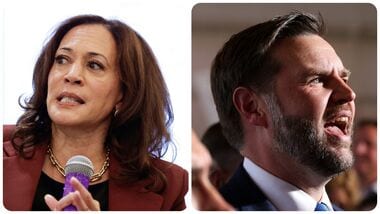
The early figures have fueled speculation about a possible contest between Harris and Vance in the 2028 presidential election. However, neither a general-election matchup nor the parties’ nominees can be determined from the current polling.
Rubio has said he has no immediate plans to become a candidate, emphasizing that his focus remains on his current responsibilities. Texas Senator Ted Cruz has also encouraged speculation about another White House bid, saying publicly that he wants to be president.
The Republican field, like the Democratic one, could change significantly before the nomination process begins.
Trump’s Approval Rating and the 2028 Political Landscape
The 2028 presidential race is developing against the backdrop of President Donald Trump’s approval ratings and growing attention to the 2026 midterm elections.
The Financial Times poll cited in the report placed Trump’s overall approval rating at 34%. It also found that 45% of registered voters believed Trump was making it harder for Republican candidates to win the November midterm elections.
The survey reported that registered voters preferred Democrats over Republicans by more than five percentage points. These findings could provide an early indication of the political challenges facing the Republican Party, although midterm results and presidential election outcomes can differ.
The 2026 midterms will be an important test of voter sentiment before the next presidential campaign intensifies. Their results could influence party strategies, potential candidates and debates over economic policy, foreign affairs and the direction of the federal government.
What the Latest Poll Means for the 2028 Democratic Primary
Harris’s 30% showing gives her an early advantage over Newsom, Buttigieg and Ocasio-Cortez in the hypothetical Democratic primary field. Her position could strengthen discussions about a possible second presidential campaign, while other Democrats assess whether to challenge her or pursue different paths.
Still, the poll should be treated as an early indicator rather than a prediction of the final outcome. The survey reflects preferences among respondents at a particular moment, well before the nomination contests and general election.
For now, Harris remains one of the most prominent potential Democratic presidential candidates for 2028, while Newsom, Buttigieg, Ocasio-Cortez and Van Hollen are among the figures drawing attention.
The central question is whether Harris will decide to run again and, if she does, whether other prominent Democrats will step aside or mount competitive campaigns of their own. Until candidates formally announce their plans, the 2028 Democratic primary remains wide open.