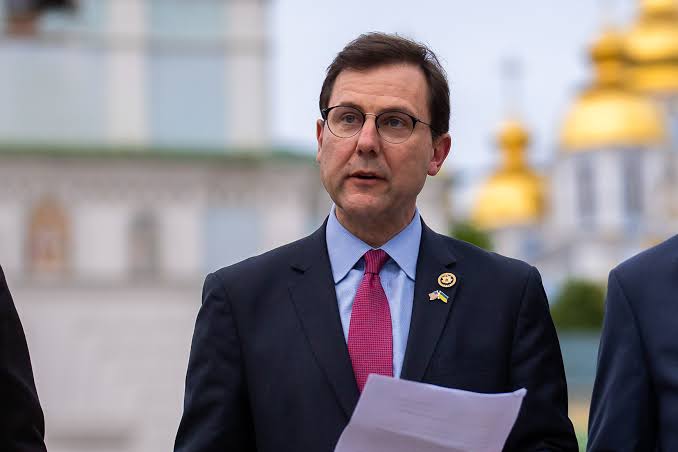
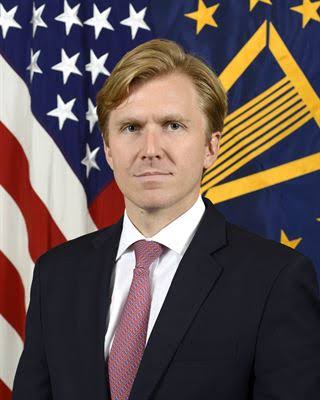
Elbridge A. Colby has become one of the most influential voices in American national security policy. Known for advocating a stronger U.S. focus on countering China while encouraging allies to take greater responsibility for their own defense, Colby has played a major role in shaping modern U.S. military strategy.
Following his confirmation by the U.S. Senate in April 2025 as Under Secretary of Defense for Policy, Colby became the Pentagon’s top civilian policy official, responsible for guiding defense strategy and advising senior government leaders on military and security issues. His ideas have generated significant debate among policymakers, allies, and foreign policy experts.
Who Is Elbridge A. Colby?
Elbridge Andrew Colby is an American national security expert, attorney, and author. Before returning to the Pentagon, he co-founded The Marathon Initiative, a think tank dedicated to developing long-term U.S. strategies for great-power competition.
Colby previously served during President Donald Trump’s first administration as Deputy Assistant Secretary of Defense for Strategy and Force Development, where he helped develop the landmark 2018 National Defense Strategy. That strategy shifted America’s defense priorities away from counterterrorism and toward competition with China and Russia.
He graduated from Harvard University before earning his law degree from Yale Law School. Throughout his career, he has worked in government, think tanks, and foreign policy research organizations.
Elbridge A. Colby’s Current Role
As Under Secretary of Defense for Policy, Colby serves as the principal adviser to the Secretary of Defense on defense policy and military strategy.
His responsibilities include:
- Developing U.S. defense strategy
- Advising on global military operations
- Managing international defense partnerships
- Coordinating national security planning
- Supporting defense policy implementation
His office also helps oversee long-term planning related to emerging military threats, technological competition, and alliance management.
Elbridge A. Colby and the China Strategy
Perhaps no issue defines Colby’s strategic thinking more than China.
He argues that China’s rapid military modernization represents the greatest long-term challenge to American national security. According to Colby, the United States should concentrate military resources in the Indo-Pacific region rather than dispersing them across multiple global conflicts.
His strategy emphasizes:
- Strengthening deterrence in the Taiwan Strait
- Expanding military cooperation with Indo-Pacific allies
- Modernizing U.S. military capabilities
- Increasing defense industrial production
- Maintaining a favorable balance of power in Asia
Supporters believe this approach prepares the United States for future strategic competition. Critics argue it could reduce America’s ability to respond effectively to crises in Europe and the Middle East.
The Strategy of Denial
Colby is also the author of The Strategy of Denial: American Defense in an Age of Great Power Conflict, published in 2021.
The book argues that the United States should focus on preventing any rival power—particularly China—from dominating key strategic regions. Rather than pursuing military intervention everywhere, Colby advocates concentrating resources where they have the greatest strategic impact.
The book has become widely discussed among defense professionals and policymakers and continues to influence debates over U.S. military priorities.
Views on NATO and European Defense
Colby has consistently argued that European NATO members should assume greater responsibility for defending Europe.
He believes the United States should remain committed to NATO while encouraging European allies to increase defense spending and strengthen their own military capabilities.
This perspective has sparked debate within both the United States and Europe. Supporters view it as a realistic adaptation to changing global threats, while critics worry it could weaken transatlantic security cooperation.
Elbridge A. Colby and India
India has become increasingly important in Colby’s strategic vision.
During his official visit to India in 2026, Colby met senior Indian leaders to discuss defense cooperation, regional security, and Indo-Pacific stability. The discussions focused on expanding military coordination, information sharing, and defense technology collaboration between the United States and India.
His visit reflected Washington’s broader effort to deepen strategic ties with New Delhi as part of its Indo-Pacific policy.
Senate Confirmation
Colby’s nomination attracted significant attention during the Senate confirmation process.
Supporters praised his expertise on defense planning and strategic competition with China. Some lawmakers, however, questioned aspects of his views on Ukraine, Iran, and U.S. alliances.
Despite bipartisan scrutiny, the Senate confirmed Colby by a vote of 54–45 in April 2025, allowing him to assume one of the Pentagon’s most influential civilian positions.
Why Elbridge A. Colby Matters
Few defense officials have shaped strategic debates as much as Colby in recent years.
His emphasis on prioritizing China has influenced Pentagon planning, congressional discussions, and conversations among U.S. allies. Whether one agrees with his approach or not, his ideas continue to shape how policymakers think about military competition, alliance management, and the future of American defense strategy.
As geopolitical tensions evolve across the Indo-Pacific, Europe, and the Middle East, Colby’s strategic framework is likely to remain central to U.S. defense policy.
Conclusion
Elbridge A. Colby has emerged as one of the leading architects of modern American defense strategy. From helping craft the 2018 National Defense Strategy to serving as Under Secretary of Defense for Policy, his influence extends across military planning, alliance management, and Indo-Pacific security.
His focus on deterring China, strengthening defense partnerships, and encouraging greater burden-sharing among allies continues to shape discussions inside Washington and around the world. Whether praised as a strategic realist or criticized for narrowing America’s global priorities, Colby remains one of the most closely watched figures in U.S. national security.