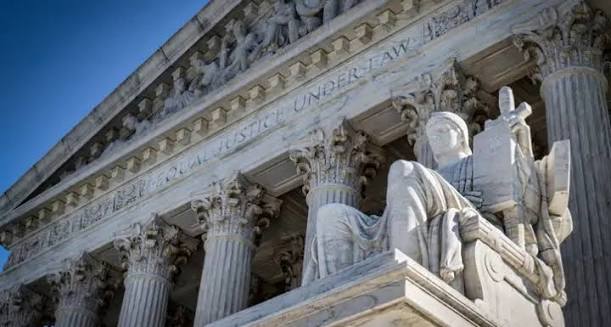
The Slaughter decision is being described as one of the major Supreme Court decisions today, fundamentally changing the balance of power between the White House and independent federal agencies. On June 29, 2026, the Supreme Court of the United States ruled that the President has broad authority to remove leaders of many independent federal agencies, overturning decades of legal precedent. At the same time, the Court separately ruled that Lisa Cook, a Federal Reserve governor, could remain in her position while litigation continues, preserving the Federal Reserve’s traditional independence.
The two decisions have sparked intense debate among constitutional scholars, lawmakers, and economists. Together, they redefine executive authority while highlighting the unique legal status of the Federal Reserve.
Table of Contents
ToggleWhat Is the Slaughter Decision?
The Slaughter decision refers to Trump v. Slaughter, a landmark ruling involving former Federal Trade Commission (FTC) Commissioner Rebecca Slaughter.
The case centered on whether the President could remove FTC commissioners despite statutory protections that historically allowed dismissal only for “inefficiency, neglect of duty, or malfeasance.”
In a 6-3 ruling, the US Supreme Court held that such restrictions on presidential removal violate the Constitution’s separation of powers, significantly expanding executive authority over independent agencies.
The decision overturned the long-standing 1935 precedent established in Humphrey’s Executor v. United States, which had protected commissioners at many independent agencies from at-will dismissal.
Why Is This One of the Major Supreme Court Decisions Today?
Legal analysts immediately described the ruling as one of the major Supreme Court decisions today because it changes nearly a century of constitutional interpretation.
The ruling affects numerous federal agencies responsible for:
- Consumer protection
- Competition enforcement
- Securities regulation
- Labor oversight
- Communications regulation
- Financial supervision
By strengthening presidential removal authority, future presidents may exercise greater control over agencies that were previously designed to operate independently from political influence.
Lisa Cook Supreme Court Decision Explained
While the Court expanded executive power in the Slaughter case, it reached a very different conclusion regarding Lisa Cook Supreme Court litigation.
Lisa Cook serves on the Board of Governors of the Federal Reserve.
President Donald Trump attempted to remove her after allegations involving mortgage fraud surfaced. Cook challenged her dismissal, arguing that the Federal Reserve Act allows removal only “for cause.”
In a separate 5-4 ruling, the Court refused to allow her immediate removal and held that she may remain on the Federal Reserve Board while the legal challenge proceeds.
Why Was Lisa Cook Treated Differently?
Many observers expected the Court to apply the same reasoning used in the Slaughter decision.
Instead, Chief Justice John Roberts emphasized that the Federal Reserve occupies a unique constitutional and historical position.
According to the majority opinion:
- Federal Reserve governors serve staggered 14-year terms.
- Congress intentionally insulated monetary policy from political influence.
- The Federal Reserve’s independence has deep historical roots.
Because of these distinctions, the Court concluded that the President cannot simply dismiss Federal Reserve governors at will.
Impact on Presidential Power
The Slaughter ruling represents one of the largest expansions of executive authority in recent decades.
Supporters argue the Constitution gives the President executive power over officers who enforce federal law.
According to this view:
- Independent agencies remain accountable to voters only if the President controls their leadership.
- Elections should determine executive policy.
- Agency officials should not undermine presidential priorities.
This reasoning reflects the constitutional theory known as the “unitary executive.”
The majority stated that executive officers exercising presidential authority should remain accountable to the elected President.
Critics Raise Constitutional Concerns
Critics argue the decision weakens checks and balances.
Opponents say independent agencies exist specifically to:
- Reduce political interference
- Ensure expert decision-making
- Protect long-term policy objectives
- Prevent rapid political swings after elections
Justice Sonia Sotomayor’s dissent warned that the ruling grants future presidents significantly greater authority than Congress intended.
Supreme Court Opinions Split on Executive Authority
The Supreme Court opinions released alongside the decisions reveal deep disagreement among the justices.
The conservative majority emphasized constitutional accountability through presidential control.
Meanwhile, dissenting justices argued the Court departed from nearly ninety years of precedent protecting agency independence.
Interestingly, the Court itself drew an important distinction by preserving Federal Reserve protections while removing similar safeguards elsewhere.
This split illustrates that not every independent agency will necessarily receive identical constitutional treatment.
What Does This Mean for Federal Agencies?
Following the Slaughter decision, agencies potentially affected include:
- Federal Trade Commission (FTC)
- National Labor Relations Board (NLRB)
- Consumer Product Safety Commission
- Other multi-member independent commissions
Future litigation will determine precisely how broadly the decision applies.
Legal experts expect additional challenges involving removal protections across the federal government in the coming years.
Economic Significance of the Lisa Cook Case
The separate Lisa Cook decision has enormous implications for financial markets.
The Federal Reserve controls:
- Interest rates
- Inflation policy
- Monetary stability
- Banking supervision
Many economists argued that allowing presidents unrestricted authority to dismiss Federal Reserve governors could undermine confidence in the central bank’s independence.
By allowing Cook to remain in office, the Court temporarily preserved long-standing protections designed to shield monetary policy from direct political pressure.
Political Reactions
Supporters of the ruling praised it as restoring constitutional accountability.
They argue that elected presidents should have authority over executive officials implementing national policy.
Critics counter that independent agencies were created precisely to prevent political pressure from influencing specialized regulatory decisions.
The contrasting outcomes in Trump v. Slaughter and the Lisa Cook Supreme Court case have already become central topics in discussions about constitutional law, executive power, and the future of independent federal institutions.
What Comes Next?
Although the Slaughter decision resolves one major constitutional question, additional litigation is expected.
Future cases may examine:
- Which agencies remain protected
- Whether Congress can create new independent bodies
- The limits of presidential removal authority
- The final outcome of Lisa Cook’s ongoing legal dispute
The Cook litigation itself continues despite the Supreme Court’s interim ruling, meaning further legal developments are likely.
Conclusion
The Slaughter decision marks one of the most consequential Supreme Court decisions today, dramatically expanding presidential authority over independent agencies while overturning decades of precedent. At the same time, the Court’s separate ruling involving Lisa Cook demonstrates that the Federal Reserve remains legally distinct because of its historic role and statutory protections.
Together, these Supreme Court opinions reshape the relationship between the President, independent regulators, and the Supreme Court of the United States. As lower courts interpret these rulings and new cases emerge, the decisions are expected to influence constitutional law, executive power, and federal governance for years to come.