Introduction
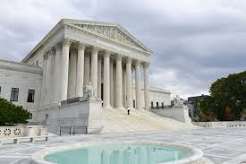
The Supreme Court of the United States is the highest judicial authority in the country and serves as the final interpreter of the U.S. Constitution. Its decisions shape American law, influence public policy, and impact the lives of millions of people. From voting rights and free speech to healthcare, immigration, and presidential powers, the Court plays a central role in resolving the nation’s most significant legal disputes.
The Supreme Court of the United States has gained even greater public attention in recent years due to major rulings on abortion, gun rights, presidential immunity, election laws, and federal regulatory powers. As political debates continue, the Court remains one of the most influential institutions in American democracy.
This article explains the history, structure, powers, notable cases, current justices, and why the Supreme Court continues to shape the future of the United States.
What Is the Supreme Court of the United States?
The Supreme Court of the United States (SCOTUS) is the nation’s highest federal court. It was established under Article III of the U.S. Constitution in 1789 and serves as the final court of appeal for constitutional and federal legal disputes.
Unlike lower courts, the Supreme Court has the final authority to interpret the Constitution. Its rulings cannot be appealed unless the Court itself later overturns a previous decision or the Constitution is amended.
Because of this authority, the Court has tremendous influence over American government and society.
History of the Supreme Court
The Judiciary Act of 1789 officially created the Supreme Court shortly after the Constitution was ratified.
Initially, the Court had only six justices. Over time, Congress changed the number several times before settling on nine justices in 1869.
During its early years, the Court had relatively little influence. That changed under Chief Justice John Marshall, whose leadership established the Court as an equal branch of government.
One of the Court’s most important early decisions, Marbury v. Madison (1803), introduced the principle of judicial review, giving the Supreme Court authority to declare laws unconstitutional.
This power remains one of the Court’s defining responsibilities today.
Structure of the Supreme Court
The Court currently consists of:
- One Chief Justice
- Eight Associate Justices
Justices are nominated by the President and confirmed by the U.S. Senate.
Unlike elected officials, Supreme Court justices serve lifetime appointments, provided they maintain good behavior. This system is designed to protect judicial independence from political pressure.
Current Justices of the Supreme Court
The Court currently includes:
- Chief Justice John Roberts
- Clarence Thomas
- Samuel Alito
- Sonia Sotomayor
- Elena Kagan
- Neil Gorsuch
- Brett Kavanaugh
- Amy Coney Barrett
- Ketanji Brown Jackson
These justices bring different judicial philosophies, constitutional interpretations, and legal experiences, contributing to a wide range of opinions in major cases.
Powers of the Supreme Court
The Supreme Court has several essential responsibilities.
Constitutional Interpretation
The Court determines whether laws comply with the U.S. Constitution.
Judicial Review
It can strike down federal or state laws that violate constitutional principles.
Resolving Federal Disputes
The Court hears cases involving federal statutes, constitutional questions, and disputes between states.
Protecting Individual Rights
Many important civil rights and civil liberties cases ultimately reach the Supreme Court.
Checking Government Power
The Court serves as a check on both Congress and the President, ensuring that neither exceeds constitutional authority.
How Cases Reach the Supreme Court
Each year, thousands of parties ask the Supreme Court to hear their cases.
However, the Court accepts only a small percentage.
Most cases arrive through petitions known as writs of certiorari.
Typically, at least four justices must agree to hear a case—a practice known as the “Rule of Four.”
After accepting a case, the Court receives written briefs, hears oral arguments, deliberates privately, and issues a written opinion.
Landmark Supreme Court Decisions
Throughout history, the Supreme Court has issued decisions that fundamentally changed the United States.
Marbury v. Madison (1803)
Established judicial review.
Brown v. Board of Education (1954)
Ended racial segregation in public schools.
Miranda v. Arizona (1966)
Required police officers to inform suspects of their constitutional rights.
Roe v. Wade (1973)
Recognized a constitutional right to abortion.
Dobbs v. Jackson Women’s Health Organization (2022)
Overturned Roe v. Wade, returning abortion policy decisions to individual states.
New York Times Co. v. United States (1971)
Strengthened protections for press freedom.
Obergefell v. Hodges (2015)
Legalized same-sex marriage nationwide.
These decisions demonstrate how the Court can reshape American society for generations.
Why the Supreme Court Is So Important
The Supreme Court affects nearly every aspect of American life.
Its decisions influence:
- Voting rights
- Free speech
- Religious liberty
- Immigration
- Gun ownership
- Healthcare
- Environmental regulations
- Executive authority
- Criminal justice
- Civil rights
Because Supreme Court decisions establish legal precedent, lower courts generally follow those interpretations in future cases.
Judicial Philosophy
Supreme Court justices often approach constitutional interpretation differently.
Originalism
Originalists believe the Constitution should be interpreted according to its original public meaning at the time it was written.
Living Constitution
Others argue that constitutional interpretation should evolve as society changes.
These differing philosophies frequently influence how justices rule in major constitutional disputes.
The Supreme Court and Politics
Although the Supreme Court is intended to remain independent, it often finds itself at the center of political debate.
Presidents seek to appoint justices who reflect their judicial philosophy, while Senate confirmation hearings have become increasingly partisan.
Major rulings involving elections, presidential authority, abortion, and administrative agencies often generate significant public attention and political discussion.
Nevertheless, the Court’s constitutional role is to interpret the law rather than make policy.
Recent Areas of Focus
In recent years, the Supreme Court has considered cases involving:
- Presidential immunity
- Federal agency authority
- Election administration
- Voting rights
- Immigration enforcement
- Religious freedom
- Social media regulation
- Second Amendment rights
- Environmental policy
- Administrative law
These issues continue to define the Court’s modern legacy and influence debates across the country.
Criticism and Public Debate
Like any institution, the Supreme Court faces criticism from various perspectives.
Common concerns include:
- Lifetime appointments
- Ethical standards
- Court transparency
- Political polarization
- Calls for term limits
- Proposals to expand the number of justices
Supporters argue that judicial independence is essential for protecting constitutional rights, while critics advocate reforms to increase accountability.
The Future of the Supreme Court
The Supreme Court will continue to confront complex legal questions involving technology, artificial intelligence, privacy, election law, cybersecurity, and federal-state relations.
Future appointments may significantly influence constitutional interpretation for decades, making each vacancy highly consequential.
As American society evolves, the Court’s decisions will remain central to debates about democracy, individual rights, and the balance of governmental power.
Conclusion
The Supreme Court of the United States stands as one of the most powerful institutions in American government. As the nation’s highest court, it safeguards the Constitution, protects individual rights, resolves major legal disputes, and ensures that the legislative and executive branches operate within constitutional limits.
Whether addressing historic civil rights cases or modern disputes over technology, elections, and executive authority, the Supreme Court of the United States continues to shape American law and public policy. Understanding its history, structure, and responsibilities helps explain why every major Supreme Court decision attracts national attention and has lasting consequences for generations of Americans.
To understand how major financial leaders shape American politics and the economy, read our detailed guide on Ken Griffin: Net Worth, Citadel, Career, Philanthropy, and Political Influence (2026), covering the billionaire investor’s rise, business empire, charitable giving, and growing influence in Republican politics.