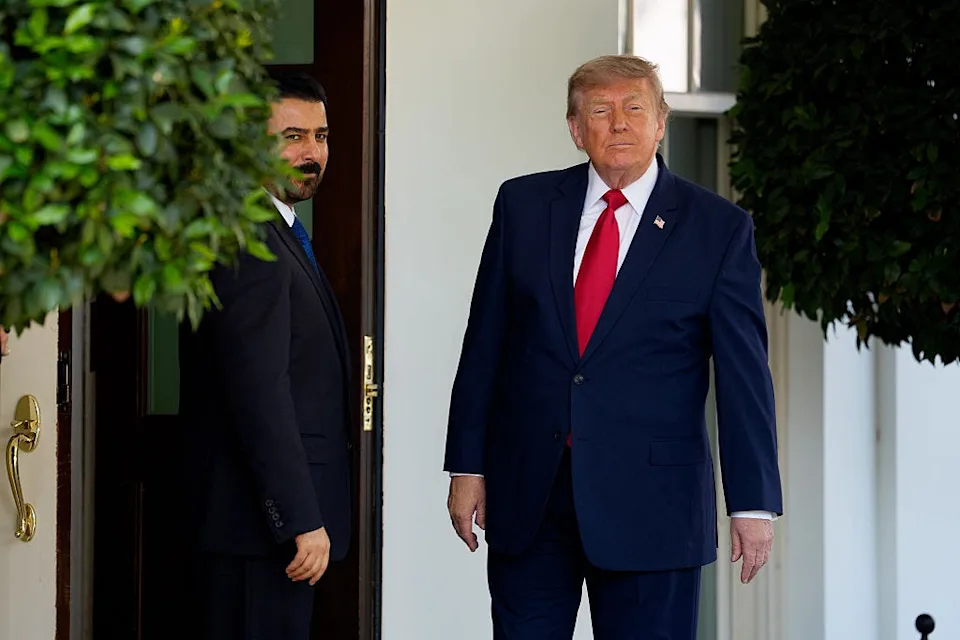
President Donald Trump’s approval rating has fallen to one of the lowest levels of his second term, according to several newly released national polls. The latest Trump approval rating poll suggests growing dissatisfaction among Americans over the economy, inflation, foreign policy, and the administration’s handling of recent international conflicts. While Trump continues to maintain strong support among many Republican voters, his standing with independents and younger Americans has weakened significantly, creating new political challenges ahead of the 2026 midterm elections.
Recent surveys, including the latest Economist/YouGov poll, place Trump’s overall job approval at approximately 37%, while nearly 59% of respondents disapprove of his performance, marking one of his weakest ratings since returning to the White House.
Latest Trump Approval Rating Poll Shows Declining Support
The newest polling data paints a difficult picture for the administration. Although Trump’s approval among Republican voters remains relatively strong, overall national support has steadily declined over recent months.
The Economist/YouGov survey conducted between July 10 and July 13 found that only about 37% of Americans approve of Trump’s performance, while a clear majority disapprove. Independent voters continue to be the deciding factor, with many expressing concerns about economic conditions and foreign policy decisions.
Political analysts note that presidential approval ratings often fluctuate throughout a term, but sustained declines can become a significant factor influencing congressional elections and legislative priorities.
Economy Remains the Biggest Concern
Economic issues continue to dominate public opinion.
Although Trump campaigned on lowering inflation and improving household finances, many Americans believe prices remain too high. Food costs, housing expenses, insurance premiums, and energy prices continue to pressure family budgets.
Recent polling also indicates declining confidence in Trump’s handling of inflation, with economic concerns becoming one of the administration’s weakest policy areas.
For many voters, economic performance outweighs partisan loyalty. Rising living costs have become one of the primary reasons behind declining approval numbers.
Foreign Policy Adds New Political Pressure
International developments have further complicated Trump’s political standing.
The administration’s military actions involving Iran and the renewed tensions in the Middle East have generated mixed public reactions. While supporters argue the White House has projected strength, critics question whether the growing military involvement serves America’s long-term interests.
A recent Reuters/Ipsos poll found that nearly eight in ten Americans believe the conflict with Iran could become prolonged, while many also expect higher gasoline prices and broader economic consequences.
These concerns appear to be influencing broader perceptions of presidential leadership.
Younger Voters Continue Moving Away
One of the most concerning trends for Republicans involves younger voters.
Recent polling shows Trump’s approval among younger Americans has declined sharply compared to earlier in his presidency. Younger voters continue placing greater emphasis on issues such as affordable housing, student debt, healthcare affordability, climate policy, and political stability.
Political strategists from both parties recognize that voter turnout among younger Americans could become an important factor during the upcoming congressional elections.
Independent Voters Hold the Key
Independent voters have traditionally played a decisive role in competitive elections.
Many recent surveys suggest these voters have become increasingly skeptical of the administration. Concerns over inflation, political polarization, government spending, and foreign policy have contributed to declining approval.
Without improving support among independents, Republicans could face more competitive races in suburban districts during the 2026 midterms.
Immigration Remains a Divisive Issue
Immigration has long been one of Trump’s strongest political issues.
However, recent surveys indicate public opinion has become more divided regarding immigration enforcement and federal deportation policies. Some polls show declining public trust in the administration’s approach compared to earlier periods.
While immigration still motivates many Republican voters, the issue no longer appears to provide the same political advantage among moderate and independent voters.
Global Perception Also Shifts
Domestic approval ratings are not the only challenge facing the administration.
International polling conducted by Pew Research Center suggests global confidence in U.S. leadership has declined in several allied countries. Foreign policy decisions, trade disputes, and military operations have influenced international perceptions of American leadership.
Although foreign opinion does not directly determine U.S. elections, it can shape diplomatic relationships and global economic cooperation.
What the Numbers Mean Politically
Presidential approval ratings are among the strongest indicators of a party’s electoral prospects during midterm elections.
Historically, presidents with approval ratings below 40% often face greater challenges in maintaining congressional majorities. While approval ratings alone do not determine election outcomes, they influence fundraising, candidate recruitment, campaign messaging, and voter enthusiasm.
Republican strategists are expected to focus heavily on improving economic messaging and emphasizing border security while attempting to reassure voters about inflation and foreign policy.
Meanwhile, Democrats are likely to highlight declining approval numbers as evidence that many Americans are seeking political change.
Polls Are Snapshots, Not Predictions
Political experts caution against treating any single poll as a definitive forecast.
Approval ratings can shift rapidly in response to major legislative achievements, economic reports, international developments, or unexpected national events.
Different polling organizations also use different methodologies, resulting in slightly different approval estimates. For that reason, analysts generally examine polling averages rather than relying on one survey.
Current polling averages nevertheless indicate that Trump remains in a politically challenging position, with approval consistently below 40% across several major surveys. (fiftyplusone.news)
Looking Ahead
The latest Trump approval rating poll underscores growing public discontent as the administration enters another critical political phase. Economic uncertainty, inflation, foreign policy tensions, and shifting voter attitudes continue to weigh on the president’s standing.
Despite maintaining a loyal Republican base, Trump faces increasing pressure to regain support among independents, younger voters, and suburban Americans before the 2026 midterm elections. Whether improvements in the economy or changes in international events can reverse the current trend remains uncertain.
As new polling data continues to emerge over the coming months, approval ratings will remain one of the most closely watched indicators of the political environment, offering valuable insight into voter sentiment and the evolving landscape of American politics.
Related: Follow our live coverage of the Todd Blanche Confirmation Hearing Live: Senate Grills Nominee Over Epstein Files and Trump Cases to see how lawmakers questioned the nominee on the Epstein files, past Trump-related investigations, and the key issues shaping his confirmation process.