Donald Trump helipad changes have become a new focus of attention as construction continues on a permanent helicopter landing pad at the White House. President Donald Trump has reportedly ordered changes to the project after expressing concerns about its appearance and the slope of the planned landing surface.
The helipad is being constructed on the White House South Lawn and is designed primarily to accommodate the newer VH-92A Patriot helicopters used for presidential transportation. The project is intended to solve a long-running problem involving the powerful aircraft’s impact on the historic lawn.
The latest changes, however, have added another dimension to the project. What began largely as a practical aviation and landscaping solution has become part of the broader debate surrounding Trump’s changes to the White House grounds.
What Are the Latest Donald Trump Helipad Changes?
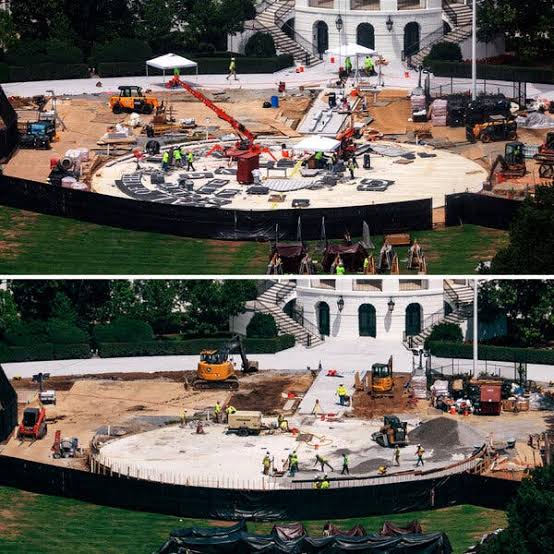
The latest Donald Trump helipad changes involve reworking portions of the construction after Trump reportedly questioned the appearance and alignment of the landing pad.
Reports indicate that crews have been taking apart some recently completed work, including elements associated with a large presidential seal that had been incorporated into the planned granite landing area. Trump reportedly wanted the helipad to appear level with the horizon rather than visibly following the natural slope of the South Lawn.
The South Lawn itself is not perfectly level. That has created a construction challenge because a helicopter landing surface must meet aviation and safety requirements while also fitting into the historic landscape.
The changes could therefore involve more than cosmetic adjustments. Contractors have reportedly considered whether portions of the underlying lawn need to be modified before the helipad can be completed.
The White House has described the work as an ongoing project in which improvements and adjustments can be made as construction progresses.
Why Is Trump Building a White House Helipad?
The primary reason for the helipad is the introduction of the VH-92A Patriot, the next-generation presidential helicopter.
For decades, presidents have routinely used Marine One to travel between the White House and other locations. The term “Marine One” is the call sign used when a Marine Corps helicopter is carrying the president.
The White House traditionally did not require a permanent paved helipad because helicopters could land directly on the South Lawn. However, the newer VH-92A aircraft created a significant problem.
The aircraft are more powerful than the older helicopters they are replacing, and their exhaust configuration can direct substantial heat toward the ground. That has created concerns about scorching or damaging the grass.
The problem became particularly important because the Marine Corps received its new fleet but could not routinely use the VH-92A for presidential landings on the White House lawn.
A permanent landing surface provides a solution by giving the aircraft a durable area designed specifically for helicopter operations. The Washington Post previously reported that the helipad idea had been under discussion for years because of the lawn-damage issue.
Granite Helipad and Presidential Seal
Trump has emphasized the appearance of the new landing pad as well as its practical purpose.
When the project was publicly discussed in July, Trump said the helipad would be made from granite and include a carved White House seal. He also described the project as something that should look attractive rather than simply functioning as a basic concrete landing area.
The original design featuring the presidential seal became one of the most recognizable aspects of the project. However, parts of that work have reportedly been removed as contractors reconsider the design.
That has raised questions about whether the final helipad will look substantially different from the version initially envisioned by Trump.
Who Is Paying for the Helipad?
The financing of the helipad has also attracted attention.
Trump said that Sikorsky Aircraft, a subsidiary of Lockheed Martin and the manufacturer of the VH-92A helicopters, would fund the project. Reuters reported that the contribution was estimated at approximately $5 million to $6 million. Lockheed Martin confirmed the contribution and said the funds were provided to the National Park Service.
The funding arrangement is notable because the helipad directly addresses a problem associated with the new presidential helicopter fleet.
Trump has characterized the contribution as a response to the damage caused by the more powerful aircraft. Lockheed Martin, meanwhile, has said that its engagement with the federal government follows applicable ethics and compliance requirements.
White House Construction Has Affected Marine One Flights
The helipad project has also temporarily changed the traditional way Trump boards Marine One.
Construction and other work on the South Lawn made the normal presidential landing area unavailable. As a result, the administration prepared a temporary landing zone at the Ellipse, the park located immediately south of the White House.
Trump subsequently used the Ellipse for Marine One operations, breaking with the familiar tradition of walking from the White House onto the South Lawn to board the presidential helicopter.
The temporary arrangement illustrates how construction at the White House can have operational consequences. A project intended to improve future presidential helicopter operations has, in the short term, required additional coordination for presidential travel.
How Much Will the Project Cost?
Trump initially described the helipad as a privately funded project costing up to about $6 million. Reuters reported that Sikorsky’s contribution was expected to be between $5 million and $6 million.
However, the broader construction work connected to the project has been reported at a significantly higher figure.
The Washington Post reported in July that the larger project, which included work involving the helipad, South Portico and an adjacent section of the White House driveway, was valued at about $13 million. The schedule was also accelerated, with additional costs reportedly associated with around-the-clock construction.
That distinction is important. The cost of the helipad itself should not automatically be treated as the total cost of all nearby White House construction.
Why the Changes Matter
The Donald Trump helipad changes matter for several reasons.
First, they show the practical difficulties involved in modernizing a historic presidential property. The White House South Lawn is both an operational space and one of the most recognizable landscapes in the United States.
Second, the project reflects the transition from older Marine One helicopters to the VH-92A Patriot. The new aircraft were delivered as part of a multibillion-dollar modernization effort intended to improve presidential air transportation.
Third, the redesign highlights Trump’s personal interest in the appearance of the White House. His administration has undertaken numerous renovation and construction projects, making changes to the presidential residence and its surrounding grounds a recurring political and cultural issue.
Finally, the project demonstrates how even a relatively small piece of infrastructure can become politically significant when it involves the White House, presidential travel, federal property and private-sector funding.
What Happens Next?
The immediate question is whether contractors can complete the redesigned helipad on schedule while satisfying both operational requirements and Trump’s aesthetic preferences.
Earlier reports indicated that the administration wanted the project completed ahead of an expected visit by Chinese President Xi Jinping. The construction schedule was accelerated for an upcoming state visit, according to reporting based on contractor records.
The final design could differ from the version initially unveiled. The presidential seal may be modified, the surface may be adjusted and the surrounding landscaping may change as construction continues.
Once completed, the helipad should provide a permanent landing surface for the newer Marine One aircraft and reduce the risk of damage to the South Lawn.
Donald Trump Helipad Changes Explained
The Donald Trump helipad changes are more than a cosmetic White House renovation. They combine aviation modernization, historic preservation, landscaping, presidential security and Trump’s broader approach to reshaping the White House grounds.
The original purpose of the project was straightforward: create a landing surface capable of handling the newer VH-92A helicopters without damaging the lawn. But disagreements over the design and slope have now resulted in construction changes and additional scrutiny.
For Trump, the helipad represents both a practical upgrade and another visible modification to the White House. For the public, it offers a close look at the challenges of balancing modern presidential operations with the historic character of one of America’s most important landmarks.
As construction continues, the final appearance, cost and completion timeline of the White House helipad will remain closely watched.
For a closer look at the latest results and the major races shaping the state’s political landscape, read our full guide to Kansas Primary Election 2026: Results, Governor Race, Senate Contest and Key Takeaways.