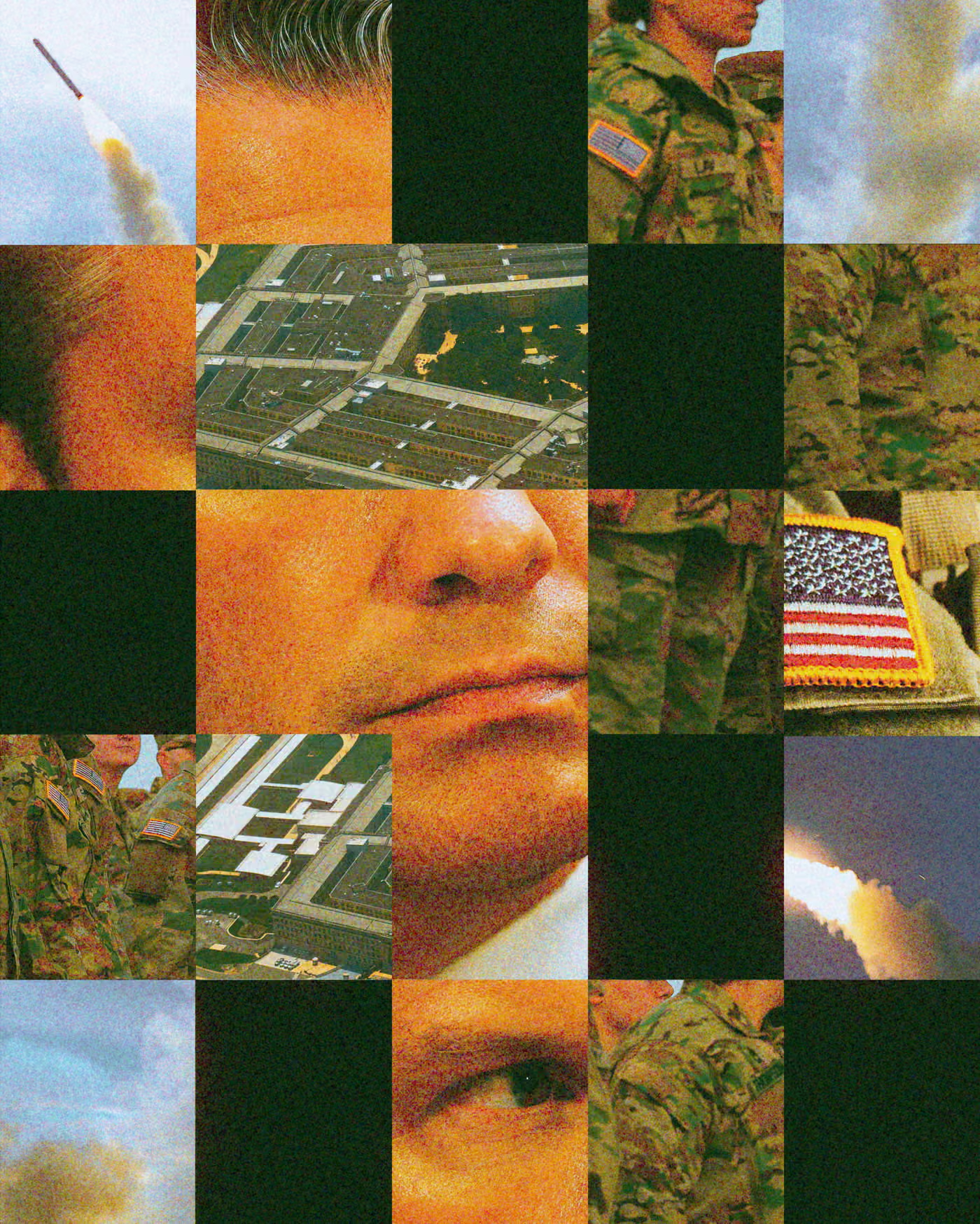
The Pentagon is facing mounting criticism after allegations emerged that it downplayed or concealed the true number of U.S. military casualties in the ongoing Iran war. The controversy has triggered outrage from lawmakers, veterans, military families, and transparency advocates, who argue that the American public deserves a complete and accurate account of the human cost of the conflict.
Recent reports suggest that official casualty figures were revised, raising questions about whether the Department of Defense intentionally minimized losses. Critics have described the alleged lack of transparency as damaging to public trust, while Pentagon officials insist they have followed standard reporting procedures.
Why the Pentagon Is Facing Cover-Up Allegations
The controversy intensified after reports revealed that the Pentagon altered publicly available casualty figures related to the Iran conflict. According to multiple media reports, the number of U.S. service members listed as killed was temporarily reduced on official platforms, prompting accusations that the Defense Department was attempting to hide the true scale of the war’s impact.
The revised figures immediately sparked criticism from military families, members of Congress, and former defense officials, who questioned why casualty data had changed without a detailed public explanation.
Former Defense Secretary Leon Panetta called the situation “shameful,” arguing that transparency is essential during wartime and that Americans have the right to know the true cost of military operations.
Reports of Rising Casualties
The Iran war has become one of the most costly U.S. military engagements in recent years.
Recent reports indicate:
- At least 18 U.S. service members have reportedly died during the conflict.
- More than 400 American troops have suffered injuries ranging from concussions and burns to traumatic brain injuries.
- Many injured personnel reportedly returned to duty after treatment, while others continue receiving medical care.
Although the exact figures remain under scrutiny, the reported revisions have fueled speculation that casualty numbers may have been underreported during key stages of the conflict.
What Critics Are Saying
Critics argue that changing casualty data without providing a detailed explanation undermines confidence in the military’s reporting system.
Several lawmakers have demanded:
- Greater transparency from the Department of Defense.
- Regular public casualty updates.
- Independent oversight of military casualty reporting.
- Congressional hearings into how casualty information is released.
Veterans’ organizations have also expressed concern that minimizing battlefield losses diminishes the sacrifices made by service members and their families.
Pentagon Denies Intentional Cover-Up
Defense officials reject accusations of deliberately hiding casualty numbers.
According to Pentagon statements referenced in recent reports, casualty figures are updated as information becomes verified, and revisions may occur as investigations continue or identification processes are completed.
Officials maintain that:
- Information is released only after notifying families.
- Casualty databases are periodically updated.
- Revisions do not necessarily indicate misconduct.
Despite these explanations, critics argue that the timing and lack of detailed communication have intensified public skepticism.
Media Access Also Under Scrutiny
The casualty controversy has expanded into a broader debate about media access during the Iran war.
Several reports claim that restrictions on journalists covering the Pentagon have increased significantly during the conflict. Critics say tighter controls over press access make it more difficult for independent media to verify battlefield developments and casualty figures.
Press freedom organizations argue that transparent reporting is particularly important during wartime because it allows taxpayers and lawmakers to assess military operations independently.
Political Fallout Continues
The allegations arrive during an already politically sensitive period in Washington.
Members of both major political parties have questioned how casualty information is communicated, although criticism has been especially sharp from opponents of the Trump administration’s handling of the Iran conflict.
The controversy may become a significant issue in upcoming congressional oversight hearings, where lawmakers are expected to seek detailed explanations regarding casualty reporting procedures.
Military accountability groups are also urging the Defense Department to publish comprehensive casualty reports more frequently.
The Human Cost of the Iran War
Beyond the political debate, the controversy highlights the significant human toll of the conflict.
Military families continue mourning loved ones killed overseas, while hundreds of injured service members face lengthy recoveries.
The reported casualties represent:
- Combat deaths.
- Missile attack fatalities.
- Serious traumatic injuries.
- Psychological trauma among deployed personnel.
Experts note that casualty numbers alone often fail to capture the long-term physical and mental health consequences experienced by veterans after returning home.
Public Trust at Stake
Public confidence in military institutions depends heavily on transparency.
Historically, casualty reporting has played a central role in maintaining accountability during major U.S. military conflicts. Any perception that information is being withheld can quickly erode public trust.
Transparency advocates argue that accurate casualty reporting is essential because it allows citizens to evaluate:
- The effectiveness of military operations.
- The true cost of war.
- Government decision-making.
- Future defense policy.
Whether the recent revisions were administrative corrections or evidence of broader communication failures, the controversy has intensified demands for clearer reporting standards.
What Happens Next?
Several developments are likely in the coming weeks:
- Congressional investigations into casualty reporting.
- Additional Pentagon briefings explaining revised figures.
- Continued media scrutiny of casualty databases.
- Potential policy changes governing wartime transparency.
As diplomatic efforts continue alongside military operations, pressure is growing for the Department of Defense to provide more detailed and timely updates.
Conclusion
The Pentagon’s handling of U.S. military casualty reporting during the Iran war has become a major political and public accountability issue. Allegations of a cover-up, combined with revised casualty figures and growing criticism from former defense leaders, lawmakers, and veterans, have intensified calls for greater transparency. While Pentagon officials deny intentionally concealing information, the controversy underscores the importance of maintaining public trust during times of war. With congressional oversight expected to increase, the debate over casualty reporting is likely to remain a central issue as the conflict continues. (The Times of India)
For more election law coverage, read our detailed guide on Darline Graham Ballot Eligibility Explained: Can She Appear on the Election Ballot? to understand the legal requirements, eligibility rules, and the latest updates surrounding her candidacy.