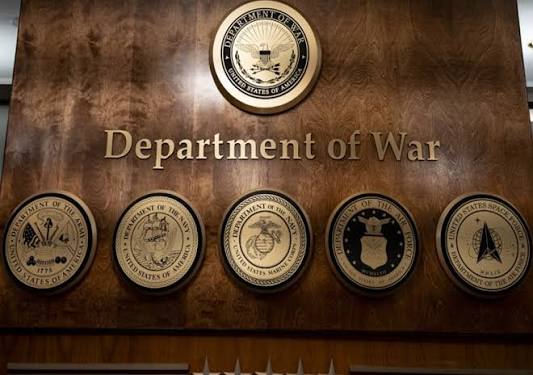
The U.S. Department of War has released an updated list of foreign academic and research institutions identified as engaging in activities that increase the risk of unauthorized technology transfer. The latest update, issued under Section 1286 of the National Defense Authorization Act (NDAA), is designed to protect U.S. government-funded research, strengthen national security, and reduce the possibility of sensitive technologies being diverted to foreign governments of concern. According to the announcement, the Fiscal Year 2025 update identifies 130 institutions located in China, Russia, and Iran that have been determined to pose heightened risks to U.S. research security.
Why the Updated List Matters
The United States invests billions of dollars each year in scientific research, advanced technologies, artificial intelligence, cybersecurity, aerospace, biotechnology, and defense innovation. Much of this work is conducted through partnerships involving universities, laboratories, private companies, and federal agencies.
While international collaboration has historically contributed to scientific advancement, U.S. officials have increasingly expressed concerns that some foreign institutions may facilitate the unauthorized transfer of American-funded research to governments whose strategic interests conflict with those of the United States.
The updated list serves as a warning to federal agencies, universities, contractors, and research organizations that collaborations with certain foreign institutions may expose sensitive technologies or intellectual property to misuse.
Officials stated that protecting taxpayer-funded innovation remains a top national security priority as technological competition intensifies worldwide.
What Is Section 1286 of the NDAA?
Section 1286 of the Fiscal Year 2019 National Defense Authorization Act requires the Department to publish and regularly update a list of foreign institutions involved in problematic activities related to technology transfer.
The purpose of the law is to:
- Protect federally funded research.
- Prevent intellectual property theft.
- Reduce risks associated with foreign talent recruitment programs.
- Improve transparency for U.S. universities and research organizations.
- Help federal funding agencies make informed partnership decisions.
The list is reviewed periodically and updated as intelligence assessments evolve and additional evidence becomes available.
What Changed in the FY2025 Update?
The latest update formally identifies 130 academic and research institutions based in:
- China
- Russia
- Iran
According to the Department, these organizations have been determined to engage in activities that increase the likelihood of U.S. government-funded research being improperly transferred or misappropriated.
Officials emphasized that unauthorized technology transfer threatens:
- National security
- Scientific integrity
- Economic competitiveness
- Defense modernization
- Emerging technology leadership
The updated list replaces previous annual versions while continuing the government’s broader research security strategy.
Why Unauthorized Technology Transfer Is a Growing Concern
Modern defense technologies increasingly overlap with civilian innovation.
Research involving artificial intelligence, quantum computing, advanced semiconductors, robotics, aerospace engineering, biotechnology, autonomous systems, and cybersecurity often has both civilian and military applications.
Unauthorized transfers may occur through:
- Research collaborations
- Academic exchanges
- Joint laboratories
- Foreign talent recruitment programs
- Improper data sharing
- Intellectual property theft
- Cyber intrusions
U.S. policymakers argue that protecting these technologies has become increasingly important as geopolitical competition accelerates.
Impact on Universities and Researchers
Although the updated list does not prohibit all international collaboration, it encourages universities and research institutions to exercise greater caution before entering partnerships with listed organizations.
Universities receiving federal research funding may need to:
- Conduct enhanced due diligence.
- Review international partnerships.
- Strengthen compliance programs.
- Improve cybersecurity protections.
- Increase oversight of research agreements.
- Ensure compliance with federal grant requirements.
Many universities have already expanded research security offices to comply with evolving federal guidance.
Implications for Federal Research Funding
Organizations collaborating with institutions on the updated list may face increased scrutiny during federal grant reviews.
Funding agencies could evaluate:
- Existing foreign partnerships
- Data protection measures
- Intellectual property safeguards
- Compliance with research security requirements
- Export control practices
The Department advises researchers and institutions to carefully assess risks before engaging with listed organizations. (World Israel News)
Protecting America’s Scientific Enterprise
Department officials said the updated list reflects a broader effort to preserve the integrity of the U.S. scientific ecosystem.
According to the announcement, protecting taxpayer-funded innovation helps ensure that American investments continue benefiting domestic economic growth and national defense rather than strengthening strategic competitors.
Officials also noted that safeguarding research does not mean ending international scientific cooperation. Instead, the objective is to encourage responsible collaboration while reducing national security risks.
Broader National Security Strategy
The publication of the updated list aligns with several ongoing U.S. initiatives, including:
- Export control modernization
- Research security programs
- Supply chain resilience
- Semiconductor investment
- Cybersecurity protection
- Defense innovation initiatives
These measures collectively seek to prevent advanced technologies from being diverted to foreign governments or organizations that could undermine U.S. security interests.
International Implications
The updated list may influence international research partnerships beyond the United States.
Global universities, multinational technology companies, and research organizations often collaborate across borders. Institutions working with U.S. federal funding may review their international relationships to ensure compliance with evolving research security policies.
Countries closely aligned with U.S. export control and security frameworks may also strengthen their own oversight of sensitive research collaborations.
Technology Fields Receiving Increased Attention
Several emerging technology sectors continue receiving heightened government attention due to their potential military and economic significance.
These include:
- Artificial Intelligence (AI)
- Quantum Information Science
- Advanced Semiconductor Manufacturing
- Hypersonic Technologies
- Space Systems
- Biotechnology
- Advanced Materials
- Autonomous Vehicles
- Cybersecurity
- Defense Electronics
Protecting research in these fields has become a central objective of U.S. national security policy.
Industry Response
Many defense contractors, technology firms, and research organizations have already strengthened internal compliance systems to address growing research security expectations.
Companies working on federally funded projects often implement:
- Partner screening
- Export compliance reviews
- Data access controls
- Intellectual property protection
- Employee training
- Cybersecurity monitoring
These measures help reduce the risk of unauthorized technology transfer while maintaining compliance with federal regulations.
Looking Ahead
The Department has indicated that the Section 1286 list will continue to be updated as new intelligence and security assessments become available. As geopolitical competition intensifies, research security is expected to remain a significant policy focus for both government agencies and the private sector.
Universities, technology companies, defense contractors, and federal grant recipients are likely to continue strengthening compliance frameworks while balancing international collaboration with national security considerations.
The FY2025 update underscores the government’s ongoing effort to protect taxpayer-funded innovation, preserve scientific integrity, and safeguard critical technologies that support America’s economic competitiveness and national defense. (U.S. Department of War)
nterested in more U.S. political news and analysis? Read our detailed guide on Trump Running in 2028: Can Donald Trump Legally Run for President Again? to understand the constitutional debate, legal challenges, and political implications surrounding a potential third presidential campaign