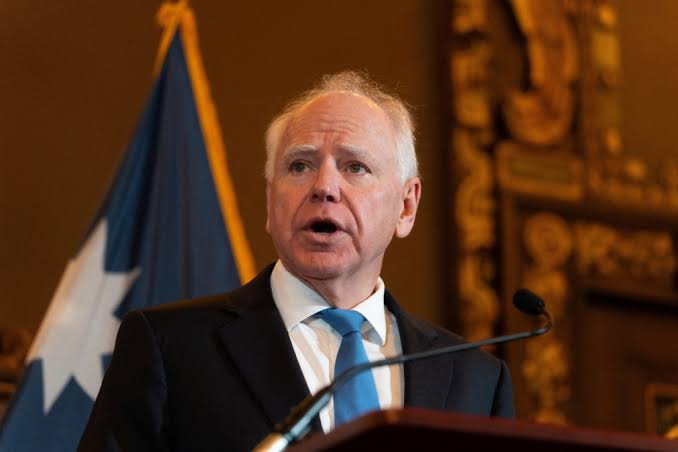
The Judge Schiltz immigration subpoena decision has become one of the most closely watched legal developments in the ongoing debate over federal immigration enforcement and state authority. The ruling, issued by Chief U.S. District Judge Patrick Schiltz in Minnesota, blocked federal subpoenas directed at Governor Tim Walz and several other Minnesota officials, marking a significant legal setback for the Department of Justice’s investigation into state immigration policies.
The decision has drawn nationwide attention because it touches on constitutional protections, the limits of federal investigative power, and the relationship between state governments and federal immigration enforcement. For legal experts, policymakers, and voters, the ruling represents more than a procedural dispute—it raises broader questions about federalism, political retaliation, and the rule of law.
What Is the Judge Schiltz Immigration Subpoena Decision?
The Judge Schiltz immigration subpoena decision refers to a federal court order that invalidated subpoenas issued to Minnesota Governor Tim Walz, Attorney General Keith Ellison, Minneapolis Mayor Jacob Frey, and other local officials.
The Department of Justice sought testimony and documents while investigating whether Minnesota officials had interfered with federal immigration enforcement operations. Judge Patrick Schiltz concluded that the subpoenas lacked sufficient legal justification and appeared designed primarily to pressure or retaliate against officials who publicly opposed federal immigration policies.
The ruling stated that prosecutors failed to demonstrate a legitimate criminal investigative purpose for the sweeping subpoenas.
Background of the Minnesota Immigration Dispute
The controversy emerged after heightened immigration enforcement operations in Minnesota created political tension between state leaders and federal authorities.
Governor Tim Walz repeatedly criticized aggressive immigration enforcement measures and maintained that Minnesota would continue following state law while respecting constitutional rights.
Federal investigators argued they needed testimony and records from top state officials to determine whether anyone had unlawfully obstructed immigration enforcement.
Minnesota officials denied wrongdoing and challenged the subpoenas in federal court, arguing they represented an abuse of prosecutorial authority rather than a legitimate criminal investigation.
Judge Schiltz’s Legal Reasoning
One of the most important aspects of the ruling is the court’s analysis of the purpose behind the subpoenas.
Judge Schiltz determined that the “dominant purpose” of the subpoenas was not to gather evidence of criminal activity but instead to pressure Minnesota officials because of their disagreement with federal immigration policy.
According to the decision, federal prosecutors presented only weak evidence suggesting criminal conduct while requesting extensive testimony and documentation.
The court concluded that grand jury subpoenas cannot be used simply as political tools or as mechanisms to intimidate elected officials.
Legal analysts say this reasoning reinforces long-standing constitutional protections against misuse of prosecutorial power.
Judge Schlitz Blocks Walz Subpoena: Why the Decision Matters
Although many online searches mistakenly use the spelling “Judge Schlitz,” the ruling was issued by Judge Patrick Schiltz.
The decision to block the Walz subpoena matters for several reasons:
- It reinforces judicial oversight over federal investigations.
- It emphasizes that criminal investigations must have genuine legal foundations.
- It protects constitutional principles governing relationships between state and federal governments.
- It limits the use of grand jury powers for political purposes.
- It may influence future investigations involving state officials across the United States.
Because immigration enforcement often creates conflicts between federal agencies and state governments, this decision could become an important legal precedent.
Tim Walz Immigration Subpoena Ruling Explained
The Tim Walz immigration subpoena ruling centered on whether Minnesota’s governor could legally be compelled to provide testimony and government records.
Federal prosecutors alleged that state officials may have interfered with immigration operations.
However, the court found little evidence supporting those allegations.
Judge Schiltz emphasized that disagreements over immigration policy do not automatically constitute criminal conduct.
The ruling therefore rejected the subpoenas issued against Walz and several other officials.
Legal experts note that the decision does not prevent future investigations supported by credible evidence. Instead, it requires investigators to satisfy constitutional standards before compelling testimony from elected officials.
Minnesota at the Center of a National Immigration Debate
Minnesota has increasingly become a focal point in national immigration discussions.
State leaders have generally favored policies emphasizing cooperation with immigrant communities while maintaining compliance with applicable federal law.
Federal officials have argued that some local policies reduce cooperation with immigration enforcement.
This disagreement ultimately produced the legal conflict that resulted in the Judge Schiltz immigration subpoena decision.
The ruling illustrates how immigration policy increasingly involves constitutional questions regarding federal authority, state sovereignty, and individual rights.
Constitutional Issues Raised by the Case
Several constitutional principles were central to Judge Schiltz’s decision.
Federalism
The U.S. Constitution divides authority between federal and state governments.
The court suggested that federal investigators cannot use criminal subpoenas simply to pressure states into adopting federal policy preferences.
Separation of Powers
Courts play an important role in reviewing executive actions.
Judge Schiltz’s ruling demonstrates judicial oversight over prosecutorial decisions, ensuring investigations remain within constitutional boundaries.
Due Process
Individuals and government officials alike are protected from arbitrary government action.
The decision emphasizes that prosecutors must demonstrate legitimate investigative purposes before compelling testimony or documents.
Political Reactions
The ruling immediately generated reactions from both supporters and critics.
Minnesota officials welcomed the decision, arguing that it protected democratic institutions and prevented political retaliation.
Supporters described the ruling as an important defense of judicial independence.
Federal officials maintained that the Justice Department has a responsibility to investigate potential interference with immigration enforcement.
The differing responses illustrate how immigration policy continues to divide political leaders across the country.
Potential Impact on Future Cases
Legal scholars believe the Judge Schiltz immigration subpoena decision may influence future disputes involving:
- Immigration enforcement investigations
- Federal subpoenas targeting state officials
- Grand jury investigative authority
- Constitutional challenges involving federalism
- Political retaliation claims
Although the decision applies directly to this case, courts in future disputes may reference its reasoning when evaluating similar investigations.
Frequently Asked Questions
Who is Judge Patrick Schiltz?
Patrick Schiltz serves as Chief Judge of the U.S. District Court for the District of Minnesota.
Why did Judge Schiltz block the subpoenas?
The court concluded that prosecutors failed to demonstrate a legitimate criminal investigative purpose and found the subpoenas appeared primarily intended to pressure Minnesota officials.
What was the Tim Walz immigration subpoena ruling?
The ruling invalidated federal subpoenas directed at Governor Tim Walz and several other Minnesota officials involved in the immigration investigation.
Does the ruling end the investigation?
Not necessarily. The decision blocks the challenged subpoenas but does not prevent future investigations supported by sufficient legal evidence.
Conclusion
The Judge Schiltz immigration subpoena decision represents an important development in the continuing debate over immigration enforcement, federal authority, and constitutional protections.
By blocking subpoenas issued to Governor Tim Walz and other Minnesota officials, the federal court reinforced the principle that criminal investigative powers cannot be used without a legitimate legal basis. The ruling also underscores the judiciary’s role in reviewing executive actions and safeguarding constitutional limits on government authority.
As immigration policy remains one of America’s most contentious issues, the Minnesota decision is likely to be cited in future legal battles involving state governments, federal investigations, and the balance of power between Washington and the states. Whether future courts follow Judge Schiltz’s reasoning remains to be seen, but the decision has already become a significant chapter in the evolving legal landscape surrounding U.S. immigration enforcement.