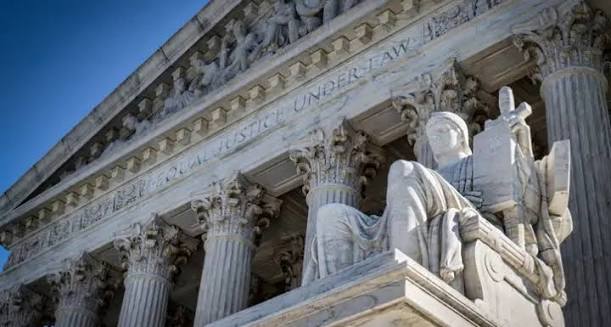
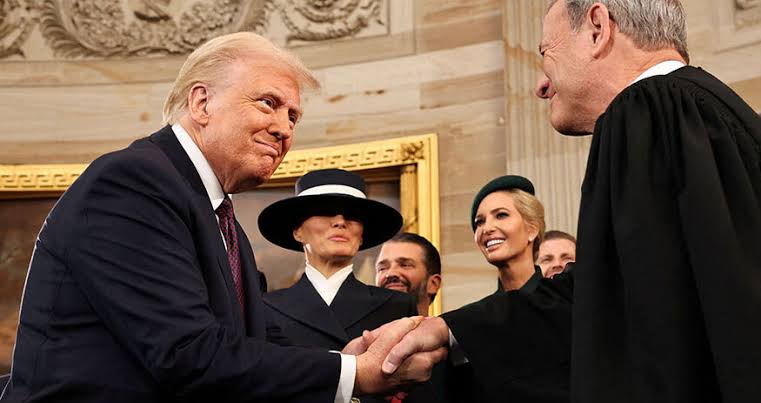
Chief Justice John Roberts has long been regarded as the institutional guardian of the U.S. Supreme Court. Throughout the Court’s latest term, he authored or joined several landmark rulings that reshaped the balance of power between the presidency, Congress, and the judiciary.
Yet two of his most consequential opinions have sparked debate among constitutional scholars because they appear to pull in opposite directions. In one decision, Roberts significantly strengthened presidential authority by embracing key aspects of the unitary executive theory. In another, he firmly rejected President Donald Trump’s attempt to exercise powers that Roberts concluded Congress had never granted.
At first glance, the rulings seem inconsistent. But a closer look suggests Roberts may be applying a deeper constitutional philosophy—one centered not on expanding or limiting presidential power universally, but on preserving the constitutional separation of powers.
What Were the Two Major Decisions?
The Supreme Court’s 2026 term featured dozens of high-profile disputes, but two Roberts opinions stood above the rest.
1. Expanding Presidential Control Over Executive Agencies
One landmark ruling strengthened presidential authority over independent executive agencies. Roberts concluded that the Constitution gives the president broad authority to supervise officials exercising executive power, reinforcing the long-debated “unitary executive” doctrine.
Supporters argued the decision restores democratic accountability by ensuring executive officials ultimately answer to the elected president.
Critics warned it weakens the independence of federal agencies that were intentionally insulated from political pressure.
The ruling represented one of the biggest expansions of executive authority in decades.
2. Rejecting Trump’s Emergency Tariff Authority
Just months earlier, Roberts authored another major opinion reaching the opposite practical outcome.
The Court ruled that the International Emergency Economic Powers Act (IEEPA) does not authorize a president to impose sweeping global tariffs simply by declaring a national emergency.
Trump argued the statute granted him broad discretion.
Roberts disagreed.
Writing for the majority, he emphasized that Congress never clearly delegated such enormous economic authority to the president.
Without explicit authorization, the executive branch could not create powers on its own.
The decision represented a major constitutional setback for Trump’s economic agenda.
Why Do These Decisions Seem Contradictory?
Observers immediately noticed the apparent contradiction.
One opinion appears to give presidents more power.
The other limits presidential authority.
If Roberts believes in a powerful executive, why reject Trump’s tariffs?
If he favors limits on executive power, why expand presidential control over agencies?
These questions have fueled widespread discussion among legal experts.
The Key Difference: Constitutional Power vs. Statutory Power
The answer lies in a distinction Roberts has consistently drawn throughout his career.
Constitutional Authority
When presidential authority comes directly from Article II of the Constitution, Roberts has generally interpreted executive power broadly.
This includes supervising executive officials responsible for enforcing federal law.
Congressional Delegation
When presidents claim powers based on statutes passed by Congress, Roberts demands clear legislative authorization.
If Congress has not unmistakably granted a particular power, Roberts has repeatedly refused to infer it.
Viewed through this lens, the two rulings become less contradictory.
One protects constitutional executive authority.
The other protects Congress’ exclusive power to legislate.
Roberts’ Institutional Philosophy
For years, Roberts has emphasized protecting the Supreme Court as an independent constitutional institution rather than advancing partisan outcomes.
That approach often frustrates both conservatives and liberals.
During this term:
- Conservatives applauded decisions expanding executive control.
- Many conservatives criticized Roberts for rejecting Trump’s tariff policy.
- Liberals opposed expanded executive authority but welcomed limits on emergency tariff powers.
The mixed reactions reflect Roberts’ tendency to follow institutional principles rather than political alliances.
Critics Say the Logic Still Doesn’t Add Up
Not everyone accepts this explanation.
Some constitutional scholars argue the Court has become inconsistent in applying separation-of-powers principles.
They contend:
- Executive authority is expanded when conservative legal theories support it.
- Executive authority is restricted when the Court prefers congressional control.
- The resulting doctrine can appear unpredictable.
Others believe Roberts selectively invokes institutional concerns depending on the case before the Court.
Supporters See a Consistent Judicial Framework
Defenders argue Roberts has actually remained remarkably consistent.
His opinions repeatedly emphasize one central idea:
The Constitution assigns powers to specific branches, and courts must enforce those boundaries.
Under that philosophy:
- Presidents may fully exercise powers the Constitution grants.
- Presidents cannot invent powers Congress never delegated.
- Courts—not political branches—determine those constitutional limits.
Viewed this way, both opinions protect the same constitutional structure rather than contradict it.
What These Decisions Mean Going Forward
The impact of these rulings extends well beyond the current administration.
Future Democratic and Republican presidents alike will inherit:
- Greater authority over executive agencies.
- Clearer limits on using emergency statutes to justify major economic actions.
- Increased judicial scrutiny of expansive executive interpretations of federal law.
Congress may also face pressure to draft statutes with far greater precision if lawmakers want presidents to possess extraordinary powers.
Political Implications
The decisions also reinforce Roberts’ unique position within today’s Court.
Although appointed by President George W. Bush and leading a conservative majority, Roberts frequently refuses to align automatically with any political movement.
His willingness to side against President Donald Trump in major cases while simultaneously embracing conservative constitutional theories demonstrates why predicting the Court solely through partisan labels often proves misleading.
Final Thoughts
John Roberts’ two biggest Supreme Court decisions this term may initially appear contradictory, but they reveal a more nuanced judicial philosophy. Rather than simply expanding or restricting presidential power, Roberts distinguishes between authority rooted directly in the Constitution and authority that depends on congressional authorization.
Whether that framework is genuinely consistent remains a subject of intense legal debate. What is certain, however, is that these rulings will shape the relationship between the presidency, Congress, and the Supreme Court for years to come, making this one of the most consequential terms of Roberts’ tenure as Chief Justice.
Related: Read our coverage of Exclusive News: Trump Pardons 9 Convicted in Aftermarket Diesel Emissions Violations Case to understand how recent executive actions continue to fuel debates over presidential authority and the limits of federal power.