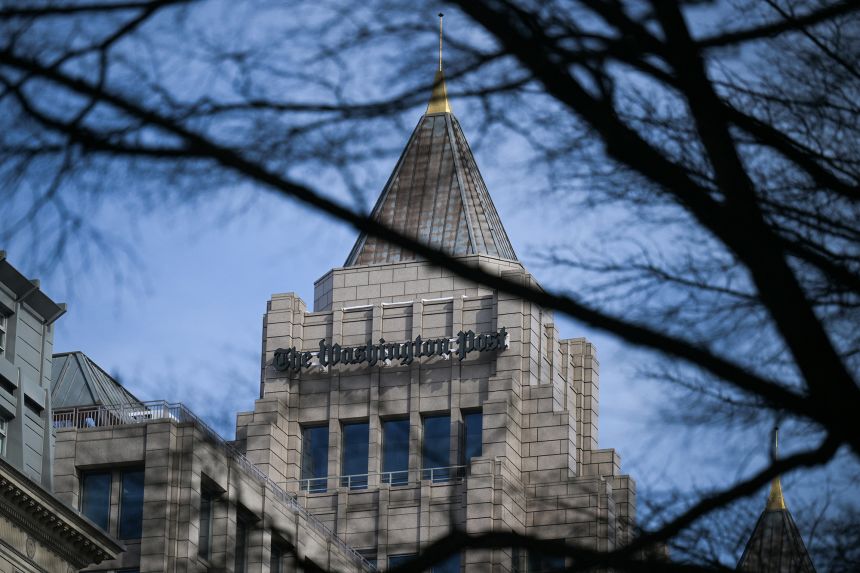
A federal judge has dismissed Trump Media & Technology Group’s (TMTG) $3.8 billion defamation lawsuit against The Washington Post, marking another significant legal setback in the company’s efforts to challenge media reporting. The ruling concluded that Trump Media failed to produce sufficient evidence showing that the newspaper acted with the “actual malice” required under U.S. defamation law for public figures.
The case attracted national attention because of the enormous damages sought, the involvement of President Donald Trump’s media company, and the broader implications for press freedom and corporate defamation lawsuits.
Why Did Trump Media Sue The Washington Post?
Trump Media filed the lawsuit after alleging that reporting published by The Washington Post damaged the company’s reputation, investor confidence, and financial prospects.
According to the complaint, the newspaper published false statements that harmed Trump Media’s business operations and contributed to significant financial losses. The company argued that the reporting misrepresented internal business matters and sought approximately $3.8 billion in damages.
The Washington Post denied the allegations and maintained that its reporting was protected under the First Amendment and based on responsible journalism.
Why Did the Judge Dismiss the Lawsuit?
The federal judge granted summary judgment in favor of The Washington Post after determining that Trump Media had not presented enough evidence to allow a reasonable jury to conclude that the newspaper acted with actual malice.
Under the landmark Supreme Court precedent established in New York Times Co. v. Sullivan, public figures and public companies tied closely to political figures face a high legal standard in defamation cases.
To succeed, they must prove that the publisher:
- Knew the statements were false, or
- Acted with reckless disregard for whether they were true or false.
The judge ruled that Trump Media failed to meet this burden.
Understanding “Actual Malice”
The phrase “actual malice” often creates confusion because it does not refer to hatred or personal hostility.
Instead, in American defamation law, actual malice means:
- Publishing information while knowing it is false, or
- Seriously doubting its accuracy but publishing it anyway.
Simple reporting mistakes or inaccurate statements generally do not satisfy this legal threshold.
Because The Washington Post argued that its reporting was supported by journalistic standards and available evidence, the court found insufficient proof of intentional falsehood.
Why Is This Decision Important?
The ruling reinforces the strong constitutional protections afforded to news organizations reporting on public officials, corporations, and matters of public interest.
Legal experts have long noted that defamation lawsuits involving public figures are among the most difficult to win because courts seek to protect robust public debate while still allowing remedies for knowingly false reporting.
The decision also demonstrates that seeking large monetary damages alone does not lessen the plaintiff’s burden of proof.
Trump Media’s Legal Challenges Continue
Trump Media has been involved in several high-profile legal disputes involving media organizations and public reporting.
The dismissal against The Washington Post joins a broader pattern of lawsuits involving media companies, many of which have centered on claims that news coverage harmed Trump’s reputation or business interests. Some have been dismissed, while others remain pending or have resulted in settlements depending on the specific facts and legal claims.
The outcome underscores how courts continue to apply longstanding First Amendment standards regardless of the political prominence of the parties involved.
What This Means for Investors
Although the lawsuit itself focused on alleged reputational harm, investors often pay close attention to litigation involving publicly traded companies.
The dismissal may reduce uncertainty surrounding this specific case, but investors will likely continue monitoring:
- Ongoing litigation involving Trump Media
- Regulatory developments
- Business performance
- Advertising and platform growth
- Market conditions
Legal outcomes can influence investor sentiment, although stock performance ultimately depends on multiple financial factors.
Press Freedom and the First Amendment
The case also highlights the balance between protecting reputations and safeguarding press freedom.
American courts have consistently recognized that journalists must be able to report aggressively on public figures without facing liability unless there is convincing evidence of intentional falsehood.
This principle has shaped U.S. media law for decades and remains one of the strongest constitutional protections for journalism.
Supporters argue these protections encourage investigative reporting, while critics contend they make it too difficult for public figures to challenge inaccurate reporting.
Could Trump Media Appeal?
Trump Media may still pursue appellate review if it believes the district court made legal errors.
Appeals generally focus on whether the judge correctly interpreted the law rather than re-evaluating disputed facts.
An appellate court could:
- Affirm the dismissal.
- Reverse the ruling.
- Return the case for additional proceedings.
However, overturning summary judgment requires demonstrating that the lower court improperly applied legal standards or overlooked genuine factual disputes.
Political and Legal Significance
The dismissal comes amid continued national debate over the relationship between politicians, media organizations, and the courts.
President Donald Trump has frequently criticized major news outlets and has supported litigation against organizations he believes have published inaccurate reporting.
Meanwhile, media organizations argue that constitutional protections are essential for independent journalism and accountability.
This latest decision reinforces the judiciary’s reliance on established defamation law rather than political considerations.
Conclusion
The dismissal of Trump Media’s $3.8 billion defamation lawsuit against The Washington Post represents another important ruling in the evolving legal battles involving media companies and public figures.
The federal judge concluded that Trump Media failed to produce sufficient evidence showing actual malice, the demanding legal standard required for public-figure defamation claims. As a result, The Washington Post prevailed at the summary judgment stage, reinforcing longstanding First Amendment protections for news organizations.
Whether Trump Media chooses to appeal remains to be seen, but the decision is likely to be closely examined by legal experts, journalists, investors, and policymakers as another significant precedent in the ongoing intersection of politics, business, and media law.
Related: Want to know what’s next for another major political figure? Read our detailed coverage of “Nigel Farage: Daughter, Net Worth, Announcement Today, and Why Did He Resign“ to understand the latest developments surrounding the Reform UK leader.