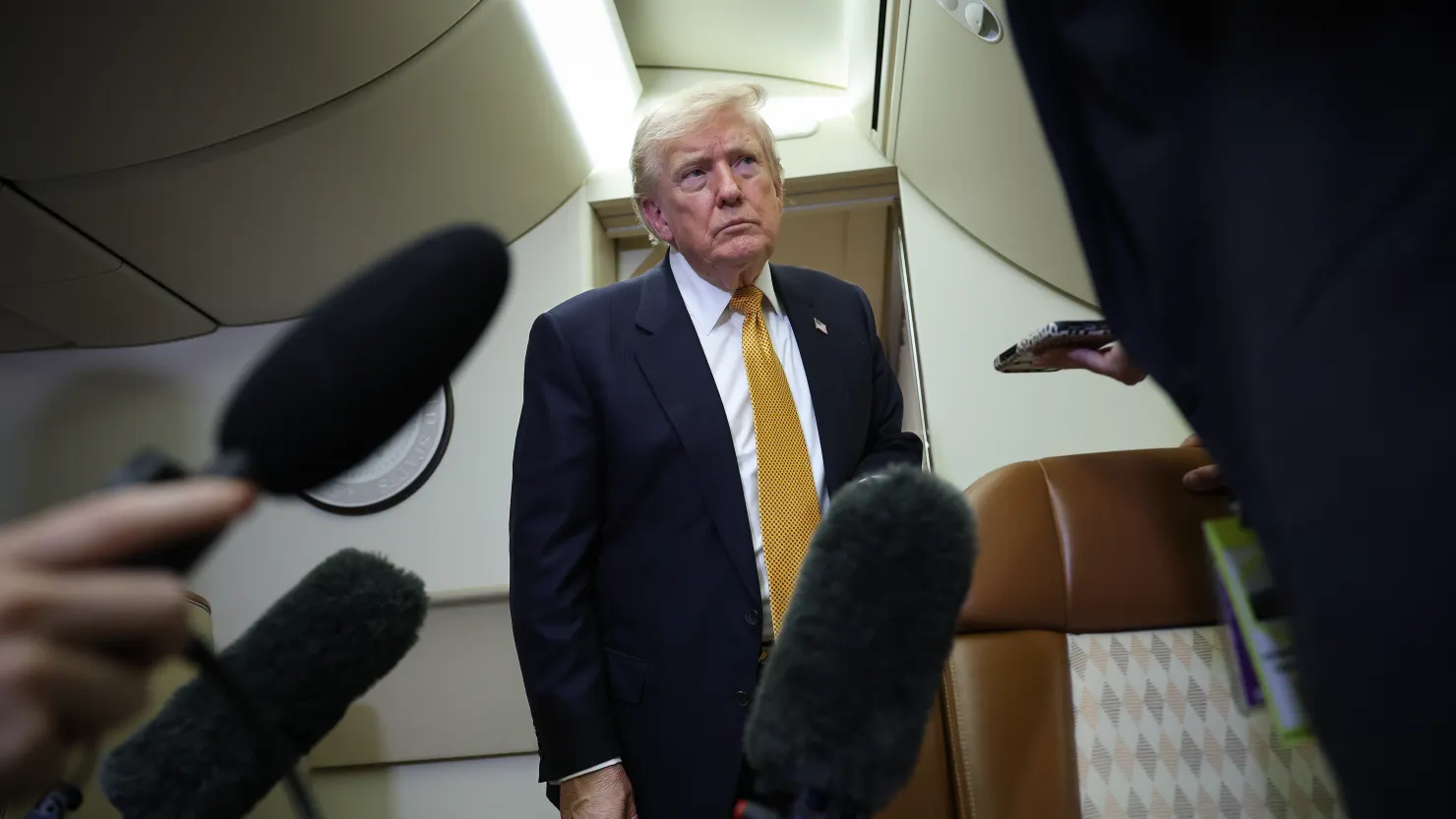
The latest chapter in the U.S.-Iran conflict has taken another dramatic turn after former President Donald Trump claimed that Iran reached out to negotiate following recent American military strikes. His remarks have sparked widespread debate over whether diplomacy is quietly returning or whether the region is moving closer to a broader conflict.
Speaking to reporters, Trump suggested that Iranian officials contacted the United States in an effort to discuss a possible agreement after suffering damage from U.S. military operations. However, he also admitted that it remains uncertain whether the conflict is ending or if another round of military escalation is on the horizon.
As tensions continue to rise across the Middle East, governments, analysts, and global markets are closely watching every new development.
Trump’s Claim: Iran Wants to Make a Deal
According to Trump, the recent U.S. military strikes significantly altered the strategic situation, convincing Iran that negotiations may now be preferable to continued confrontation.
Trump argued that American military strength forced Tehran to reconsider its position and explore diplomatic options.
While he did not provide detailed evidence regarding the alleged communication, his comments immediately generated international attention because they suggest behind-the-scenes diplomacy could already be underway.
The statement aligns with Trump’s long-standing foreign policy approach of combining military pressure with negotiations.
U.S. Military Operations Increase Pressure
Recent American strikes reportedly targeted multiple Iranian military facilities and strategic infrastructure following heightened regional tensions.
Officials have described the operations as defensive measures designed to deter further attacks on U.S. forces and regional allies.
The strikes marked one of the most significant military actions between Washington and Tehran in recent years, increasing fears that the confrontation could expand into a wider regional war.
Military analysts believe the attacks demonstrated America’s willingness to respond forcefully while leaving the door open for diplomatic engagement.
Iran’s Response Remains Measured
Iranian officials have strongly condemned the American strikes, calling them violations of international law.
Tehran has vowed that any attacks on its territory will receive an appropriate response. At the same time, official statements have stopped short of completely rejecting future diplomatic discussions.
This mixed messaging has fueled speculation that Iranian leadership may be weighing both military retaliation and potential negotiations depending on developments in the coming days.
Iran continues to insist that its sovereignty and national security remain non-negotiable.
Is Diplomacy Returning?
The possibility that Iran may have reached out for talks remains difficult to independently verify.
Diplomatic channels between Washington and Tehran have historically remained active through intermediaries, even during periods of intense hostility.
Regional governments including Qatar, Oman, and other Gulf nations have frequently played important roles in facilitating indirect communication between both countries.
If Trump’s claim proves accurate, it could indicate that informal negotiations are already taking place behind closed doors.
However, diplomatic experts caution that preliminary contacts do not necessarily guarantee a comprehensive agreement.
Why the Future of the War Remains Unclear
Despite suggestions of possible negotiations, several major factors continue to threaten regional stability.
1. Military Forces Remain on High Alert
Both American and Iranian military assets remain deployed across key strategic locations throughout the Middle East.
Additional naval forces, missile defense systems, and air assets continue operating in the region.
2. Proxy Groups Could Escalate Fighting
Iran-backed armed groups operating in Iraq, Syria, Lebanon, and Yemen remain capable of launching attacks against U.S. interests or allied nations.
Any significant incident involving these groups could rapidly escalate tensions.
3. Political Pressures
Both Washington and Tehran face significant domestic political considerations.
Leaders on both sides must balance national security concerns with growing public pressure regarding military engagement and diplomatic solutions.
4. Nuclear Concerns Continue
Iran’s nuclear program remains one of the central issues driving tensions.
Western governments continue expressing concern over uranium enrichment activities, while Tehran insists its nuclear program remains peaceful.
Any future negotiations would almost certainly include discussions surrounding nuclear inspections, sanctions, and regional security.
Global Markets Watching Closely
Every new statement regarding the conflict has influenced financial markets.
Oil prices remain particularly sensitive because any disruption to shipping routes through the Persian Gulf could affect global energy supplies.
Investors are also monitoring stock markets, gold prices, and currency movements as geopolitical uncertainty increases.
Businesses worldwide continue assessing potential risks associated with prolonged instability in the Middle East.
International Reactions
Several world leaders have urged restraint while encouraging diplomatic engagement.
European governments continue calling for renewed negotiations to prevent further escalation.
The United Nations has repeatedly appealed for dialogue and emphasized the importance of avoiding actions that could trigger a broader regional conflict.
Meanwhile, America’s allies continue coordinating security measures while supporting efforts aimed at restoring stability.
Could a New Deal Be Possible?
If both countries eventually return to negotiations, several major issues would likely dominate discussions:
- Iran’s nuclear activities
- Economic sanctions
- Regional security
- Protection of shipping lanes
- Prisoner exchanges
- Military de-escalation
- Future inspection mechanisms
Negotiators would face significant challenges because trust between both governments remains extremely limited after years of confrontation.
Nevertheless, history has shown that diplomatic breakthroughs often emerge after periods of heightened tension.
Political Implications for Trump
Trump’s comments also carry political significance.
Supporters argue that his strategy of combining military pressure with negotiations demonstrates effective leadership.
Critics, however, question whether increased military action risks triggering a larger conflict before meaningful diplomacy can succeed.
Foreign policy remains a major issue in American politics, making every development in the Iran crisis politically important.
What’s Next?
The coming days will likely determine whether the region moves toward negotiations or renewed military confrontation.
Officials on all sides continue monitoring military movements while diplomatic efforts reportedly remain active behind the scenes.
Although Trump’s claim that Iran contacted the United States has generated headlines, independent confirmation remains limited.
Until official negotiations are announced, uncertainty will continue dominating discussions about the future of the conflict.
For now, the possibility of diplomacy exists—but so does the risk of further escalation.
Conclusion
Trump’s assertion that Iran sought to make a deal following U.S. strikes has added a new dimension to an already volatile geopolitical crisis. While diplomacy may still be possible, military deployments, regional proxy conflicts, and unresolved nuclear disputes continue to cloud the outlook. Whether these developments lead to peace talks or another round of hostilities will depend on decisions made by leaders in Washington, Tehran, and across the Middle East in the weeks ahead. (CNBC)
Also Read: Concerned about America’s political future? Read our in-depth analysis, “Weimar America Explained: Why Experts Fear the U.S. Is Following a Dangerous Path,” to understand why experts believe growing political instability could reshape the United States.